
Thursday, June 20, 2013
street news, views and stories of justice and injustice
Follow me on Twitter

Search WitnessLA:

Recent Posts

Categories

Archives

Blogs We Like

LA Connections

Points of Interest

The BlogFather

Meta

Daily Reports


A Murdered Palmdale Child & the Everyday Wounds of Thousands of LA Children….One Good DCFS Story….Drug Convictions & The “Wobbler Option”

June 10th, 2013 by Celeste Fremon


DCFS CHIEF BROWNING CLAIMS PRESSURE TO KEEP FAMILIES TOGETHER IS PART OF THE “CULTURE” THAT RESULTED IN THE MURDER OF 8-YEAR-OLD GABRIEL FERNANDEZ


Many of us are still haunted by the entirely preventable murder last month of 8-year-old Gabriel Fernandez,
the Palmdale boy who was reportedly abused over and over again, before the day he was tortured and fatally beaten by his mother and the mother’s boyfriend.

The fact of this child’s terrifying death is made worse by reports from other adults who knew him, like his elementary school teacher, Jennifer Garcia, who said she repeatedly warned officials that the sweet-faced, big-eyed boy was in peril. And yet, despite a blizzard of red flags, LA County DCFS officials charged with working his case ignored the danger and left this boy in the hands of his tormenters.

As ABC 13 reported:

“My first report was from October,” said Jennifer Garcia, Gabriel’s teacher. “And in every single report I made, there was enough information in that report that he should have been removed that first October.”

Over the weekend I noted that LA Times columnist Sandy Banks—who is a parent as well as a journalist with a healthy access to her compassion— wrote a column in which she expressed her own outrage at the inexplicable failure by DCFS to protect this little boy.

In the course of researching the column, Banks asked DCFS Chief Philip Browning, who has been on the job for 15 months with a mandate to clean up the chronically dysfunctional department, what the hell was going on?

She reports that Browning told her the following:

… Social workers feel hamstrung by a departmental obsession with keeping children with their families, given the shortage of good foster homes.

That policy was the product of a previous culture change, aimed at reducing foster care rolls and strengthening troubled families with resources like drug treatment, mental health care and parenting classes.

But Browning said it has “immobilized” social workers, who rely on mindless allegiance to the goal instead of “common sense and critical thinking” about what’s best for children.

“Social workers have said they feel pressured to leave kids with families,” Browning said.

Reading DCFS Chief’s explanation, my own fury shot through the roof.

Even if Browning’s contention was true, that part of the problem was an overload of pressure to reunite families, it is stating the painfully obvious to point out that such “pressure” in no way explains how social workers could decide that it was perfectly fine to leave a child in a household where everyone from his teacher, to his therapist, to various close relatives, reported to authorities that Gabriel Fernandez showed clear and repeated signs of frightening abuse.

However, figures show that, contrary to Browning’s contention that DCFS workers feel overly pressured to leave at-risk kids with their families, in practical fact, quite the opposite is occurring.

While the county’s removal rate did decrease dramatically for a few years from around 2006 to 2009 when what was known as the Title IV E waiver allowed counties to spend federal foster care dollars on a wide variety of services aimed at strengthening families with problems so that children could be helped to remain safely at home, instead of going through the trauma of being removed to foster care.

But then headlines over a handful of terrible cases like that of the death of Gabriel Fernandez whipped up a frenzy of public pressure, which began to push the pendulum back the other direction. After that programs began to be cut and the pendulum swung still further.

Thus, since 2009, DCFS has, if anything, been filing to remove more kids from their homes every year, not less. There were 10,725 petitions filed in 2009. In 2012, the number jumped to 13,454. Thus far this year, the rate is reportedly going still higher.

As a consequence, many family advocates have expressed strong concern that a worrisome number of kids are being yanked from their homes and into court unnecessarily.

And then at the other end of the spectrum, we have Gabriel Fernandez.

Certainly we sympathize with Chief Browning, who is charged with the daunting task of reforming the largest foster care system in the nation, with 27,188 children under LA’s courts’ jurisdiction, at last count.

But we do not believe it is responsible to react to one ghastly tragedy, with wrong-headed rhetoric that could easily trigger more slow-motion, everyday tragedies.


A RARE HAPPY ENDING FOR ONE 17-YEAR-OLD FOSTER “CHILD” WHO GETS ADOPTED AFTER BEING ARRESTED

The always excellent Joe Piasecki has a story in the Pasadena Sun of the adoption of 17-year-old Fred Jingles, who had not only spent years in foster care, but had also landed himself in LA juvenile justice system when, emotionally whiplashed by his father’s terminal illness, and his misery at being separated from his family, he slugged a kid at the group home where he was staying and knocked him out.

But this tale appears, at the moment anyway, to have a happy ending. Here’s a clip from Piasecki’s story, but be sure read the rest, or at the very least, check out the photo of Jingles gazing happily at his new mom-to-be as he is going through adoption proceedings.

Here’s the clip:

Following a series of family tragedies, four years in the foster care system and a seven-month stint in a juvenile probation camp for a schoolyard assault, 17-year-old Fred Jingles sat in a Pasadena courtroom on Tuesday for arguably the most important hearing of his life.

He was being adopted.

Holding hands with his birth mother, who sat teary-eyed and wearing a blue Twin Towers jail uniform, Fred took the, almost unheard of, step of being united with new parents while a ward of the Los Angeles County Probation Department.

“You’re going to be all right. And your mother is, too. And I love you,” Kimberly Freeman told her youngest child before signing over parental rights to Fred’s paternal aunt, LaVetta White, and her husband, Rondia White.

Adoptions are typically a happy ending reserved for the dependency court system, which handles cases of parental abuse or neglect and oversees some 16,000 children in county-run foster care.

Fred’s adoption out of delinquency court is only the third such case in the history of Los Angeles County, said Lisa Campbell-Motten, a probation department supervisor.

She hopes many similar stories will emerge among the hundreds of Los Angeles-area foster kids mixed in with the county’s roughly 20,000 young offenders on criminal probation or living in juvenile halls and camps.


THE WAR ON DRUGS…AND THE “WOBBLER” OPTION

This smart editorial from the LA Times editorial board (written by Rob Greene) explains why, SB 649—the new drug “wobbler” bill that would allow simple possession of a small amount of an illegal substance to be charged as either a felony or a misdemeanor— should be passed forthwith.

Here’s a clip, but as usual, we urge you to read the whole thing in order to get the full picture of why this piece of legislation should work for both sentencing reformers and law-and-order types.

Okay, here’s the clip:

Simple possession of small amounts of methamphetamine — enough for personal use but presumably not for dealing — is a “wobbler” in California, meaning that offenses can be charged as either felonies or misdemeanors. It’s different with possession of cocaine, opiates such as heroin and many other addictive drugs; they currently can be charged only as felonies.

The state Senate has now passed a bill to bring criminal handling of those drugs into line with methamphetamine, and the measure is before the Assembly. SB 649, by Democrat Mark Leno of San Francisco, is good policy and should be adopted.

The bill is an improvement over a version Leno offered last year to convert possession to a misdemeanor, with no felony option.

True, there is something perverse about locking people up for any period for possessing highly addictive drugs for their own use. Most offenders have the stuff on hand because they are hooked. For years California sent such addicts to prison, where little or no treatment was available. They were released on parole, which they were practically fated to violate by using drugs again — because they were, after all, addicted.

This foolhardy approach gave California a steady supply of unrecovered addicts shuttling between prison and the streets. That meant continuing damage to neighborhoods dealing with the addicted, plus overcrowded prisons. At the end of last year, for example, there were more than 4,000 inmates in state prison for possessing drugs for personal use.

It would be better to divert addicts from the criminal justice system entirely if they could be successfully treated without ever going to jail or even to court. But for many addicts, there remains a role for punishment, or at least the threat of punishment…

Posted in DCFS, Foster Care, Sentencing, Uncategorized, War on Drugs | No Comments »

Shootings in Santa Monica & at Santa Monica College, 5 Dead, Multiple Crime Scenes

June 7th, 2013 by Celeste Fremon


Shootings occurred in Santa Monica at multiple locations,
one at Santa Monica College reportedly in the library, another occurring on the street at Pico near Cloverfield firing into some vehicles, at a Big Blue bus, and into a building, another at a local home, which was burned with two men dead inside—believed to be the gunman’s brother and father.

The shooting reportedly began just before noon. At 5 pm, at least 7 were said to be dead, others being treated at UCLA, and various local hospitals. But at a press conference around 8:30 pm Friday night, Santa Monica PD corrected the number of dead to 5—meaning four plus the shooter, who was again confirmed as being among the dead.

As mentioned above, in a related event, the shooter reportedly set fire to a house before going on the move and beginning shooting.

Two men are reportedly dead inside the torched house.

In addition to the dead shooter, another man was initially arrested, and then released late on Friday, after being entirely cleared of any involvement. (For much of the afternoon, police were looking for another possible suspect, or at the very least someone who aided the shooter. Later that idea seemed to be dropped as the shooter’s activities began to be better accounted for.)

The dead gunman has been described by witnesses as being white, 5’10″ dressed all in black with a protective vest, probable head covering, armed with at least one assault rifle.

Santa Monica Police Department is the lead agency on the shootings, with LAPD, Los Angeles Sheriffs, the CHP and possibly Beverly Hills Police assisting, and a mobile FBI unit on the scene.


WLA will only check in occasionally from here on out. So for live updates:

ABC 7 has live video.

KPCC is doing special coverage.

The LA Times has multiple reporters on the ground doing regular updates.

LA Weekly’s Dennis Romero is also doing live updates with newest posts added at the bottom.

For AM Radio tune to KFI radio.

Posted in BREAKING L.A. | No Comments »

New Survey Reports Views of California’s Crime Victims, With Surprising Results, Stirring Controversy

June 7th, 2013 by Celeste Fremon


ONE IN FIVE CALIFORNIANS

According to a new survey released on Thursday, 1 in 5 Californians has been a victim of a crime in the past five years. Surprisingly, of those crime victims surveyed, the majority did not favor tougher laws, but rather wanted wanted prisons that were more rehabilitative and, in certain instances, favored treatment programs for certain kinds of crimes, rather than incarceration.

The survey, which was commissioned by Californians for Safety and Justice, a nonprofit that advocates for criminal justice reform, reported among its findings that:

– Two-thirds of crime victims reported negative emotional affects in the aftermath, namely “anxiety, stress, and difficulty with sleeping, relationships or work,” often lasting six months or more

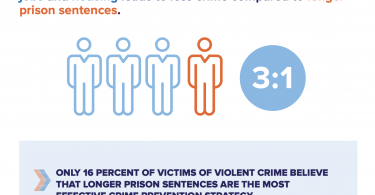
Victims surveyed preferred investments in mental health and drug treatments by a three-to-one margin over incarceration.

-- Three in four victims believed that prisons either make inmates better at committing crimes or have no impact at all. Only a small minority believes that prisons rehabilitate people.

When asked about California’s rates of incarceration, 36 percent of the victims surveyed said that we send “too many” people to prison, 33 percent said, “too few.”

-- The victims wanted a focus on supervised probation and rehabilitation by a two-to-one margin over prisons and jails (50 percent to 23 percent)

– 65 percent of the victims favored realignment, Gov. Jerry Brown’s AB109 program of sending low-level felons to county jail instead of state prison, and 24 percent opposed realignment.


A SNAPSHOT OF CRIME VICTIMS

“These findings will surprise people,” said David Binder, head of David Binder Research. His firm conducted the study in April 2013 with 2,600 Californians that matched the state’s demographics and geographies according to the 2010 Census.

According to Binder, the full survey was conducted with the 500 respondents who identified as crime victims. “We found that a small portion of the population–mostly young men of color—experiences the lion’s share of crime, whereas a larger majority experience none at all.”

“This report turns on its head the notion that victims only care about tough-on-crime sentences,” said Lenore Anderson, Director of Californians for Safety and Justice. Anderson said that crime victims want leaders to be “smart on crime. They believe we send too many people to prison, and they want more investment in education, mental health and drug treatment, supervised probation, and rehabilitation. In that way, their views very much align with overall public opinion, despite victims’ unique and often tragic experiences with crime.”


WHO HAS THE RIGHT TO SPEAK FOR VICTIMS & SURVIVORS?

Indeed, the survey’s results fly in the face of the points of view expressed by traditional crime victims advocacy organizations like Crime Victims United of California that, for the last 30 years, have been among the state’s most powerful lobbying forces. By aligning themselves politically and fiscally with the California Correctional Peace Officers Assn., the union that represents the state’s prison guards, and with the state’s district attorneys associations, these victims rights (VR) groups were able to push for tough-on-crime legislation that, in turn, ushered an interweave of sentencing statutes that has made California’s prison system the second largest in the nation (behind Texas).

These traditional victims groups, however, represent a specific demographic as they are made up largely of white women and some white men.

When the survey came out, Harriet Salarno, director Crime Victims United of California declared herself “outraged” by the report, which she characterized not “a true representation of how victims feel.”

Yet, the new survey indicates—and other research supports—that the majority of crime victims tend to be young African American or Latino males, most of whom reported that they had friends and family who had also been victimized, and the majority of whom do not appear, in general, to share the opinons of Salarno’s group and the rest of the long-established and influential victims of crime movement.


A DIFFERENT DIALOGUE WITH VICTIMS

In addition to measuring attitudes toward crime and punishment, the survey—which bills itself as the first ever survey of California crime victims—also looks at the unmet needs of this crime victims and survivors demographic, and and asks the respondents about their experiences with victim services, and about whether they reported the crime to law enforcement.

In addition, Californians for Safety and Justice has a line-up of crime victims and survivors who work with the organization, one of whom, the widow of a police officer, spoke affectingly to reporters during Thursday morning’s phone-in press conference. [See videos above and below.]

The survey—and the testimonies—are an interesting way of rebooting a conversation about state policy that, heretofore, has been dominated by one very narrow definition of victims.

Let us hope the conversation continues.

Posted in crime and punishment, criminal justice, prison, prison policy, Realignment, Reentry | 1 Comment »

House Votes to Deport “Dreamers,” Tar Pits Cold Case…and More

June 7th, 2013 by Taylor Walker

(Video of Thursday’s House decision getting booed.)


HOUSE PASSES AMENDMENT AGAINST DEFERRED DEPORTATION OF YOUTH

The House of Representatives voted Thursday to block funding for the Obama administration program (similar to the Dream Act) that defers the deportation of young immigrants who are in school or the military. The change came in the form of an amendment added to the Department of Homeland Security spending bill currently being considered by the House.

Huffington Post’s Elise Foley has the story. Here are some clips:

The House voted 224-201 on Thursday to end Department of Homeland Security discretion policies that allow it to delay deportations for young, undocumented immigrants and other people deemed low-priority, effectively demanding the government force out Dreamers who came to the United States as children.

[SNIP]

The King provision was added to the Department of Homeland Security spending bill currently being considered by the House. It’s almost certain to be opposed by the Democratic-run Senate, or by President Barack Obama, who has expanded the use of discretion in deportation proceedings.

[SNIP]

White House Press Secretary Jay Carney issued a statement on Thursday vowing the amendment will not be signed into law. The full statement:

As the Senate prepares to debate bipartisan commonsense immigration reform next week, House Republicans chose to spend today passing an extreme amendment to strip protections from “Dreamers.” These are productive members of society who were brought here as young children, grew up in our communities, and became American in every way but on paper. This amendment, sponsored by Representative Steve King, runs contrary to our most deeply-held values as Americans. It asks law enforcement to treat these Dreamers the same way as they would violent criminals. It’s wrong. It’s not who we are. And it will not become law.


LAPD TAKES A DIVE INTO TAR PITS

A law enforcement task force sent an LAPD diver into the oozing La Brea Tar Pits in search of cold case evidence on Thursday.

LA Times’ Andrew Blankstein has the story (and there’s a short video). Here are some clips:

LAPD Lt. Andrew Neiman would not discuss details of the case and wouldn’t say exactly what authorities were searching for, other than that it involved investigators from a joint task force.

“They requested the assistance of our dive team to search for an item of evidence related to an ongoing homicide investigation,” Neiman said.

[SNIP]

“It’s horrible in there,” Neiman said. “There’s a diver in the water in a full dry suit which is completely enclosed. He’s covered with tar. It’s a mess.”

On the warm afternoon when this story broke, LA Times writers couldn’t resist coming up with an endless series of tweet-puns. Here are our favorites from Andrew Blankstein and Joel Rubin:

Joel Rubin ‏(@joelrubin)
.@anblanx Sources tell me it’s a homicide from the Ice Age – a very cold case.

Andrew Blankstein (‏@anblanx)
Cold Case-La Brea Tar Pits @joelrubin: @RobertFaturechi says they are trying to find who killed the dinosaurs. #VeryColdCase #LAPD #FBI


RECOMMENDED READING: FRESH JOURNALISM IN SB

A promising new Santa Barbara investigative and narrative non-profit news site, Mission & State, launched Thursday. M&S has some big journalistic talent behind it, including Joe Donnelly, the former deputy editor of LA Weekly and the founding publisher and co-editor of the quarterly reader Slake: Los Angeles.

They have a page full of interesting articles already up, like this one on Santa Barbara County Main Jail’s problematic releasing of inmates in the middle of the night. Here’s a clip:

There were 8,602 people released from county jail between January and April, according to Santa Barbara County Main Jail Custody Lieutenant Tim McWilliams. Approximately 2,508 people were released between 11 p.m. and 6 a.m., about 20 per day. While the jail provides bus vouchers, Santa Barbara Metropolitan Transit District buses generally don’t run between 11 p.m. and 5 a.m., and the bus serving the section of Calle Real adjacent to the jail doesn’t run between 5 p.m. and 8 a.m.

Pressure to release inmates early is coming from two sides—court-ordered caps on the county jail population and AB 109, the state-mandated prison realignment that diverts low-level criminals from state prisons to local jurisdictions. The average daily population has increased from 887 in 2011 to 1,009 as of March 2013 partially because of the realignment, according to Lt. McWilliams.

Posted in immigration, journalism, LAPD, Uncategorized | 1 Comment »

Issues with DCFS Stopping Family Services, Voluntary Isolation, and a SCOTUS DNA Swabbing Update

June 6th, 2013 by Taylor Walker

(Scroll down to the second section for the corresponding story.)


FOSTER CARE SERVICE PROVIDERS PUT THE HEAT ON DCFS

A community meeting was held in South LA last week to discuss the ramifications of the decision by the Department of Child and Family Services (DCFS) to drop what are known as “family preservation services” meant to keep kids out of the foster care system while providing troubled families help through various programs that allow them to get control of their lives while keeping kids safe.

Kelly Vassar has the story for Chronicle of Social Change. Here are some clips:

The coalition, angered by recent cuts of $14 million in cuts to family preservation services set to take effect in July, addressed three primary issues with the DCFS’ policies in SPA 6: detention strategies, dismantling the safety net, and the dismantling of partnerships that had been developed during a county-wide effort to bring down the numbers of children entering foster care.

“At our last snap shot, which was through April, we had 27,188 children under our courts’ jurisdiction,” stated Judge Nash, while reading from a report for the county’s judges. “Are there any services that will allow the child to safely remain in the home? We must force DCFS to answer this question in each and every case.”

[SNIP]

The $14 million cut to the family preservation fund for high-risk DCFS families also concerns the SPA 6 coalition, because reduced funding for family prevention strategies means the number of child detentions in South L.A. might escalate.

Indeed, as Nash pointed out, it already has.

David Green, president of the local 721 Service Employees International Union (SEIU), discussed ways to best serve the children of South L.A., he observed the “detain first, ask questions later mentality” was the not the best way to move forward.

Proponents of family preservation policies argue that reuniting families is a much more suitable priority than foster care, considering the poor life outcomes experienced by many foster children.

Obviously, family reunification requires rigorous risk assessment. We don’t want more dead kids at the hands of their families. Nor do we want more kids yanked away from parents that could’ve been helped to nurture their children. (And we don’t want them sent to frightening places like Teens Happy Homes, for that matter.)


“JUVENILE IN-JUSTICE” PHOTOGRAPHER’S 24 HOURS IN SOLITARY

Juvenile In-Justice Project photographer and advocate Richard Ross was given the opportunity to spend a day in an isolation cell at a juvenile detention facility last month. He documented his stay with a digital camera that snapped a photo every seven seconds during his twenty-four hour voluntary solitary confinement.

Wired’s Jakob Schiller has the story and photos. Here are some clips:

His incarceration started at 4:30 p.m. on May 3 and lasted until 5:00 p.m. the following day. During the entire time he had a digital camera and an intervalometer set up in the corner of the cell that took a picture every seven seconds as a way to record his stay.

Ross chose 24 hours because that’s the typical amount of time a juvenile offender spends in isolation at the facility when they’re first admitted. It’s not punishment for some aggressive or egregious behavior, just a matter of procedure while the bureaucracy “evaluates” them. Sometimes children are put in isolation because they are low-level offenders and should not be housed with the more serious offenders in the general population. Isolation can also be used for disciplinary action, however, and Ross has interviewed many kids who have spent weeks alone.

It was unbelievably dehumanizing [in the cell], and I’m an adult and I knew that I had 24 hours,” he says. “Then you have these kids who are used to sleeping in their beds, some of whom have never been away from home.”

[SNIP]

“Humane” would not be how Ross described his experience in the cell. Instead, he says it was cold and designed to take away any sense of control. There was no clock in the room and someone else decided when the lights were on or off. The food was predictably terrible, the bed was unforgiving, and the only thing he was allowed to read was the Bible. To stay sane he sang “Ain’t No Mountain High Enough” because it reminded him of his wife.

As difficult as the experience was for Ross, he had it easy. It was on his terms. He knew when he was getting out. He had a nice hotel and dinner to go back to. He spoke with many kids who were scheduled for 24 hours but spent many days. One child in California had spent eight weeks.


SCOTUS UPDATE: BOTH SIDES MISSED THE BOTTOM LINE ON DNA SWABBING AND 4TH AMENDMENT

In a delightfully smart essay for Slate, law professor Barry Friedman explains why both the majority and the dissenting justices are wrong about Maryland v. King, Monday’s ruling on the constitutionality of DNA swabbing upon arrest for serious crimes.

Here’s an unusually large clip (and we hope Slate will forgive us), but we wanted to show you how great Friedman’s reasoning is (and definitely go read the whole thing):

What the justices seem to see only through a glass darkly is that there are two very different kinds of searches, reflecting two different kinds of policing. There are investigative searches, and there are regulatory searches. The first kind are what you see on television, like on The Closer when Brenda Leigh Johnson tries to catch a bad guy who has committed or is about to commit a crime. The second kind includes airport security or drunk driving roadblocks—or even searching arrested people for weapons. These searches aim not to catch criminals, but to deter bad things from happening in the first place. Sure, we want to find the person getting on a plane with a gun. But the real reason for airport security is to deter people from bringing weapons to airports in the first place.

The categories matter because until you see them you can’t understand what the Fourth Amendment’s protection against unreasonable search and seizure offers in each situation. Justice Scalia was right that the Fourth Amendment is categorical in requiring that the police must have a good reason before conducting investigative searches. These searches target a specific person for a specific crime, and before the government can single you out from the crowd for its special, loving attention, it has to have reason to believe you deserve to be the lucky winner. That’s probable cause.

If you think about it for all of a nanosecond, though, it makes zero sense to talk about “probable cause” as a protection against regulatory, deterrent searches. We don’t have any reason to think anyone in the airport security line did anything wrong. But does that mean airport security is unconstitutional? Surely not!

The Constitution does offer protection from invalid regulatory searches, though, in two ways. The first is generality: Search everyone, and there is a good chance the courts should uphold it. If Congress decided that everyone in the country, members of Congress included, should be in the DNA databank, lawmakers are more likely to have a good reason than if they only go after a politically vulnerable group like people who are arrested. (And yes, the chance of universal DNA collection actually getting adopted by Congress resembles that of the proverbial snowball surviving in Hades, demonstrating how general applicability is a good political check on government intrusiveness.)

The second protection is “cause,” but of a specific and heightened sort: The rule should be that the government must have a really, really good reason to subject a particular group to a regulatory search—for example to collect DNA from arrestees rather than from everyone.

Posted in DCFS, DNA, Foster Care, juvenile justice, mental health, Supreme Court | No Comments »

Marijuana Arrests by Race…..Mike Feuer Picks All Star Transition Team… and the DWP’s Brian D’Arcy Sends His Love

June 5th, 2013 by Celeste Fremon


(click to enlarge)


NEW REPORT SHOWS CRAZY RACIAL DISPARITIES IN ARRESTS FOR MARIJUANA POSSESSION

Dylan Matthews of the Washington Post’s Wonkblog reviews the ACLU’s very comprehensive report on the black/whire marijuana arrest discrepancy.

The results are startling.

Overall, over the last decade, blacks and whites use marijuana at around the same rates, with blacks edging out whites by a few percentage points, except among the 18-25 year olds, where the ratio flips and young whites smoke a few percentage points more weed than young blacks.

It likely won’t be a surprise for most of you to find out that blacks are arrested for marijuana possession more often than whites, despite the similar usage numbers of the two racial groups.

But how much more often? Take a look.

The ACLU report (and the diagrams at WaPo) also looked at cities and counties that had the greatest descrepancy. (Yes, in LA County the ratio is out of whack, but it’s nothing when compared to, say, Cook County, IL or New York, NY, or Clark County, NV.

Click here to see the rest of WaPo’s startling charts and here for the underlying ACLU report.

The New York Times’ Ian Urbina also reports well on the ACLU report. Here are some clips from Urbina’s story:

Black Americans were nearly four times as likely as whites to be arrested on charges of marijuana possession in 2010, even though the two groups used the drug at similar rates, according to new federal data.

This disparity had grown steadily from a decade before, and in some states, including Iowa, Minnesota and Illinois, blacks were around eight times as likely to be arrested.

During the same period, public attitudes toward marijuana softened and a number of states decriminalized its use. But about half of all drug arrests in 2011 were on marijuana-related charges, roughly the same portion as in 2010.

Advocates for the legalization of marijuana have criticized the Obama administration for having vocally opposed state legalization efforts and for taking a more aggressive approach than the Bush administration in closing medical marijuana dispensaries and prosecuting their owners in some states, especially Montana and California.

Time to legalize, people!


CITY ATTORNEY-ELECT MIKE FEUER PICKS AN ALLSTAR TRANSITION TEAM

On Tuesday, newly-elected City Attorney-to-be Mike Feuer announced his transition team. It’s a long, varied and very impressive list (which you can read in its entirety here: City Attorney-Elect Mike Feuer’s Transition Team)

Here are some quick examples of the kind of folks who’re on the team (three of whom were part of the Citizens Commission on Jails Violence):

Lourdes Baird, who served as U.S. District Court Judge and U.S. Attorney for the Central District of California (and was on the Jails Commission).
Erwin Chemerinsky, who is the Dean and Distinguished Professor of Law at University of California, Irvine School of Law and formerly served as Chair of the Elected Los Angeles City Charter Reform Commission.
Miriam Krinsky, The executive director of the Jails Commission, who is also a lecturer at the UCLA School of Public Policy and is the former President of the Los Angeles County Bar and former President of the Los Angeles City Ethics Commission.
Stewart Kwoh, who is the founding President and Executive Director of the Asian Pacific American Legal Center and is a past President of the Los Angeles City Human Relations Commission.
Jorja Leap is a Professor at the UCLA Luskin School of Public Affairs and also serves as the Director of the UCLA Health and Social Justice Partnership; known for her research and writing focuses on gangs, community health and social justice
Carlos Moreno, (another Jails Commission member) who served as California Supreme Court Justice and Deputy Los Angeles City Attorney.
Ira Reiner, who served as Los Angeles City Attorney and Los Angeles County District Attorney.
Connie Rice, who co-founded the Advancement Project and was the Co-Director of the Los Angeles office of the NAACP Legal Defense Fund.
John Van de Kamp, who served as California Attorney General, Los Angeles County District Attorney and Federal Public Defender.


THE DWP’S BRIAN D’ARCY TALKS TO LA TIMES’ PATT MORRISON ABOUT WHY HE FLIPPED OFF LA WEEKLY’S GENE MADDAUS AND OTHER WAYS THAT EVERYONE ELSE IS WRONG & HE’S RIGHT

Interviews with utilities union guys aren’t usually part of our mission, but this one in which the stellar Patt Morrison corrals and questions DWP union powerbroker, Brian D’Arcy, is…. irresistible.

Here are two clips—one from the very beginning of the interview and one from the very end—to give you an idea of why you need to read the whole fabulous thing:

Sometimes L.A. politics seem like patty-cake, but when Brian D’Arcy gets in the game, the game gets serious. He’s a third-generation union man, and the union he heads, the International Brotherhood of Electrical Workers Local 18, is the DWP’s biggest and a huge player at City Hall. In some quarters, the IBEW’s DWP contracts — worth as much as six figures — are a symbol of overweening union power. The political action committee he co-chairs and the IBEW supports, Working Californians, cobbled together the largest amount spent on behalf of Wendy Greuel’s mayoral bid, about $4 million. The IBEW isn’t crying “uncle.” D’Arcy has zest for the fray and one gear: forward.

First things first: John Shallman, Wendy Greuel’s campaign consultant, has said your union’s support became “damaging to the campaign.”

That doesn’t surprise me — the guy who’s directly responsible for the tone-deaf campaign she ran. What else would he say? The hit on her was, somehow, she was the DWP candidate. [Voters] merged the employer and the union. It could have been deflected. They never did, and they ran a crappy campaign. The larger message is that some people will do anything to get elected — the same people [Garcetti's camp] who wanted our endorsement all of a sudden turn it into a pejorative.

Why the antipathy toward public unions like yours?

If you sell the idea that if others are dragged down then somehow you are elevated — I find it offensive. Does it help somebody if my members make less? They are 22% of the [DWP] budget. DWP union workers could take zero [pay] and it isn’t going to fix the city budget. The right-wing apparatchik has decided workers are the enemy, and we represent them….

And our personal favorite of all the Q & A exchanges…

Did you really flip off LA Weekly writer Gene Maddaus from your office window?

[His expression says, "Of course."] My entire staff is out walking precincts, I’m here with the [staff] women downstairs, and he scared them. On most days I’d pick up my bat and walk downstairs and say, “Get out of here,” but that’s what he wanted. My assistant [told him], “You have to leave, this is not a public building.” He refused, like a jackass, so she called the police. I did flip him off — he was jumping up and down like my Labradoodle at the back door.

Posted in City Attorney, elections, Marijuana laws, race, racial justice | No Comments »

Dorner Report Leak Reveals Firing of Rogue ex-LAPD Officer Found “Justified”

June 4th, 2013 by Celeste Fremon


The findings of the reexamination of the firing of former LAPD officer Christopher Dorner
are not expected out until later this month, but civil rights attorney Connie Rice told AP reporter, Tami Abdollah, that the report has deemed to the firing of Dorner to be justifiable.

Abdollah, who broke the story late Tuesday afternoon, writes that Rice said that the report found “no basis for allegations of racism and bias that Dorner made in a manifesto vowing revenge on his former colleagues and their families.”

Rice went on to reveal that, according to the report, Dorner had a record of “embellishing stories, misperceiving slights and making bogus complaints against his fellow officers” and was “nearly incomprehensible during the hearing over his firing.” It has been reported earlier, that Dorner made his report of brutality by his training officer belatedly and only after he learned that she was giving him a negative performance review.

While Rice was not part of the re-examination process, she was allowed to review the findings at length.

Here’s a clip from Abdollah’s article:

“The firing was justified and his allegations are completely unfounded,” said Rice, who spent two weeks reviewing the findings. “This guy needed to go. And the question was, even if he needed to go, did the LAPD get rid of him in a way that was illegitimate? And the answer for me was no.”

[BIG SNIP]

The roughly 40-page report relied on about 80 documents, including 900 pages of transcripts from the Board of Rights hearing that concluded Dorner lied when he claimed a training officer had brutally kicked a mentally ill man during an arrest. He was fired for making a false report and a Los Angeles Superior Court judge sided with the department during a 2010 appeal.

Dorner is believed to have killed two law enforcement officers and the daughter and fiance of an LAPD officer (who had acted as his lawyer in the proceedings that led to his termination), before being cornered by San Bernardino Sheriff’s Deputies in a mountain cabin where, after a deadly firefight, he is reported to have shot and killed himself while the cabin burned around him.

While Dorner was on the run, LAPD Chief Charlie Beck ordered that the ex-cop’s case be reopened and re-examined. The leaked report is the result of that reexamination.

Representatives from LAPD media relations, who have gotten a zillion calls, say that as far as they know, it’s just in the process being reviewed by such persons as Chief Beck, and other higher-ups, so that the paint may not yet be dry on the thing, so to speak. But it’s clear that they aren’t 100 percent sure either.

Posted in LAPD, law enforcement | 3 Comments »

SCOTUS Sez OK to DNA Swab at Arrest, Scalia Protests….Crime in Schools Down, Bullying Not….Juvie Justice Reform in Nebraska

June 4th, 2013 by Celeste Fremon


In a 5/4 decision on Monday, the Supreme Court ruled that law enforcement officers
can take one’s DNA if one is arrested for a serious offense, a decision that elicited howls of protest from certain quarters. However, the primary howl of dissent came, not from the liberal justices or advocacy organizations, but from Justice Antonin Scalia.

(For the record, all three liberal-leaning female justices voted in the minority block. Breyer voted with the majority.)

And, be advised, Scalia didn’t just write a dissent, he insisted on reading it aloud—with much drama, lots of well crafted and colorful verbiage, and general passion.

Here’s a clip from Joan Biskupic’s story for Reuters on Scalia’s dissent :

Writing for the minority, Scalia was joined by three liberal justices. But his 11-minute oral statement – a departure from the usual practice in which only the majority opinion is read aloud – was classic Scalia. It relied on his “originalist” interpretation of the U.S. Constitution and employed forceful rhetoric as clever as it was heated. He declared that the majority’s rationale “taxes the credulity of the credulous.” An adroit writer, he sprinkled in words from decidedly non-legal contexts, such as “hash” and “genuflecting” and mixed in references to American revolutionary Patrick Henry and the biblical Leviathan.

The latter came at a moment of high drama in the white marble courtroom when Scalia concluded: “It may be wise, as the court obviously believes, to make the Leviathan all-seeing, so that he may protect us all the better. But the proud men who wrote the charter of our liberties would not have been so eager to open their mouths for royal inspection. I dissent.”

Only a few times each term does a justice read a dissenting opinion aloud. It typically happens in a close, hard-fought case, when a dissenter is especially angry and wants to call attention to a decision he or she believes especially unwise…..

And here’s a clip from Adam Liptak’s more general story on the decision for the NY Times:

The police may take DNA samples from people arrested in connection with serious crimes, the Supreme Court ruled on Monday in a 5-to-4 decision.

The federal government and 28 states authorize the practice, and law enforcement officials say it is a valuable tool for investigating unsolved crimes. But the court said the testing was justified by a different reason: to identify the suspect in custody.

“When officers make an arrest supported by probable cause to hold for a serious offense and they bring the suspect to the station to be detained in custody,” Justice Anthony M. Kennedy wrote for the majority, “taking and analyzing a cheek swab of the arrestee’s DNA is, like fingerprinting and photographing, a legitimate police booking procedure that is reasonable under the Fourth Amendment.”

Justice Antonin Scalia summarized his dissent from the bench, a rare move signaling deep disagreement. He accused the majority of an unsuccessful sleight of hand, one that “taxes the credulity of the credulous.” The point of DNA testing as it is actually practiced, he said, is to solve cold cases, not to identify the suspect in custody.

But the Fourth Amendment forbids searches without reasonable suspicion to gather evidence about an unrelated crime, he said, a point the majority did not dispute….

Scalia’s dead right, of course. And, although WLA is agnostic on the issue in general, we too are bugged by the legal underpinnings of this ruling. Given how long it typically takes to get DNA results back, the majority’s rationale is a major stretch for the average felony arrest. And we don’t like it that the majority used this squishy and not-terribly supportable line of reasoning as a way to get around any Fourth Amendment problems.

The good news is that the ruling for swabbing will help solve more crimes. And, with luck, fewer innocent people will be convicted. But, it sets a weird precedent.

So, yes, go Antonin! Thank you for not going into your minority status quietly.

PS: For this one brief and shining moment, the ACLU agrees with Scalia, and name checks him in their post ruling statement.


NEW REPORT SHOWS CRIME AND VIOLENCE IN SCHOOLS ARE DOWN SINCE 1992, BUT BULLYING HAS REMAINED DISHEARTENINGLY STEADY

Last Friday, the Bureau of Justice Statistics released a new report that looks at violence and safety in schools and the numbers tell a complicated story.

For example, victimization of students at school by theft and violent crime dropped precipitously from 1993 to 2011 with a high in ’93 of around 165 students per thousand, to only around 35 students per 1000 in 2010.

When it comes to homicides in schools, the numbers were high in 1992, and then again in the 2006-07 school year, but steadily declined after that.

The number of kids who’d brought a weapon to school in the last 30 days has gone down quite a bit since the early 1990s. But still, 5 percent of students have brought a weapon to campus at least one day in the last 30 days (down from more than 12 percent in 1993.)

Yet, while violence and crime in schools dropped, bullying did not.

In 2011, 28 percent of kids between the ages of 12 to 18 reported being bullied at school, with the numbers slightly higher for girls at 31.4 percent, than for boys, at 24.5 percent.

There has been, as one might guess, much more in the way of safety measures put into place since the early 1990s (security cameras, restricted access to campus during school hours, etc.). And yet, while the percentage of schools with security guards, or school police, has remained about the same since 2005 (after rising a bit in 2007) the number of armed personnel on campus has dropped.

Take a look at the numbers and charts for yourself.


NEBRASKA TAKES BIG STEP TOWARD JUVENILE JUSTICE REFORM

Although, nationally, juvenile incarceration is dropping, Nebraska had an 8 percent rise between 1997 and 2010, according to the Annie E. Casey Foundation analysis released this year.

But now the state has taken a significant step in the direction of turning that trend around, according to a story by James Swift of the Juvenile Justice Exchange.

Nebraska’s juvenile justice system will have a new focus on rehabilitation thanks to a bill signed into law Wednesday by Gov. Dave Heineman.

Legislative Bill 561 (LB561), introduced by state Sen. Brad Ashford (I-Omaha), will allocate $14.5 million towards several new services, as well as a grant program to aid counties in treating juvenile offenders.

The bill decreases the state’s dependency on juvenile detention programming, placing a greater emphasis on youth rehabilitation. The new measure also transfers juvenile offender supervision over to Nebraska’s Office of Probation Administration, which is subordinate to the state’s Supreme Court. Prior to the legislation taking effect, Nebraska’s juvenile populations were instead overseen by the state’s Department of Health and Human Services.

Posted in Civil Liberties, Civil Rights, Education, Human rights, juvenile justice, law enforcement, Supreme Court, Youth at Risk, Zero Tolerance and School Discipline | No Comments »

Deputy Says He Wore FBI Wire to Probe LASD Political $$ Raising Scheme

June 3rd, 2013 by Celeste Fremon


This weekend brought yet another account of reportedly questionable actions by higher-ups
in the Los Angeles Sheriff’s Department.

In this newest case, an LASD deputy named Edwin Tamayo wore a wire for the FBI last month in a reported attempt to get the goods on a department captain, who—according to Tamayo—was strong-arming subordinates to sell tickets to a 2011 fundraiser for Carmen Trutanich’s failed campaign to become LA’s district attorney. All this, said Tamayo, was done at the behest of those far higher on the department food chain, going ultimately up to Sheriff Baca.

To bolster his novel-esque tale of double-agentry (complete with a clandestine meet-up with the feds at the local iHop), Tamayo provided the LA Times with texts from his fed handlers who apparently coached him in real time through his wire-wearing outing.

Here’s a clip from the story by Robert Faturechi, Jack Leonard and Andrew Blankstein:

Tamayo said he told federal agents that the captain instructed about a dozen sheriff’s employees to sell 10 fundraiser tickets each, saying the order came down through the chain of command from Sheriff Lee Baca — an allegation his spokesman denied. It is unclear what specific law such conduct might violate.

Tamayo provided The Times with a text message exchange he said he had with an FBI agent during the secret recording. The messages show Tamayo being coached on how to use his recording equipment and what to say.

In one text, Tamayo is instructed to mention Trutanich and to bring up “the difference between the truth and staying loyal.” Do so “at your own pace,” he was advised.

“You’re doing fine…. End well so you can stay in touch,” the messages continue. “OK when you have a chance turn everything off, we’ll meet you at ihop.”

In addition to Tamayo’s wearing-a-wire story (parts of which the reporters were unable to verify), the LA Times article contains other accounts of possible questionable donations that certainly deserve further investigation.

For instance, they said Tamayo told them that his captain ordered him to “routinely pick up donations for the agency — sometimes in what appeared to be envelopes full of cash — from wealthy residents in the area.”

What exactly is meant by “donations for the agency.” And cash? In what dollar amounts? And how was it reportedly accounted for?

And then there is this:

Paul Tanaka, whom Baca recently ousted as the department’s second in command, contends that the sheriff has engaged in improper campaigning in the past. He said that in about 2004, when Baca was campaigning for a sales tax increase to fund law enforcement, he ordered former Undersheriff Larry Waldie to go to tow companies that had sheriff’s contracts and pressure them to donate.

“I don’t remember the exact words but something to the effect of ‘We make them a lot of money because of the tow contracts with us so they should contribute to this campaign,’” said Tanaka, who is considering running against Baca next year. Tanaka, who has himself been criticized for accepting political donations from sheriff’s employees, called Baca’s request improper: “The tow companies are not obligated to part with their hard-earned money.”

Steve Whitmore denied that Baca gave the order for the fundraising that Tamayo describes.. Whitmore also told the Times that “any claim that Baca ordered sheriff’s employees to raise money for the Trutanich event was ‘absurd.’”

We too have heard reports of those at the highest level of the department allegedly leaning on a person or persons, whose company has a lucrative contract with the LASD, to donate money to pet political campaigns.

(We’ll likely have more on this to come.)

In the meantime, we can tell you that those who talked to us about such matters, have also talked extensively to the FBI.

Posted in FBI, LASD, Sheriff Lee Baca | 32 Comments »

Executions in CA Still on Pause, Virginia Gives Vote to Some After Prison…and More on DOJ/Media Spying

June 3rd, 2013 by Taylor Walker

APPELLATE COURT KEEPS CA EXECUTIONS ON HOLD

The CA stay on executions will remain in place after a three-judge panel of the lst District Court of Appeal in San Francisco upheld a lower court ruling that the CDCR has failed to comply with procedural law when establishing lethal injection regulations.

The Sacramento Bee’s Denny Walsh has the story. Here’s a clip explaining what might come next in the process:

Steve Mayer, lead appellate counsel for the condemned inmates challenging the regulations, estimated it will take “at least nine months to a year, and maybe longer,” if the state decides to craft revised regulations and jump through the rule-making hoops set out in the Administrative Procedure Act.

On the other hand, if the Brown administration petitions the California Supreme Court for review, Mayer said, “we are looking at anywhere from two to four years” before the court issues an opinion. It depends on how long it takes the seven-member court “to get four justices to sign off on something.”

Mayer said the case is unique in that “the CDCR did such a bad job. There wasn’t a single step in the process they did right, so it’s not surprising there is no case law right on point.”


VA RESTORES VOTING RIGHTS TO DISENFRANCHISED

Virginia Gov. Bob McDonnell announced that he would automatically restore the voting rights of disenfranchised non-violent offenders who meet certain criteria–a big step in the right direction for a state where over 7% of the adult population is disenfranchised.

In California, voting rights are restored automatically once a person is released from prison and discharged from parole (probationers can vote). You can look up the voting laws for ex-offenders in the rest of the states here.

Here’s a clip from an NY Times editorial on restoring the voting rights of the disenfranchised:

Governor McDonnell’s order, which could cover more than 100,000 people, reflects a growing awareness that disenfranchisement serves no rehabilitative purpose — and may, in fact, contribute to further criminal behavior by forcing former offenders to the margins of society.

In all, nearly six million Americans — about 2.5 percent of the voting-age population — are barred from voting by a confusing patchwork of state laws that strip convicted felons of the right to vote, often temporarily, but sometimes for life. Nearly two dozen states have softened their disenfranchisement policies since the late 1990s, with several states repealing or scaling back lifetime bans.


ATTORNEY GENERAL HOLDER PLEDGES CHANGES TO GUIDELINES ON INVESTIGATING JOURNALISTS

To address the controversy over recent outrageous cases of spying on journalists by the Department of Justice, Attorney General Eric Holder assured media editors in a private meeting that the administration would push for a federal “media shield ban” to protect journalists from unreasonable and invasive subpoenas. (Thanks, Eric. Nice to know that you plan to protect us from…um, you.)

Wall Street Journal’s Devlin Barrett has the story. Here are some clips:

Mr. Holder and aides said they were open to changing the guidelines the department uses to broaden the circle of officials who have to agree that subpoenas are justified as a last resort. The officials also said they were open to annual reviews with news organizations, according to a Wall Street Journal editor who attended the meeting.

The department’s guidelines haven’t been revised in more than two decades, and the officials said they needed to be updated to deal with significant changes in news gathering that have occurred in that time.

[SNIP]

Mr. Holder and the other Justice officials told the editors they were committed to protecting the role journalists play in reporting on the government. Mr. Holder and his top aide, Deputy Attorney General James Cole, have been criticized by press organizations and First Amendment advocates for what have been called overly broad seizures of reporters’ phone records, as well as a search warrant to read one reporter’s personal emails.

Mr. Holder and his aides also said the administration would throw its weight behind an effort to pass a federal media shield law, though such legislation would likely have little impact on the two cases at the center of the current controversy, according to the editor.


EDITOR’S NOTE: THE NEW YORK TIMES & OTHER MEDIA OUTLETS BOYCOTTED THE HOLDER MEETING

And with good reason, we think.

Here’s a clip from the Huffington Post’s story about why NYT’s Executive Editor Jill Abramson decided the paper wasn’t going.

Jill Abramson spoke out on Sunday about the New York Times’ decision to boycott Eric Holder’s meeting with news organizations, saying that the newspaper is worried that “the process of news gathering is being criminalized.”

Attorney General Holder recently met with outlets to review the DOJ’s guidelines for investigating journalists. The meeting, however, provoked even more controversy when it was announced that it would be off-the-record, prompting the Times among others to abstain from attending.

“To have this private meeting with the attorney general and not be able to share anything about it with our readers didn’t seem to have a point to me,” Abramson told Bob Schieffer on Sunday’s “Face the Nation.” “The Times and our readers are quite concerned about the six active criticism leak cases that the Obama administration has pursued. That’s more than all the other administrations combined. And, you know, we are concerned that the process of news gathering is being criminalized.”

Later, she added that it was important to remember that the public is probably less invested in the case than journalists, and more preoccupied with other issues like the state of the economy and the cost of health care.

The AP and the Huffington Post were among the other outlets that declined to attend once it was announced that the meeting was off-the-record—an extraordinarily tone-deaf decision on the part of the the administration.

At the meeting Holder reportedly announced to those assembled that, regarding the whole spying-on-media thing: “I get it.”

And yet the meeting remained off-the-record— although finally Holder agreed that journalists could report “in general” on what was discussed.

This leads many of us to believe that, although Holder is trying mightily to diffuse the media’s anger toward him and the DOJ, he still doesn’t, in fact, “get it.”

Posted in Death Penalty, Government, journalism | No Comments »

« Previous Entries Next Entries »