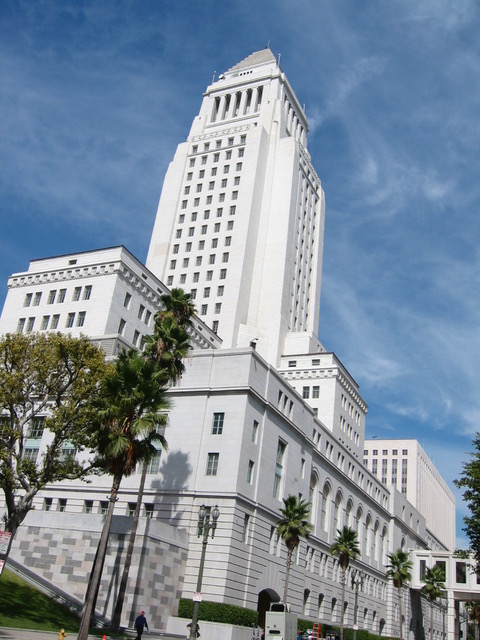
With the scheduled July 27 demise of the Sunday LA Times Book Review looming ever closer, this past Monday morning former LA Times Book Review editor, Steve Wasserman, and three other former editors of the Book Review section—Sonja Bolle, Jack Miles, and Digby Diehl—wrote an open letter protesting the loss and urging people to join in the protest. They sent the thing to a list of publications ranging from our local blogs to the New York Times. LA Observed printed it first, followed by a short piece in Editor & Publisher. There was a mention in Publisher’s Weekly. This morning, Inside Higher Ed ran an impassioned column sparked by the letter. And when I last checked, the cultural reporter at the Lehr News Hour expressed an interest in running a small story on the issue.
You can find a copy of the letter here.
I spoke to Wasserman a few hours after it first appeared to find out what effect, if any, he hoped the letter would have. “Frankly, I’m not all that hopeful,” he said. “We released it because we felt that, either singly or collectively, that it would be a mistake to let the moment pass. But they’ve cut more than a third of the Book Review staff already,” he added. “Only three people are left.”
So is there nothing that can be done to save the Sunday Book Review (and Opinion)? It’s true, Sam Zell sure isn’t much of a listener, so maybe it is hopeless.
Then again, maybe not. Can’t hurt to try.
But first a few facts:
In its 33-year history, the LA Times Sunday Book Review has admittedly never turned a profit. But neither does the business section or sports section (as Wasserman reminded me). The idea has always been that the high interest sections of the paper such as sports, business, books and opinion are part of the package that draws readers.
And although the ad department can’t sell directly against those pages, the paper’s big advertisers are counting on the fact that, when we get our papers on Sunday, after we pull out our favorite sections, we will likely wander through the Macy’s and the Best Buy ads. Then we’ll look at that nice glossy insert hawking the latest Target specials.
Curious as to where Los Angeles stands as a book buying market, yesterday I called the people at Nielson Bookscan, which is the primary collector of book sales data in the US. They told me that, in 2007, Los Angeles was second only to New York (with which it often trades places). Last year, New York had 8.5 percent of national book sales. Los Angeles followed with 5.5 percent. San Francisco was third with 3.7, followed by Chicago, 3.5, and Washington D.C. had 3.4.
Also, just to remind you, the LA Times Festival of Books, which draws 140,000 people to the UCLA campus each year, is the largest book fair in the nation.
So, yeah, LA residents are interested in books, a fact we demonstrate with our feet and with our wallets. So why doesn’t ZellCo understand that? Forget the cultural damage to Los Angeles that cutting the Book Review both signals and actually accomplishes, it’s a bad business decision. A pullout Books and Opinion section gives many of us an excuse to subscribe to the paper. Without it, our reasons for that expenditure are rapidly vanishing.
“This is very, very painful,” said Wasserman. “My real fear is that this isn’t about news papers at all, it’s about real estate,” he added morosely. “This is about Sam Zell waiting until it’s the right time to sell the property at 1st and Spring street, and making a killing.”
Probably so. Yet in the short term, it can’t hurt to write letters. We have nothing to lose. (At this point, we’ve pretty much already lost it.)
But it’s worth trying to get back. So write Editor-in-Chief Russ Stanton at the LA Times. (Russ.Stanton@LATimes.com) And firmly ask him to reinstate the Book Review and Opinion.
It’s good business, and it’s good for Los Angeles.
But, tell Stanton, hey, don’t believe us. Call the folks who make the advertising decisions at Target and Macy’s and ask them what sections they’d like to see stay in the LA Times in order to make their ad dollars worth spending over at Spring Street.
The late, great Molly Ivins expressed the whole thing rather succinctly two years ago: “I don’t so much mind that newspapers are dying — it’s watching them commit suicide that pisses me off.”