Thursday, May 17, 2012
street news, views and stories of justice and injustice
Follow me on Twitter

Search WitnessLA:

Recent Posts

Categories

Archives

Meta

solitary


Death Penalty Initiative Qualifies, DA Candidates Opine (Badly), LA Thinks About April 30, 1992…& Much More

April 27th, 2012 by Celeste Fremon

by Celeste Fremon and Taylor Walker


While WLA was dark earlier this week,
a few things happened that we wanted to make sure you didn’t miss:

DEATH PENALTY REPEAL WILL BE ON NOVEMBER BALLOT IN CALIFORNIA

First of all, on Monday, the initiative known as the SAFE California Act, officially qualified for the ballot. This means that, in November, Californians will have the opportunity to vote on a measure that would ban the death penalty in the state, in favor of life without the possibility of parole.

The death penalty is alarmingly disproportionately applied to people of color, particularly African Americans.

Jeanne Woodford, who was formerly the head of the California Department of Corrections, and the former warden of San Quentin prison, is one of the ballot measure’s most vocal supporters, and was quoted in the press release announcing the measure’s official approval by California Secretary of State Debra Bowen.

“I oversaw four executions at San Quentin,” said Woodford. “I can tell you as a law enforcement officer with 34 years of experience those executions did not make any one of us safer. What they did do was consume millions of dollars in resources that would be better spent on solving crime. Now, Californians will have a real chance to improve personal safety by replacing the death penalty with life in prison without parole, and directing some of the savings to solving more rape and murder cases.”

The fact that the initiative has qualified in California is eliciting a lot of comment from outside the state.

For example, there is this from the International Business Times by Ashley Portero:

….Studies conducted in multiple states have concluded that carrying out inmate executions is ultimately more expensive than sentencing them to life without parole, further leading capital punishment opponents to question the logic of the system.

California taxpayers alone have spent more than $4 billion on the 13 inmate executions the state has performed since 1978, according to a three-year study published in the Loyola of Los Angeles Law Review last year. The study estimated the costs of capital trials, enhanced security on death row and legal representation for death penalty defendants adds $184 million to California’s budget each year.

Similar studies have been conducted in at least 9 other states since 2000, all of which have concluded imposing the death penalty is exorbitantly more expensive than a life-without-parole sentence. A 2001 report from the National Bureau of Economic Research concluded that capital crime trials place huge and unexpected burdens on country budgets, often leading them to counter those high costs by defunding public projects and increasing taxes….

Also, the Death Penalty Information Fact Sheet has some interesting statistics pertaining to the topic….such as these:

-California had 723 death row inmates as of Jan. 2012 (the second highest, Florida, had 402).

-Over 130 people have been exonerated since the reinstatement of the death penalty in 1973.

-”A 2010 poll by Lake Research Partners found that a clear majority of voters (61%) would choose a punishment other than the death penalty for murder.”

There’s more, so check it out.


THE CANDIDATES FOR LA’S DISTRICT ATTORNEY SPEAK ABOUT THE DEATH PENALTY AND REALIGNMENT…BADLY

The LA Times video-taped five of the candidates for DA speaking on questions that are crucial for any potential LA D.A. to be able to answer coherently. In the videos posted on Wednesday, nearly to a person, the candidates’ answers seemed to indicate a horrifying cluelessness on realignment. On the issue of the death penalty, there’s mostly a lot of pandering and very little reasoned opinion.

Not cheering.

Watch the videos here and then read the LA Times editorial that takes the candidates to task for their inexcusable lack of willingness to say anything that might be actually thought through, fact-based and responsible.

Here’s a clip:

Voters should expect the six candidates for district attorney to have mastered the facts of realignment and to be able to present well-thought-out policies for re-creating the justice system in Los Angeles County and making the reforms stick.

But today, none of the candidates seems completely prepared to grapple with what to do next. Some repeat falsehoods as if they were gospel: Los Angeles County’s jails are overcrowded (false; they are at about half capacity). California’s recidivism rate is 70% (meaningless, without distinguishing between a new criminal offense that should land an offender back behind bars and a technical parole violation, such as failing to report to an agent in time). Realignment puts parolees on our streets unsupervised (a blatant falsehood). State prisoners are being released early under realignment (false). But it’s true that if prosecutors, the courts and the sheriff are not careful, they will release people whom they should keep. And it’s true that under realignment, more jail inmates (as opposed to prison inmates) may be unsupervised upon release.

Alan Jackson has two answers to realignment: repeal it (which is not going to happen, and Jackson knows it) and allow counties to send prisoners out of state instead of seeking alternative treatment and supervision for those who can respond to it. Carmen Trutanich repeats the old saw that “we cannot start crying, ‘The sky is falling.’ ” We know that, but what would he do as D.A. to make realignment work? “This is a terrible mistake,” Jackie Lacey offers somewhat wearily. “But it’s also an opportunity.” Very well, but how will she respond to that opportunity?


JERRY BACKS CARMEN

Did we mention that Governor Jerry Brown announced on Thursday that he would be supporting City Attorney Carmen Trutanich in the upcoming Los Angeles District Attorney’s race? Okay, consider it mentioned.

THREE STRIKES INITIATIVE ALSO CLOSE TO QUALIFYING

An initiative to modify California’s Three Strikes Law is headed for the November ballot with almost twice as many signatures as necessary. SF DA George Gascon (who is also the former Assistant Chief of the LAPD), and LA DA Steve Cooley, have both publicly endorsed the measure which would eliminate the mandatory 25 to life for non-violent and less grievous third strike felonies.

Sacramento Bee’s Torey Van Oot writes:

…Under the proposal, only offenders convicted of a “third strike” felony that is violent or serious would face a minimum sentence of 25 to life in prison. The measure, which is modeled after proposed legislation, would also allow some offenders currently behind bars for a “third strike” that was a minor crime to seek a re-sentencing.

Voters rejected a similar measure, Proposition 66, in 2004.

San Francisco District Attorney George Gascon, who has endorsed the new measure, said in a statement that the initiative “saves California taxpayers money and restores the original intent of the law,” which was approved by voters in 1994, “by focusing on truly dangerous criminals.” A fiscal analysis estimates the measure could reduce prison costs by up to $100 million a year in the future.

Tracy Kaplan for the San Jose Mercury News has a nicely informative piece on the newly ballot-ready initiative, in which she quotes Steve Cooley and others.


CDCR CALLS EMERGENCY MEETING IN ONGOING NEGOTIATIONS WITH HUNGER STRIKER GROUP

Isaac Ontiveros reports for the San Francisco Bay View. (EDITOR’S NOTE: It’s not entirely clear if the meeting is really an “emergency meeting,” or if the “emergency” part is a bit of hyperbole from the Bay View editors.) In any case, here’s the deal:

A little over a month after the California Department of Corrections and Rehabilitation (CDCR) released its “Security Threat Group Prevention, Identification and Management Strategy,” which proposes new gang validation and Security Housing Unit (SHU) step down procedures, the department has called a meeting with members of the mediation team advocating on behalf of SHU and Administrative Segregation (Ad-Seg or ASU) prisoners around the state as well as legislative aides in Sacramento….


20 YEARS AFTER THE LA RIOTS….WHICH WAY LA? DOES A WEEKS WORTH OF PROGRAMS

Warren Olney and his producers have done an unusually good series of programs this week on different aspects of the LA Riots of 1992. You can listen here.


SUPERVISOR RIDLEY THOMAS ORGANIZES A DAY OF DIALOGUE FRIDAY

This is from the press statement:

At 9 a.m. Friday, April 27, 200 civic leaders will return to the First A.M.E., gathering at the FAME Renaissance building at 1968 West Adams Boulevard, to participate in a Day of Dialogue. In small groups, participants will discuss the causes and impacts of the 1992 upheaval, and they will assess what progress has been made and what challenges remain….

I know from talking to various community organizers that this is going to be a very large and interesting event that will be well worth your time if you can get over there.


MAYOR OF UPLAND PLEADS GUILTY TO A BRIBERY CHARGE…

This is from Thursday’s U.S. Attorney’s Office statement:

The former mayor of Upland pleaded guilty today [Thursday] to a federal bribery charge, admitting that he accepted a $5,000 payment in exchange for helping a business obtain a conditional use permit from the city.

John Victor Pomierski, 58, who resigned as mayor last year after he was named in a grand jury indictment, pleaded guilty this morning before United States District Judge Virginia A. Phillips. Pomierski becomes the third defendant to be convicted in relation to a corruption investigation in the city of Upland.

As a result of today’s guilty plea to the bribery charge, Pomierski faces a statutory maximum sentence of 10 years in federal prison. Judge Phillips is scheduled to sentence Pomierski on August 6.

(We don’t usually report on Upland. But we thought that a lot of you might like to know that the feds are on a roll—since they’re also very busy with ever widening investigations closer to home.)


EDITOR’S NOTE: WitnessLA has linked before to the TED talk about justice and injustice by civil rights attorney Bryan Stevenson, founder and executive director of the Equal Justice Initiative.

But, it’s worth listening to again. (And again.)

Stevenson was the dinner speaker on the first night of the symposium I attended in New York, and the 31 experienced and sometimes jaded reporters in the room were utterly riveted

Posted in CDCR, Death Penalty, Los Angeles Times, solitary | 10 Comments »

Solitary Confinement in AZ Extra Cruel & Unusual says ACLU Lawsuit

March 7th, 2012 by Celeste Fremon


On Tuesday, the ACLU filed a class action lawsuit alleging that the Arizona Department of Corrections (ADC)
houses thousands of prisoners in solitary confinement conditions so harsh they violate the Eighth Amendment ban on cruel and unusual punishment.

This is from Tuesday’s statement:

While other states also use solitary confinement, Arizona has added features that seem designed to gratuitously increase suffering. The cells in that state’s supermax Special Management Units (SMUs) were deliberately constructed with no windows to the outside, so prisoners — many of whom have no means of telling the time — become disoriented and confused, not knowing the whether it is day or night. The cells are often illuminated 24 hours a day, making sleep difficult and further contributing to prisoners’ disorientation and mental deterioration.

Some prisoners in solitary spend all but six hours a week alone in their cells. Their only respite occurs when they are taken to a slightly larger windowless cell, with no equipment, for “exercise.” Many prisoners refuse to go, because the cell is so small that it doesn’t allow meaningful exercise, and because prisoners are placed in restraints and strip-searched when going to and returning from the cell. And in a final cruelty, ADC reasons that because prisoners in solitary don’t get much exercise, they don’t need much food — some receive only two meals a day….

…..…“The prison conditions in Arizona are among the worst I’ve ever seen,” said Donald Specter, executive director of the Berkeley, Calif.-based Prison Law Office. “Prisoners have a constitutional right to receive adequate health care, and it is unconscionable for them to be left to suffer and die in the face of neglect and deliberate indifference.”

Arizona has the 6th highest incarceration rate in the nation.

The ACLU was joined in the filing by the Prison Law Office, the Arizona Center for Disability Law, and the law firms Jones Day and Perkins Coie.


LATEST REPORT FROM VERA INSTITUTE SHOWS LESSONS FROM 14 STATES WHO HAVE SENTENCING REFORM, AND INCARCERATION ALTERNATIVES

Here’s a clip from the executive summary:

Most states are facing budget crises, and criminal justice agencies are not exempt. With fewer dollars available, they are challenged to increase public safety while coping with smaller budgets. This report distills lessons from 14 states that passed research-driven sentencing and corrections reform in 2011 and is based on interviews with stakeholders and experts, and the experience of technical assistance staff at the Vera Institute of Justice. It is intended to serve as a guide to policy makers and others interested in pursuing evidence-based justice reform in their jurisdiction.

Legislatures throughout the United States enacted sentencing and corrections policy changes in 2011 that were based on data analysis of their prison populations and the growing body of research on practices that can reduce recidivism. Although this emphasis on using evidence to inform practice is not new in criminal justice, legislators are increasingly relying on this science to guide the use of taxpayer dollars more effectively to improve public safety outcomes.
In highlighting important legislative

Sadly, California hasn’t, as yet, joined these forward looking fourteen. But check it out. The details are interesting.


NOTE: VERY LIGHT POSTING TODAY as my Interwebs have been down and are still behaving strangely. (Wind? Ghosts? Disgruntled public officials with garden sheers?) Good things coming tomorrow, I promise. So stay tuned.


Photo of Colorado’s SuperMax by Chris McLean/AP

Posted in ACLU, Sentencing, prison policy, solitary | 3 Comments »

Tuesday Must Reads: Solitary Confinement, Citizen’s United & Criminal Lying

February 21st, 2012 by Celeste Fremon


INSIDE THE GRAY BOX – THE INCONVENIENT FACTS ABOUT SOLITARY CONFINEMENT IN AMERICA

Right now approximately 80,000 Americans are living in solitary confinement in this country’s prisons. Many of them have no record of violence either in or out of prison, says a new investigative report by The Dart Society.

Here’s a clip from the report, written by Susan Greene:

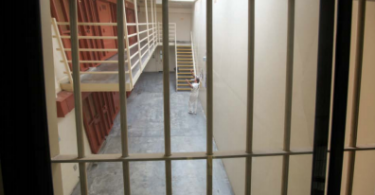
Among the misperceptions about solitary confinement is that it’s used only on the most violent inmates, and only for a few weeks or months. In fact, an estimated 80,000 Americans — many with no record of violence either inside or outside prison — are living in seclusion. They stay there for years, even decades. What this means, generally, is 23 hours a day in a cell the size of two queen-sized mattresses, with a single hour in an exercise cage, also alone. Some prisoners aren’t allowed visits or phone calls. Some have no TV or radio. Some never lay eyes on each other. And some go years without fresh air or sunlight.

Solitary is a place where the slightest details can mean the world. Things like whether you can see a patch of grass or only sky outside your window – if you’re lucky enough to have a window. Or whether the guy who occupies cells before you in rotation has a habit of smearing feces on the wall. Are the lights on 24/7? Is there a clock or calendar to mark time? If you scream, could anyone hear you?

In the warp of time and space where [Osiel] Rodriguez lives, the system not only has stripped him of any real human contact, but also made it unbearable to be reminded of a reality that has become all too unreal. It’s ripping him apart. [Rodriguez robbed a bank and a pawn shop when he was 22 years old.]

“Looking at photos of the free world caused me so much pain that I just couldn’t do it any more,” writes Rodriguez, 36. “Time and these conditions are breaking me down.”

This is what our prisons are doing to people in the name of safety. This is how deeply we’re burying them.


SHOULD FREE SPEECH PROTECT THE RIGHT TO LIE?

William Bennett Turner writes for the NY Times about the alarmingly slippery slope presented by the Stolen Valor Act.

Here’s a clip:

XAVIER ALVAREZ is a liar. Even the brief filed on his behalf in the United States Supreme Court says as much: “Xavier Alvarez lied.” It informs us that he has told tall tales about playing hockey for the Detroit Red Wings, being married to a Mexican starlet and rescuing the American ambassador during the Iranian hostage crisis. But as the brief reminds us, “none of those lies were crimes.”

Another of his falsehoods, however, did violate the law. In 2007, while introducing himself at a meeting of a California water board, he said that he was a retired Marine who had been awarded the Medal of Honor (both lies). He was quickly exposed as a phony and pilloried in the community and press as an “idiot” and the “ultimate slime.”

But his censure did not end there. The federal government prosecuted him under the Stolen Valor Act, which prohibits falsely claiming to have been awarded a military medal, with an enhanced penalty (up to a year in prison) for claiming to have received the Medal of Honor. Mr. Alvarez was convicted but appealed to the United States Court of Appeals for the Ninth Circuit, which held that the act violated the First Amendment.

The government has taken the case to the Supreme Court, which is scheduled to hear arguments this week. The question before the court is not whether there is a constitutional “right” to lie. Rather, it’s a question about the scope of the government’s power over individuals — whether the government can criminalize saying untrue things about oneself even if there is no harm to any identifiable person, no intent to cheat anyone or gain unfair advantage, no receipt of anything of value and no interference with the administration of justice or any other compelling government interest.

Read the rest. It’s extremely interesting—especially when you start to consider the implications. (Hint: One of them involves Steven Colbert.)


THE SUPREMES, CITIZENS’ UNITED, THOSE CRANKY MONTANANS CHALLENGING THE LAW—AND THE MEANING OF RUTH GINSBURG’S REMARKS

On Friday of last week, the Supreme Court agreed to a stay on the Montana Supreme Court’s ruling of last fall,—one that upheld its own state law and thus basically made the US Supreme Court’s extremely controversial (and truly hideous) Citizens United decision inoperative in the Big Sky state.

Tom Goldstein over at SCOTUSBlog explains the significance of the message conveyed in the statement made by Justice Ruth Ginsburg (joined by Justice Breyer) at the hearing’s conclusion.

Or, if SCOTUSBlog is too wonky for your taste, the story at the Washington Post, addressing the same issue, lays things out more directly. Here’s how it opens:

Two Supreme Court justices suggested Friday that the court reconsider its controversial 2010 decision that allowed unlimited corporate and union spending in elections.

The suggestion came as the court blocked a Montana Supreme Court decision upholding a century-old ban on corporate campaign spending in the state.

The Montana ruling seems squarely at odds with the court’s 5 to 4 decision in Citizens United v. Federal Election Commission, which allowed unlimited corporate spending. The U.S. Supreme Court majority had said such independent spending did not give rise to corruption or the appearance of corruption.

In Friday’s order, Justices Ruth Bader Ginsburg and Stephen G. Breyer said the upheaval in the world of campaign finance since the Citizens United decision does not bear out the majority opinion.

“Montana’s experience, and experience elsewhere since this court’s decision in Citizens United v. Federal Election Commission, make it exceedingly difficult to maintain that independent expenditures by corporations ‘do not give rise to corruption or the appearance of corruption,’ ” Ginsburg wrote.

“A petition for certiorari [from those challenging the Montana court’s decision] will give the court an opportunity to consider whether, in light of the huge sums currently deployed to buy candidates’ allegiance, Citizens United should continue to hold sway.”

Most experts think that the chances of Citizens United being modified or undone by the Supremes are worse than slim, as that would require Justice Kennedy (or someone more conservative than he) switching sides, which is unlikely. But the fact that the discussion will likely be raised may lay down tracks for a future court’s consideration.


Posted in Free Speech, Must Reads, Supreme Court, prison, prison policy, solitary | 2 Comments »