Thursday, September 2, 2010
street news, views and stories of justice and injustice
Follow me on Twitter

Search WitnessLA:

Daily Twitter Blend

aldaytualdaytu: Leyendo RT @NiemanLab: Why we can expect more convergence in the future, not less http://nie.mn/aOVRMc
1 minute ago from TweetCaster
JoRoanJoRoan: Why we can expect more convergence in the future, not less. http://nie.mn/aOVRMc via @NiemanLab
2 minutes ago from Ping.fm
keeganskidmorekeeganskidmore: RT @NiemanLab: "The innovator's paradox": why critics keep getting it wrong about Netflix http://j.mp/ak4AgG
11 minutes ago from TweetDeck
ScoutAnalyticsScoutAnalytics: Newsonomics of convergence searching for #digitalequilibrium http://bit.ly/cWIpie
16 minutes ago from TweetDeck

Recent Posts

Categories

Archives

Meta

elections


Election Aftermath: Gloria Romero and the LA Times Factor

June 10th, 2010 by Celeste Fremon


The elections results were pretty much what we expected
in terms of candidates’ victories. No real surprises in either the Democratic or Republican camps.

The voting outcomes on the ballot measures were heartening because of the voters’ rejection of both corporate attempts to buy a nice, shiny new law—namely Prop. 16 and 17. It is also cheering that the electorate embraced of ANYTHING that might even have a tiny shred of a chance at changing our state’s dysfunctional, money-driven and paralyzingly partisan system.

For me, however, the one truly dispiriting outcome of this June primary was the fact that State Senator Gloria Romero did not make it into the runoff for State Superintendent of Public Instruction

Instead, the top vote-getter was a virtual unknown, Larry Aceves, a former school superintendent who was lured out of retirement for the task by the association of California school administrators, which put $400,000 into his mailers. Amazingly, Aceves got 18.9 percent of the votes cast by the 3.2 million who went to the polls, no doubt at least somewhat helped by having the words “former school superintendent’ after his name, while the other two had IDs that seemed less obviously education-related (even though Romero’s also a tenured college professor).

Oh, yeah, and Aceves was also helped by the fact that he was endorsed by the Los Angeles Times.

The number two vote getter, Tom Torlakson, had a more obvious reason for whatever success he enjoyed as he was the darling of the state’s powerful teachers’ unions, who threw substantial support behind him. Torlakson, who won 18 percent of the vote, was opposed to charter schools, opposed to the parents’ choice measure, and opposed to the federal Race to the Top program.

Romero came in third with 17.2 percent of the bote. Unlike Aceves and Toriakson who both arguably represented the status quo, Romero was the reform candidate in the race.

The Daily News, which endorsed her, put it succinctly:

Tom Torlakson, a liberal Democrat from the Bay Area, is backed by the teachers unions—a group that has worked strenuously to thwart reform in California at every turn.

Larry Aceves, a retired schools superintendent and teacher from the Bay Area, is backed by district superintendents across the state and the administrators association. He’s been a part of the same education structure for three decades that has overseen the downfall of what was once an envied public educational system.

The third candidate, Sen. Gloria Romero-–and the only one of the three from Southern California – is supported by a collection of teachers, students, administrators, parents and everyone else who supports serious reform of education in California.

[SNIP]

Though part of the established Democratic power structure in Sacramento for years, no other legislator has done more to buck her own party to push union-opposed school reform legislation than Romero. She’s either sponsored or supported bills that would allow for innovative programs like L.A. Unified’s School Choice, for the parent trigger to force change at failing schools, for allowing districts to have some flexibility in how they lay off teachers, and for changes in teacher evaluations that allowed the state to compete in federal Race to the Top funding…..

So why did the LA Times, which has expressed support for nearly all of the reforms that Romero championed, endorse the very nice guy who, no matter how likable, represents the way it’s always been?

The position of SPI comes with some real power. He or she will determine what should be on the state’s standardized tests, and will decide when and how to require changes in schools that are failing to make adequate progress. These are both elements of the state’s vast education bureaucracy that could use some fresh eyes and some level-headed examination. It also features a fairly large bully pulpit, that Romero would have put to good and energetic use.

In the end, around 30,000 votes made the difference between making it into the runoff or not for Romero.

In this low-turn-out election where few were paying much attention to the down-ballot races, it is reasonable to guess that an endorsement by the state’s largest newspaper could have been a deciding factor—perhaps THE deciding factor—in how 30,000, or 40,000 or 60,000 votes got cast.

The LA Times editorial board explained in part why it chose Aceves. In essence, they said, because he’s calm, non-partisan, upbeat and experienced. Okay, fair enough.

However, given the mess this state’s schools are in, to my mind anyway, a sure hand on the tiller—while undeniably desirable—no longer seems like enough.

Posted in Social Justice Shorts, elections | 4 Comments »

The Filter: Prop 16 and 17 in 3 Minutes or Less – UPDATED

June 8th, 2010 by Celeste Fremon


Here is The Filter’s full show,
which features interviews with Carly Fiorina and Tom Campbell among other elections-related segments. (Did you know that Tom Campbell was okay with gay marriage because he’s “anti big government?” No? I didn’t either. Logical consistency in the realm of politics is startling wherever you find it.)

In any case, VOTE!

And, whatever your leaning—right, left, or center—I urge you to strongly consider voting for Gloria Romero for CA Superintendent of Public Instruction.

I’m genuinely shocked that the LA Times has chosen to recommend a career school district bureaucrat over reformer Romero. (Bad LAT, no cookie!!)

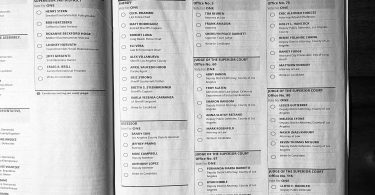
Okay, as promised, here’s your print out-ready voter guide:

WITNESSLA’S JUNE 2010 ELECTIONS RECOMMENDATIONS

PROPOSITIONS

13 – YES
14 – YES
15 – YES
16 – NO
17 – NO


CANDIDATES

Governor:

Dem: Jerry Brown
Repub: Steve Poizner

Lieutenant Governor:

Dem: Gavin Newsom
Repub: Albert Maldonado

Attorney General:

Dem: Kamala Harris
Repub: Steve Cooley
(or John Eastman if you want a good protest vote.)

Insurance Commissioner:

Dem: Dave Jones or Hector de La Torre.

(I’m going for Jones. But they’re both good)

Repub: Mike Villines

State Superintendent of Public instruction:

Gloria Romero. Period.

JUDGES

Judicial: Office 28 – Mark Ameli or Randy Hammock (Both are good. I’m voting for Hammock.)
Office 35: Soussan Bruguera
Office 73: Laura Matz
Office 107: Stephen Bolinger
Office 117: Alan Scheider
Office 131: Maren Elizabeth Nelson

MEASURE E - NO (see below)


UPDATE: it has come to my attention that I neglected to post about LAUSD’s Measure E.

Here’s the deal: Measure E is a limited parcel tax that will, for the next four years, impose a $100 tax per parcel per year on all property owners in the areas that LAUSD covers.

If passed, LAUSD expects to raise around $93 million per year from the measure.

All well and good. We know the district is in terrible trouble, what with all the state budget cuts and all. How great that we can help it out and get more teachers rehired, more art programs kept in place, more librarians saved from layoffs, right?

Well, maybe. However when asked directly what they intend to do with the funds, LAUSD honchos have been remarkably un-forthcoming.

This past semester a student of mine spent quite a lot of time trying to get someone—anyone—at LAUSD to tell her how the money would be spent. She’s a smart reporter and was quite resourceful and persistent in bugging administrators and board members. But, in the end, all anyone was willing to say amounted to little more than “trust us, we know how to spend it.”

Others have tried as well and have gotten from Superintendent Ray Cortines only that out of the $93 million that the measure will raise yearly, $27 million of that will go to neighborhood schools to save teachers, librarians etc.

Well I did the math, and if the $27 mill is divided between all the district’s schools, that’s $40,000 per school, which isn’t enough to do much. You can maybe hire one teacher’s aide.

As for where the other $66 million would go, the district has turned on its vague-ifiers. It would be used for “programs.”

Right.

Right now my thinking is as follows: until LAUSD can tell us that it is going to use our money for something other than yo no se que, I’m reluctant to hand over any $100 per parcel.

Maybe by the the time I vote I’ll be in a better mood about all this. But for now, I’m voting NO.

How are you voting?

Posted in Education, elections | 3 Comments »

WLA Election Endorsements – Part 2: The Propositions

June 7th, 2010 by Celeste Fremon


Okay here are the ballot measure recs:


PROPOSITION 13 – YES

Prop 13’s an easy yes. A no brainer. It means that, if you’re a building owner, and you want to make your building safer in our earthquake prone state by retrofitting the thing, you won’t pay higher property taxes because you have been a responsible property owner. You’ll only be taxed on the upgrade when the building is sold. It’s in the interest of public safety that we pass this puppy.


PROPOSITION 14 – YES

This is the measure I dithered over the most. It’s the so-called “Top Two” elections reform plan. If it passes, it means that when you go to the ballot box on primary day, you can vote for whatever candidate you like, regardless of party affiliation—yours or theirs. And the top two candidates will go into the runoff, again, regardless of party affiliation.

Theoretically, Prop. 14 will help alleviate the partisan gridlock that is so hamstringing Sacramento by encouraging legislators and candidates both to play to the middle rather than the far right or far left of their base, which is what we’ve got now, particular on the Republican side of things.

Will it work? Some experts say, yes. Other say, the affect will be minimal.

Plus there is the argument that it will eliminate 3rd party candidates from the general elections, which is arguably true—(unless the 3rd party candidate is unusually strong, then it could possibly help that rare person.)

Although many support the measure, both the ACLU and the Howard Jarvis folks oppose 14, as do the leaders of both political parties.

Nearly every major newspaper supports it.

My final reason for coming down on the YES side is that I am so fed up with the paralyzing partisan bickering in Sacramento that I figure it can’t possibly get worse and that desperate times call for desperate measures. I hope I am not proven wrong.

Washington State has passed a similar measure, and has been pleased with the results.

If it does pass, however, we must pressure legislators to amend it to allow for write in candidates, which in its present form it eliminates.


PROPOSITION 15 – YES

Prop 15 would lift the ban on public funding for elections, if candidates meet certain requirements. It would pay for itself by levying fees for lobbyists of $350, (which is not exactly onerous).

But here’s the thing: It is simply a pilot program and would only be tried out for two elections cycles to see if it works, and even then, only for one office, that of Secretary of State. Then it can be expanded if we like it. If not, nothing lost; without renewal, it will expire.

The LA Times has an unusually good rundown on the measure if you want to know more.

Prop 15 is opposed by people like Meg Whitman who think it would be BAD for democracy if they were not allowed to buy elections. (I don’t believe that’s quite how she phrased it, but that’s the bottom line.)


PROPOSITION 16 – NO (WITH EXTREME PREJUDICE)

Prop 16 is a true jaw-dropper—a conscience-free attempt at corporate law making.

If you had a meter than measured chutzpa, Proposition 16 would send it into the red zone.

The measure is funded almost entirely by utility giant Pacific Gas & Electric Corp.to the tune of $46 million and it is as bald-faced a power grab as you can imagine, designed to give PG&E, and other investor-owned, profit-making utilities, virtual monopolies in the areas they cover.

More specifically, Proposition 16, the disingenuously named the TaxPayers Right to Vote Act, would amend the state’s constitution to require a two-thirds vote before any city or municipality can offer its residents some sort of alternative source of electricity. (And we know how often supermajority votes on anything pass in the state.)

The same two-thirds vote would also be necessary before cities could create “community choice aggregation” programs, in which residents sick of rising PG&E prices may buy power wholesale from elsewhere, or several eleswheres.

PG&E really, really doesn’t like it when you comparison shop and buy cheaper power elsewhere.

So it has paid for a ballot initiative in order to block such moves in the future. In short, Prop 16 is a proposed a law that would only benefit it’s primary backer—PG&E, and other investor-owned companies, not you and me.

If you want to read more, try the Modesto Bee’s editorial opposing the measure titled: Prop. 16: No way, never, uh-uh, no.


PROPOSITION 17 – NO

Prop 17 is another corporate funded power grab, albeit one that is not quite as breathtaking as Prop. 16, but nearly so.

Backed by Mercury Insurance, which has spent a bundle on the campaign, Prop 17 allows drivers to bring their “company loyalty” discount with them if they change insurers. Doesn’t sound so bad, right? But in offering that little carrot, the measure would take a great big step toward gutting the 1988 landmark piece of legislation, Proposition 103, which requires insurance companies to offer and price policies based on a drivers’ individual safety records and driving patterns, not on broad strokes risk groups. Mercury has tried, unsuccessfully, to kill the law before. Prop 17 would allow Mercury to wound 103, which is bad for all of us.

In other words, with one hand, Mercury and it’s fellow insurers are giving you a nice, sweet cookie, but while you’re munching, with their other hand, they’re jacking your wallet.

The hidden wallet-jacking comes in the form of much higher rates for anyone who is newly insured (younger people, lower income first time insurance buyers), or who stops driving for a while, like students, someone with an illness, or a man or woman who joins the military, your nephew if he moves back east for two years of graduate school, for example. And if, heaven forbid, you are ever really late on paying your insurance premium, under this proposed law, you can have your rates raised to unpleasant heights.

To put it another way, Mercury and its pals are not in the habit of giving away money. And they certainly aren’t going to plunk down big bucks to do something that only benefits me and you. (Consumer Reports claims that they have spent $17 million on the YES on 17 campaign.)

One more thing: earlier this year, Insurance Commissioner Steve Poizner filed a lawsuit against Mercury stating that the insurance company had:

1. improperly applied surcharges to its customers

2. failed to give customers the discounts they were due

3. discriminated against people with certain medical conditions

4. refused to insure applicants based on their occupation.

So, yeah, I’d trust that Mercury’s paying the tab on this initiative because it has your best interest in mind.

NOT.

NOTE: Late tonight I’ll put up a print out list, for those who want take it with them.

Posted in elections | No Comments »

WLA Election Endorsements, Part I

June 7th, 2010 by Celeste Fremon


GOVERNOR

DEMS: Well, JERRY obviously.

REPUBS: Hey, do whatever you want but, barring a some force majeure, it’ll be Whitman. I

My personal attitude is a pox on both their houses for their endlessly negative and mendacious campaigns and for both trying to (falsely) position their generally moderate records as slightly to the right of Ivan the Terrible. But if I were registered Republican I’d vote for Poizner, who is quite capable in many ways (even if doomed). And the main thing that recommends him is—he’s not Whitman who, before getting herself on the ballot, hardly ever lowered herself to the plebeian act of voting in this state she wants us to let her run. During her eBay tenure, she was accused of making money for herself at the expense of her shareholders.

Now the woman has decided she wants to buy herself a governorship.

I won’t be voting for either of them in the general election. I’m rooting for the old guy, EGB—Edmund G. Brown, Jr.

However, this is a liberal state that has a habit of electing Republican governors. And the thought of it being Whitman, is not a good one.


LIEUTENANT GOVERNOR

DEMS: GAVIN NEWSOM The Lt. Gov doesn’t do a hell of a lot. At least Newsom is a bright, ambitious guy who will liven up the place. Janice Hahn is perfectly fine too. Having a woman would be nice. But Newsom has my vote.

REPUBS: Vote for the guy who’s already there, ABEL MALDONADO.. He’d be fine. (He already has been fine.)


ATTORNEY GENERAL

DEMS: KAMALA HARRIS. Despite her recent problems with the San Francisco crime lab, Harris is far more qualified and suited for the job than any of her opponents She’s Intelligent, a strong prosecutor, and has run a big agency well. But she’s also refreshingly progressive on such issues as lowering the prison recidivism rate. And she’ll aggressively go after environmental and corporate lawbreakers, among others.

It’s nice that people like Feinstein and Pelosi have endorsed her but, except in the political sense, they don’t really matter. It does, however, matter that she’s been endorsed by most of the major law enforcement figures in the state, save Sheriff Lee Baca, who has endorsed Cooley. Even Bill Bratton has reached out to endorse the woman.

SFPD Chief George Gascon (formerly the Assistant Chief of the LAPD), who is most in a position to know how she’s performed as SFDA, has endorsed Harris—and it does not appear to be a proforma endorsement.

There are, however, two issues that Harris is going to get slammed over.

The first is the death penalty. Harris campaigned for SF DA as an anti-death penalty candidate. When she won, it should have come as a surprise to no one that, given the opportunity to ask for the death penalty in a big murder case, she instead made good on her campaign promise and didn’t.

The case that has caused some controversy for Harris was the 2004 murder of San Francisco police officer Isaac Espinoza. Many in the police community feel that Harris should have asked for death. However, it turned out to be a mute point when the jury came back with a second degree murder conviction. This meant that the death penalty was off the table, no matter what Harris wished.

The far bigger issue for Harris is going to be the crime lab a scandal. The basis of the scandal is the revelation that an SF crime lab tech who was supposed to be testing narcotics evidence, instead made a habit of snorting the stuff. To make matters worse, the evidence-Hoovering tech had a criminal record.

Now, keep in mind that the crime lab is run by the SFPD, not the DA’s office. And the lax atmosphere that produced the druggie tech can be chalked up to the colossally dysfunctional nature of the SF police department prior to the hiring of SF Chief of Police George Gascon.

However, some have accused Harris and her office of failing to report to defense attorneys the unreliability of the tech once the DA’s office suspected that something was amiss with the woman, which—if true—is a ginormous no-no. (See Brady v. Maryland.)

All this said, Harris is still a far stronger choice than any of her Democratic opponents.

AND ABOUT HER OPPONENTS:

CHRIS KELLY, while a smart man who has demonstrated that he is skillful at memorizing nice sound bite-length statements on the various policy issues, has no experiential understanding of the job and is simply not close to qualified. Plus his primary selling point is that he was the guy in charge of privacy on Facebook, among the most notoriously privacy-challenged corporations in the nation

As for THE REST OF THE FIELD, the three legislators, Ted Lieu, Pedro Nava and Alberto Torrico, each have some strengths, but none comes within a country mile of having the experience necessary to hit the ground running as a DA, and a couple of them sound downright naive on criminal justice issues.

And then there’s ROCKY DELGADILLO, who does have experience But we in LA have been there, done that.

ON THE REPUBLICAN SIDE OF THINGS…STEVE COOLEY, no question.

It’s going to come down to Harris and Cooley. We’ll talk more about the differences in November. But we can’t go terribly wrong with either one.


INSURANCE COMMISSIONER

DEMS: DAVE JONES & HECTOR DE LA TORRE both have strong resumes as consumer advocates. I’m leaning toward Dave Jones, who I think has the most aggressive kick-butt attitude, which the post needs. (For more info, the Modesto Bee has a good rundown on the Jones/de la Torre match up.)

REPUBS, MIKE VILLINES. The only Republican. I don’t know a lot about him but, by all accounts, he is independent minded and simply wants to do a good job in the post, without dragging politics into it.


LAST BUT ASSUREDLY NOT LEAST….

STATE SUPERINTENDENT OF PUBLIC INSTRUCTION – GLORIA ROMERO

The LA Times has endorsed Larry Aceves over Romero, and they’re wrong-headed. They point out that Aceves is a swell guy and he’s been a school superintendent for a number of California school districts.

But in this troubled educational environment we don’t need another business-as-usual school bureaucrat, no matter how nice he (or she) may be.

We need a reformer. Romero is that person. Over the past year, she has more than proven that she is completely fired up to do the job. She was the prime mover in the legislature who pushed for the statewide changes necessary to be competitive for the federal Race to the Top money. Romero didn’t get everything she wanted, but some tracks got laid for the next go-round. We have Romero to thank for that.

Gloria Romero’s our gal.


TOMORROW…..THE PROPOSITIONS.

PLUS I’LL BE ON THE FILTER TONIGHT at 7:30 PM, talking about the elections, of course—specifically some of the propositions.


PS: I realize I didn’t comment on the Campbell/Fiorina/DeVore U.S. Senate primary. Okay, here’s the condensed version: All three are anti-health care reform, anti gay marriage, and extremely anti-regulation.

Fiorina, the front runner’s main claim to fame is that she was tossed out of Hewlett-Packard after she wrecked the place but walked away with a $21 million parachute. But she too is hoping to buy an election.

Cambell’s a bright, principled guy (even though I don’t happen to agree with some of his principles, on a policy level). He’d be my pick of the three. (DeVore’s the farthest right, and the Tea Party darling.) But right now Fiorina and her money have got the lead.

Posted in elections | 15 Comments »

Tuesday Round-Up

June 1st, 2010 by Celeste Fremon


SUPREMES AGREE TO HEAR CASE AGAINST (EXTREMELY VILE) FUNERAL PROTESTERS

On top of his grief over his Marine officer son’s death, Albert Snyder had to endure protesters Westboro Baptist Church disrupting the funeral with signs that bore messages like: “Semper Fi Fags,” “Thank God for Dead Soldiers.” Distraught and furious, Snyder sued the Westboro demonstrators in civil court and won, but the decision was reversed on appeal.

Now the case has made it all the way to the Supreme Court, which will hear the issue this fall.

The Washington Post reports:

[Albert] Snyder and his late son, Marine Lance Cpl. Matthew Snyder, killed in Iraq, have become the public faces of more than 200 families that have seen funerals of loved ones picketed by members of a tiny church who say the deaths of U.S. soldiers are God’s retribution for the nation’s tolerance of homosexuality.

The collision of privacy rights and the Constitution’s protection of free speech will be heard by the Supreme Court in the fall. Snyder’s lawyer, Sean Summers, recently filed his brief to the court, and the fortuitous deadline for others to support Snyder is the day after Memorial Day.

Many First Amendment scholars are wondering why the Supremes took the case, arguing that, as hideous and cruel as the protest was, it is also protected speech.

(I wondered the same thing.)

In any event, it will be a significant case to watch.

And in the meantime, our hearts go out to Albert Snyder, and all the parents of service men and women who have had to grieve for their kids this past weekend.


CALIFORNIA BATTLES FOR THE SOUL OF THE REPUBLICAN PARTY?

At least so says Connie Bruck’s in her long and interesting article about the primary battle between Tom Campbell and Carly Fiorina, in the June 7 issue of the New Yorker.

The full story requires a subscription, but here’s a clip to give you the tone:

Ronald Reagan was still in the White House the last time a Republican was elected to the Senate from California, in 1988. This year, Republicans believe, will be different. The candidate who wins the primary may have a good chance of defeating Barbara Boxer, who faces an anti-incumbent mood and discontent over the state’s foundering economy. The national Republican Party has seized upon the race as a bellwether. Tom Campbell, a five-term Republican congressman who describes himself as a fiscal conservative and social moderate—he is pro-choice and supports gay marriage—believes this is his year. Recent polls show, however, that his opponent, Carly Fiorina, has overtaken his lead, and Campbell’s greatest assets—policy experience and a powerful intellect—now seem to be handicaps. Fiorina, the polished former C.E.O. of Hewlett-Packard, said at a debate on May 6th: “I am not a career politician.” Campbell’s other opponent, Chuck DeVore, casts himself as anti-government. The resolution of this contest will determine a great deal about the future of the Republican Party….

For some reason, however, the Republican gubernatorial primary fight between Steve Poizner and Meg Whitman is just a run the of the mill primary battle (albeit a very expensive one), not a mythic struggle for any party’s soul.


THE ILLEGAL IMMIGRANT CRIME WAVE!!!! (THAT DOESN’T APPEAR TO EXIST)

The June edition of Social Science Quarterly contains an article that draws correlations between the large crime drop that has occurred across the nation, and immigration patterns.

Newsweek’s Christopher Dickey cites the report and wonders why some of those screaming loudest about immigration issues do so using “facts” about immigrant crime that are entirely and provably false.

Governor Brewer told Fox News and anyone else who’d listen, “We’ve been inundated with criminal activity. It’s just—it’s been outrageous.” Arizona’s Sen. John McCain said last month that the failure to secure the border with Mexico “has led to violence—the worst I have ever seen.” The president of the Arizona Association of Sheriffs, Paul Babeu of Pinal County, claims, “Crime is off the chart in this state.”

What the FBI chart actually shows is that the incidence of violent crime in Arizona declined dramatically in the last two years.

Crime is also down in most cities that have the largest influx of immigrants.

But don’t believe me: just take your own walk through the stats at the FBI’s recently released Uniform crime Report.


GEORGIA ASKS HOW TO TURN LAWBREAKERS INTO TAXPAYERS (NOTE: WHY ISN’T CALIFORNIA BOTHERING TO ASK THE SAME QUESTION?)

In a two part feature, the Atlanta Journal Constitution explores the issue. Here’s how Part I begins:

As states across the nation recognize that prison costs are busting tight budgets and doing little to reform offenders, many governors and legislators are thinking outside the cell.

Mississippi lawmakers decided in 2008 to cut prison costs by allowing all nonviolent offenders to be considered for parole after serving 25 percent of a sentence instead of 85 percent.

In Texas, a bipartisan effort in 2007 avoided $2 billion in costs to build and operate new prisons by spending $241 million on alternatives: stepped-up probation and parole programs, new halfway houses and specialty courts devoted to offenders with drug issues and mental health problems.

North Carolina announced in April a bipartisan initiative to develop a new research-driven approach to public safety that is expected to reduce prison costs by investing in alternatives that are more effective.

South Carolina’s Legislature last week approved a landmark sentencing reform package designed to save the state $400 million over the next five years by reducing incarceration of nonviolent offenders and more closely supervising released inmates to reduce recidivism.

Then the AJC asks: What about Georgia?

In Part 2, the AJC gives some ideas “that could help Georgia reduce its need for prison beds. ”

Interestingly, California—the state with the largest prison population in the nation—is not on the AJC’s list of states instituting cost saving and prisoner rehabilitating reform.


A FATHER CONTEMPLATES MEMORIAL DAY

In an LA Times Op Ed a father whose son was killed three years ago in Iraq reflects on Memorial Day.

Here’s a clip:

For us, personal loss has rendered the last Monday in May into the day of remembrance that it was originally intended to be. Yet loss has also invested Memorial Day with political significance, posing uncomfortable questions.

The fallen gave their lives so we might enjoy freedom: However comforting, this commonplace assertion qualifies at best as a half-truth. Who can doubt that the soldier killed in battle at Gettysburg or on Omaha Beach died while advancing the cause of liberty? Whether one can say the same about the Americans who lost their lives assaulting Mexico City in 1847, suppressing Filipino demands for independence after 1898 or chasing rebels in 1920s Nicaragua is less clear, however.

In recent decades especially, the connection between American military intervention and American freedom has become ever more tenuous….


Posted in Civil Liberties, criminal justice, elections, immigration, parole policy, prison, prison policy | 86 Comments »

Lying Politicians, Immigration Grandstanding & Organ Donation

April 30th, 2010 by Celeste Fremon

Okay, here are the videos from Thursday’s The Filter. As I said earlier, I was on with former city council member, Jack Weiss, who—in addition to cultural commentator Amy Alkon—is my favorite partner when I do a segment of the show.

We discussed the topics I’ve listed below.


WHITMAN, POIZNER & THE TRUTHINESS FACTOR

So do we care that Meg Whitman lied about her townhall meeting ad? Steve Poizner wants us to. He has a video out pointing to Whitman’s entirely mendaciously “spontaneous” meeting.

However Poizner had his own bout of truthiness spotlighted this week on This American Life in which Ira Glass spent a long segment pointing out that Poizner’s new book about a semester spent teaching at a San Jose high school, Pleasant Valley High—a book that is figuring prominently in his campaign—was riddled with statements that are “obviously and provably untrue.”

And indeed a bit of follow-up fact checking bears this out. So why should we care? Glass tells us exactly why:

….”So many of the political discussions in our country seem so disconnected from reality. Every year there are egregious examples of politicians and commentators who believe if they repeat some non-fact over and over, it becomes true.”

And we’re sick of it. We really, really are.


ANTONIO VILLARAIGOSA AND THE ARIZONA BOYCOTT

Mayor Antonio Villaraigosa is in favor of Los Angeles boycotting Arizona in order to protest the state’s new draconian immigration law.

(As of Thursday, the West Hollywood City Council i
s also talking about suspending all official travel to the state.)

Yes, of course, it’s a hideous, impractical, national soul-damaging law and it will be challenged in the courts, successfully, I believe. But do we really want to punish everybody in the state in order to express our displeasure with the Arizona legislature? Do I, for instance, decide not to buy Arizona writer Chuck Bowden’s new book in order to protest a law that he passionately opposes too? Or is this just so much political grandstanding?


All this and more on immigration plus a look at NY’s new proposed law pertaining to organ donation.

Posted in State politics, The Filter, elections, immigration | 40 Comments »

Waiting for Jerry – UPDATED

March 1st, 2010 by Celeste Fremon

Jerry-Brown-Portrait-2

In an Op Ed in Monday’s LA Times, Jerry Roberts and Phil Trounstin of CalBuzz,
analyze the two declared candidates for California governor, Republican eBay diva, Meg Whitman, and Insurance Commissioner, Steve Poizner —and the undeclared candidate, the once and maybe-would-be governor, Jerry Brown.

I can at least answer one question that Roberts and Trounstin pose:

Q: When will Jerry formally announce?

A: This Tuesday. (Call it an informed bet.)


UPDATE: Like I said.


For me the other question to be answered is this: now that Jerry’s spent the last two years madly courting every law enforcement organization, agency and union in California, how progressive will he have the nerve to be on criminal justice issues in a state that desperately needs wise criminal justice management and reform?


On an unrelated topic, Marc Cooper’s ongoing commentary on the Chilean earthquake has been excellent.

Posted in Edmund-g-brown, elections | 1 Comment »

The Supremes, Free Speech & The Personhood of Corporations

January 22nd, 2010 by Celeste Fremon

Judicial-PINOCCHIO-I

As most of you know, on Thursday morning the US Supreme Court blasted aside
a century old ban on corporate elections spending with its 5/4 decision in the case known as Citizens United.

Here’s how the LA Times explains it:

Until now, corporations and unions have been barred from spending their own treasury funds on broadcast ads or billboards that urge the election or defeat of a federal candidate. This restriction dates back to 1907, when President Theodore Roosevelt called on Congress to forbid corporations, railroads and national banks from using their money in federal election campaigns. After World War II, Congress extended this ban to labor unions.

Now all that has been handily wiped away.

If you want to know a bit more about the broad strokes of the case, listen to NPR’s Nina Totenberg.

Adam Liptak of the New York Times
also has a fairly cogent description:

Overruling two important precedents about the First Amendment rights of corporations, a bitterly divided Supreme Court on Thursday ruled that the government may not ban political spending by corporations in candidate elections.

The 5-to-4 decision was a vindication, the majority said, of the First Amendment’s most basic free speech principle — that the government has no business regulating political speech. The dissenters said that allowing corporate money to flood the political marketplace would corrupt democracy.

The ruling represented a sharp doctrinal shift,
and it will have major political and practical consequences. Specialists in campaign finance law said they expected the decision to reshape the way elections were conducted.

Ironically, this comes right at the time when ordinary Americans have been growing increasingly alarmed and enraged by the way that big money interests influence lawmaking, both on Republican and Democratic sides of the aisle. However, after Thursday’s decision, those big money interests will be able to go upstream of the pesky and time consuming lobbying process in order to focus directly on buying electing the lawmakers whom they believe will view their agendas from the most felicitous possible perspective.

The Citizen’s United decision is being presented as a free speech issue. Yet, it was not really speech that was being protected on Thursday. It was the ability to use unlimited corporate money to slam or promote a candidate. Had it been so inclined, the court could have narrowcast its ruling to address the principle that was the supposed center of this case, which was the right to show, shortly before an election, an attack dog documentary on Hilary Clinton.

But the five Supremes who voted to give Citizens United its victory, went much further than a decision that would have merely viewed the documentary as protected. Instead the court gave its blessing to the corporate right to spend an unrestrained amount of cash in promoting and buying time for said documentary— or election ads or whatever form of electioneering a corporation thinks will most benefit its candidate of choice. Cynically, the court shrouded all this suddenly unfettered corporate elections spending under the cloak of the First Amendment.

In his written dissent, an impassioned Justice Stevens, vehemently objected to the Constitutional slight of hand that would magically transform a Lehman Brothers or a Pfizer into a…well….person. Here’s how Slate’s Dahlia Lithwick puts it in her article on the ruling,The Pinocchio Project: Watching as the Supreme Court turns a corporation into a real live boy:

Stevens hammers, more than once this morning from the bench on the principle that corporations “are not human beings” and “corporations have no consciences, no beliefs, no feelings, no thoughts, no desires.” He insists that “they are not themselves members of ‘We the People’ by whom and for whom our Constitution was established.”

But you can plainly see the weariness in Stevens eyes and hear it in his voice today as he is forced to contend with a legal fiction that has come to life today, a sort of constitutional Frankenstein moment when corporate speech becomes even more compelling than the “voices of the real people” who will be drowned out. Even former Chief Justice William H. Rehnquist once warned that treating corporate spending as the First Amendment equivalent of individual free speech is “to confuse metaphor with reality.” Today that metaphor won a very real victory at the Supreme Court. And as a consequence some very real corporations are feeling very, very good.


The rest of us, I am sad to say, should feel very, very worried.


Posted in Free Speech, Freedom of Information, Supreme Court, elections | 50 Comments »

What He Said

January 21st, 2010 by Celeste Fremon
The Daily Show With Jon Stewart Mon – Thurs 11p / 10c
Mass Backwards
www.thedailyshow.com
Daily Show
Full Episodes
Political Humor Health Care Crisis

Look: I’m trying to forgo commenting on issues that are purely national news, but this sums the events of Tuesday up so well (inhaler-necessitating wheezes and all) that I cannot possibly avoid posting it.

Also, the above clip demonstrates once again why an entire generation looks to Jon Stewart as their primary news source—as opposed to the purported actual news sources.

Posted in National politics, elections, media | 15 Comments »

Social Justice Shorts – UPDATED

November 17th, 2009 by Celeste Fremon

Wesleyan-inmates

UPDATE:

FROM THE OH, REALLY? SEZ YOU! FILE

Once again proving my contention that the world of city politics is just like high school, but with higher stakes, according to the LA Times, District Attorney Steve Cooley said today that he is going to prosecute marijuana dispensaries no matter what the city council decides. (See earlier post a couple of paragraphs below.)


The district attorney said his office was already prosecuting some dispensaries,
and he promised to step up efforts next month. Cooley said he decided to weigh in today because he was irritated that the council had ignored the advice of the city attorney, Carmen Trutanich.

“What the City Council is doing is beyond meaningless and irrelevant,” he said.

Alrighty then. That certainly settles that. Rough translation: Screw you, City Council.

******

Then later, Councilman Ed Reyes made his own statement in response to Cooley’s statement. It should be said that Reyes is, at the moment, sounding like the voice of sanity.

Here are some LA Times clips from the Reyes volley in this escalating ping-pong match:

Councilman Ed Reyes, who has overseen the development of the city’s ordinance, said he did not think Cooley’s comments would cause the council to rethink whether to allow sales. “This is not about Cooley versus Reyes, or Cooley versus the council. This is about the quality of life. We all have better things to do than to do this legal jousting,” he said.

[SNIP]

Once the council acts on the issue, Reyes said, “We expect the city attorney to vigorous defend our medical marijuana ordinance.”

Um, about that last thingy, Ed. Lots of luck.


KILLER OF FLOR MEDRANO WAS A SPOUSAL ABUSER WHO HAD BEEN DEPORTED TWICE

On Monday, officials released the name of the 23-year-old man, Daniel Carlon, who stabbed 30-year-old single mother, Flor Medrano, in her mid-city apartment before two LAPD officers were able to stop him. Carlon, it seemed, had a past of abusing women, and had been deported to his home country of Mexico twice in the past two years. But each time he returned.

Baxter Holmes and Andrew Blankstein report in the LA Times:

Alrighty then.

Carlon had also pleaded guilty to charges of domestic violence in two previous cases, both of which involved another woman, according to Michele Daly, a family violence prosecutor with the San Bernardino County district attorney’s office, which had jurisdiction.

The first incident occurred in March 2005. According to Daly, who quoted from a police report, Carlon threatened violence against the victim if she reported the abuse to authorities. “If you call the police department, we’re both going to die. I’ll kill you if you call the cops,” Carlon told the victim

After pleading guilty to felony spousal abuse, Carlon was sentenced to 180 days in jail and was ordered to complete a 52-week domestic violence program. When he was released in the fall of 2005, he began stalking the same woman again, Daly said.

The woman filed a report in November stating that Carlon
was harassing her over the phone and knocking on her window, which he broke. The woman also hid from him, Daly said. He was sent to prison in February 2006 for two years after he again pleaded guilty to felony spousal abuse.

There’s more here.


CITY COUNCIL COMMITTEES TO CITY ATTORNEY: “SMOKE ON THIS, BUDDY!”

After what has been described as a raucous four hour meeting, two separate committees from within the city council voted to reject the recommendation from city Attorney Carmen Trutanich, to label all retail sales of marijuana as illegal and criminal.

The city attorney and DA Steve Cooley recently reinterpreted the medical marijuana statute
much more narrowly than most other legal professionals who have commented on the law.

The LA Times, has this:

After the members of the planning committee and Public Safety Committee voted, David Berger, a special assistant to City Atty. Carmen Trutanich, said it is up to the council to decide whether to accept the office’s legal advice. “Our duty is to advise them on what the law allows for and not to go on a whim,” he said. “They decided to go a different way.”

Councilman Ed Reyes, who has overseen most of the council’s consideration of the issue, expressed exasperation with the city attorney’s office. “I think they are very, very narrow in that they’re taking their prosecutorial perspective,” he said.

The long-delayed measure could be taken up by the full council as soon as Wednesday. “We need something on the books now. There is no reason why we should delay,” Reyes said

And John Guenther of Neon Tommy had this.

Councilman Ed Reyes, who has been driving the creation of dispensary legislation for the past two years, released some pent up frustration with the city attorney’s office.

“For two years, we have reached points of disagreement,” Reyes said. “We have a hearing here on Monday. And again it’s the same posturing that I’ve been enduring for the past two years in office and I find that very disconcerting.”


WESLEYAN UNIVERSITY OFFERS NEW RIGOROUSLY EXCLUSIVE COLLEGE DEGREE—TO INCARCERATED FELONS.

The New York Times reports:

Though community colleges and others, like Boston University, have long had inmate programs, the two-month-old Wesleyan program is one of a few in the country where the selection process is highly rigorous, where academic potential is the primary criterion and where past criminal conduct, however heinous, is not considered in admission.

Some 120 inmates applied at Cheshire for 19 spots in the program. The process required them to submit essays, some of which can be read here, on weighty matters like Frantz Fanon’s view that language helped “support the weight of a civilization” or Sigmund Freud’s thoughts on happiness.

Many states—California among them—dropped most of their college programs after the Clinton administration did away with Pell grants, that once upon a time used to help to help pay for the state programs. In California, the few educational programs remaining have been first on the chopping block due to the budget crisis.

But Wesleyan, it seems, is committed to making this program work. The New York Times has more about the prisoner/students, their admissions essays and their course work.

Photo by Christopher Capozziello for The New York Times

Posted in Medical Marijuana, Social Justice Shorts, crime and punishment, elections, prison, prison policy | 3 Comments »

« Previous Entries