Thursday, March 18, 2010
street news, views and stories of justice and injustice

Daily Twitter Blend

Initializing...
Follow me on Twitter

Sections

Recent Posts

Categories

Archives


Search:

Meta

children and adolescents


What is Owed the Victims of Child Porn?

February 3rd, 2010 by Celeste Fremon

child_porn-punishment

Should people who are convicted of downloading pornographic images
of a child have to pay the victim? It is a new and controversial question. Some people feel the download is a victimless crime. But read on:

And The New York Times has a story about the issue on Wednesday

When Amy was a little girl, her uncle made her famous in the worst way: as a star in the netherworld of child pornography. Photographs and videos known as “the Misty series” depicting her abuse have circulated on the Internet for more than 10 years, and often turn up in the collections of those arrested for possession of illegal images.

Now, with the help of an inventive lawyer, the young woman known as Amy — her real name has been withheld in court to prevent harassment — is fighting back.

She is demanding that everyone convicted of possessing even a single Misty image pay her damages until her total claim of $3.4 million has been met.

Some experts argue that forcing payment from people who do not produce such images but only possess them goes too far.

In February, when the first judge arranged payment to Amy in a case in Connecticut, Jonathan Turley, a law professor at George Washington University, called the decision “highly questionable” on his blog and said it “stretches personal accountability to the breaking point.”

Here’s the rest. Read on. Then tell me what you think.


Meanwhile, the Urban Institute released a report
on Tuesday that examines the effects of immigration enforcement on children.

This is from the abstract:

This report examines the consequences of parental arrest, detention, and deportation on 190 children in 85 families in six locations, providing in-depth details on parent-child separations, economic hardships, and children’s well-being. The contentious immigration debates around the country mostly revolve around illegal immigration. Less visible have been the 5.5 million children with unauthorized parents, almost three-quarters of whom are U.S.-born citizens. Over several years, Immigration and Customs Enforcement (ICE) intensified enforcement activities through large-scale worksite arrests, home arrests, and arrests by local law enforcement. The report provides recommendations for stakeholders to mitigate the harmful effects of immigration enforcement on children.

Read more here.

Posted in children and adolescents, crime and punishment | 3 Comments »

Tuesday’s Social Justice Shorts

December 8th, 2009 by Celeste Fremon


WHEN DOES RESTRAINING AND SECLUDING KIDS TURNS ABUSIVE AND DANGEROUS

On Wednesday, December 9, Representatives George Miller (D-CA) and Cathy McMorris Rodgers (R-WA) plan to introduce a bill that prevents the misuse of restraint and seclusion on school kids. (Miller is the chairman of the House Education and Labor Committee. McMorris Rodgers is a member of the Committee.)

One would imagine that such a bill as this one would not be necessary in this day and age. But one would be wrong.

It seems that, unlike with hospitals, and like facilities that receive federal funding, there are currently no federal policies that provide guidelines as to how restraint and seclusion can be used in schools, and the state laws are ridiculously uneven.

As a consequence, there have been reports of horrific cases of adults sitting on kids who are face down until they have stopped breathing, adults placing mentally disabled kids in closets for extended periods of time, in certain cases with fatal results, and on and on.

(The video above shows the Congressional testimony of a mother named Toni Price about once such incident. Price’s account is dignified, clear and heartbreaking.)

A look at the report
on the matter from the US General Accounting Office is quite sobering.

Anyway, this is a bipartisan bill. Take a look.

The video above is of one mother’s testimony at a Congressional hearing on the issue this past spring.


ROBBER APOLOGIZES TO VICTIM

Evidently on Sunday night, a gun-wielding robber who jacked $70 from a Christmas tree salesman apologized to his victim saying, “Times are tough,” according to the LA Times.

I know several young able bodied men who are about to apply for General Relief because, despite daily searches for any kind of work they can find nothing, and they need some way to put food in the house but do not want to turn to the same desperate strategy as the gunman.

I got a call from one of them last night. He does not want a government hand out, he said. “But what can I do?” he asked me. I had no answer.


CAN A CAMPUS CHRISTIAN GROUP BAN GAYS AS VOTING MEMBERS?

On Monday, the Supreme Court agreed to take a case which pits issues of religious freedom against a college’s policy of nondiscrimination. Moreover, the case has views of two circuit courts at odds with each other, one of them California’s beloved and sometimes notorious 9th Circuit.

The Christian Science Monitor has a very thorough write up. Here’s a clip:

The Christian Legal Society (CLS) at the Hastings College of the Law in San Francisco was stripped of its registered student organization status at the college because it refused to allow gay and lesbian students to become voting members or officers of the group.

Under the Hastings nondiscrimination policy, student organizations must allow fellow students to join and potentially seek leadership positions in any organization without regard to their status or beliefs….

Starting in the 2004-2005 academic year, the CLS required prospective members to sign a statement of Christian faith. The statement includes a pledge that the undersigned student trusts in “Jesus Christ as my savior.”

Prospective members must express belief in several religious tenets, including “one God, eternally existent in three persons, Father, Son, and Holy Spirit.” The statement includes a pledge of belief in the virgin birth, eternal life, Jesus’ resurrection, a divinely created heaven and earth, and that the Bible is the inspired word of God.

In addition, the national Christian Legal Society developed a policy position stating its view of biblical principles of sexual morality. The position, adopted by the Hastings chapter, said that “unrepentant participation in or advocacy of a sexually immoral lifestyle” was inconsistent with the group’s statement of faith and would disqualify an individual from membership.

Great case! Morally complex and legally ambiguous. Go Supremes!


JUSTICE BREYER: “GET ME THE REWRITE GUY!”

And Speaking of the Supreme Court…based on another case that went before the court on Monday, it looks quite possible that the nation’s Miranda warning may get rewritten. The case—Florida v. Powell—concerns one Kevin Dwayne Powell who did not understand, even after the warning was given, that he could have an attorney with him during questioning—as that fact is not really spelled out.

(Although if Mr. Powell had watched a little more episodic television, surely he would have known his rights a bit better.)

As the AP explains the rest.


STILL MISSING DAVID FOSTER WALLACE

This isn’t really a social justice issue at all, it’s a literary issue. But if you care about such things, the new posthumous piece of fiction by David Foster Wallace in the upcoming issue of the New Yorker, is a reminder why so many of us are, more than a year later, so devastated that Wallace could seem to find no way out of his personal psychic pain other than to silence it in the most permanent of manners.

Still and all, no matter how bittersweet, another encounter with DFW’s huge and humane talent is utterly thrilling.

The New Yorker published short story is an excerpt from The Pale King, the unfinished novel he was working on before he committed suicide in September 2008.

Posted in Civil Liberties, Courts, Education, LGBT, Social Justice Shorts, State politics, Supreme Court, children and adolescents, crime and punishment, criminal justice | 15 Comments »

Motivating Foster Care Kids to College

July 8th, 2009 by Celeste Fremon

gloria-molina

Every year around 5,000 kids are emancipated
from California’s foster care system. Sixty-five percent of those kids who “age out” of foster care do so with nowhere to live, and 51 percent are unemployed.

When combined with whatever abuse and/or neglect brought a kid into the system, the effects of this sudden removal of all support are stark. One in four foster kids who mature in the system will be incarcerated within two years of leaving. One in five will become homeless before they turn 20-years old.

Only around three percent of those who age out in foster care will ever go to college.

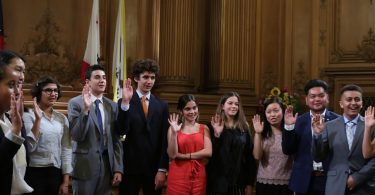
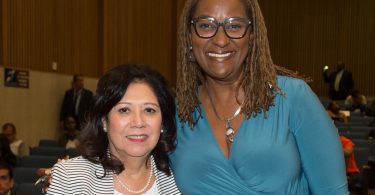
At yesterday’s County Sups meeting, Los Angeles County Supervisor Gloria Molina honored 80 foster care kids who are part of a pilot program that has taken a small but promising step in reversing those troubling statistics.

Launched in spring 2008, the program known as the First District Education Pilot Program is designed to improve graduation and college entry rates among LA County’s foster children.

Molina, who is one of the program’s strong supporters, announced that of the first graduating class from the program, 80 percent will be attending two or four year colleges in the fall.

“I’m proud of the work we’ve done,” Molina said. “But I’m particularly proud of the students because many of them had just sort of given up. Many of them thought this is just the way the system works. But I think they, too, were inspired and motivated by the caregivers, by the social workers, by the counselors, and all the people that were involved.”

One of the graduating seniors named Jeanette Rios talked about how she was way behind in school and didn’t think it was possible to graduate with her class. Now she has discovered a love of creative writing and is off to college to major in English, after having gotten some work experience interning at Wells Fargo bank. “The most important thing I learned,” she said, “is that I can reach everything I believe in.”

Molina said she hopes to see the program expanded countywide and eventually statewide.

We hope that eventually this is a program that is going to be available to every single foster care child that is with us because they deserve it,” Molina said. “As you can see, these are bright, talented, wonderful young people. And we need to do all we can to give them that boost that they need toward their independence, to really create an emancipation that will truly make them the future leaders we want to see.”

May it be so.

Molina said recently that whatever money troubles the city, county and state are having, there are some programs we must not cut because the long term cost of slashing them will be far more than what we would save in the short term. Let us hope that this pilot program is one of those must-save budget items.

************************************************************************************************************

AND WHILE WE’RE ON THE SUBJECT OF EVER-WORSENING BUDGET-CUTS AND EDUCATION, the California State University Chancellor announced yesterday that the Cal States will have a new 15-20 percent tuition hike, which comes on the heels of the existing 10 percent hike approved in May. The LA Times’ Gale Holland has the rest of the story.

****************************************************************************************************************
Gloria Molina photo from the LA Times

Posted in Public Health, children and adolescents, public assistance | 9 Comments »

1 in 7 American Teenagers Think They’ll Die Young

June 30th, 2009 by Celeste Fremon

istockphoto-american-teenagers

In a brand new study published in the July issue of Pediatrics,
University of Minnesota pediatrics expert, Dr. Iris Wagman Borowsky, found that almost 15 percent of American teens believe they will die before age 35.

Dr. Borowsky also found that the adolescents who were the least hopeful that they would survive past 35, were the most likely to engage in risky behavior.

Those of us who have worked around at-risk kids have long noted that a hopeless kid is the one who is most likely to act out in dangerous ways. But seeing quantified the sheer numbers of American teenagers who believe that they will die young cannot help but shock us.

Dr. Borowsky arrived at her conclusions after she and her team analyzed reams of data collected by the National Longitudinal Study of Adolescent Health, in which the attitudes and behaviors of 20,594 adolescents in 7th through 12th grade, were tracked over a three year period.

One of the reasons the study is important is that it topples a common fallacy that most kids engage in risk-taking behavior because of their naive belief that nothing bad will happen. The reality, Borowsky found, is actually quite the opposite—and far more complex.

“While conventional wisdom says that teens engage in risky behaviors because they feel invulnerable to harm [italics are mine], this study suggests that in some cases, teens take risks because they overestimate their vulnerability, specifically their risk of dying,” Borowsky said. “These youth may take risks because they feel hopeless and figure that not much is at stake.”

Nearly 25 percent of youth living in households that receive public assistance and more than 29 percent of American-Indian, 26 percent of African-American, 21 percent of Hispanic, and 15 percent of Asian youth reported believing they would die young—compared to just 10 percent of their Caucasian peers.

“Our findings reinforce the importance of instilling a sense of hope and optimism in youth,” Borowsky said. “Strong connections with parents, families, and schools, as well as positive media messages, are likely important factors in developing an optimistic outlook for young people.”

No kidding.

Borowsky noted specifically that the kids who believed they would die young were more prone to drug use or to acquire STDs.

Yet, this same model applies when we look at the likelihood of joining or staying in gangs.

In and around the gang world, the least hopeful kids are always the most deeply involved and the most dangerous—either to themselves or others.

“Hey, you gotta die sometime.…..” I’ve heard kids say right before they go do something life-theateningly stupid. These were the same kids who told me how they had already planned what they were going to wear to their own funerals.

It is for the above reasons that programs like “Scared Straight” and the ever more draconian juvenile laws that are aimed at getting young gang members or gang wannabes to “think twice”—are so entirely ineffective.

These strategies work wonderfully for the kids who don’t need them—the hopeful kids.

But if we want to help the kids who are the most at risk (and it seems according to Borokwsky and company, there are a great many of them) we need to find much more effective methods for infusing them with hope.

Posted in children and adolescents, juvenile justice, psychology | 12 Comments »