Monday, May 21, 2012
street news, views and stories of justice and injustice
Follow me on Twitter

Search WitnessLA:

Recent Posts

Categories

Archives

Meta

Chief Beck


Monday Must Reads: The LAPD Makes an Enlightened Move, SCOTUS Deals With Cocaine…& More

April 16th, 2012 by Celeste Fremon


by Celeste Fremon and Taylor Walker


LAPD SAYS IT WILL HAVE SEPARATE AREA FOR TRANSGENDERED INMATES IN POLICE LOCK-UP

Last Thursday night, LAPD Chief Charlie Beck announced a newly crafted, and hearteningly enlightened policy toward transgender people—including a separate LAPD lock-up, the first in the nation. The new policy takes a hugely significant step in healing the problem-laced relationship between the transgender community and the criminal justice system in general.

(According to a study by UC Irvine commissioned by the Department of Corrections and Rehabilitation, nearly 60 percent of transgender inmates in California lock-ups reported being sexually assaulted by other inmates, a rate 13 times higher than for a random sample of the general inmate
population.)

The LA Times’ Sam Quinones has the story. Here’s how it opens.

Responding to incidents of violence against transgender arrestees, the Los Angeles Police Department plans to open a segregated lockup for biologically male and female suspects who identify themselves as members of the opposite sex, officials said.

By early May, a 24-bed transgender module will open at the LAPD women’s jail downtown, the first such police lockup in the nation, according to Capt. Dave Lindsay, the jail division commander.

“This is a major change,” Lindsay said. It will allow for “an environment that’s safe and secure, as there’s been a history of violence against transgender people.”

City jails are for holding people only until they are arraigned in court on the charges on which they were arrested, typically a maximum of three days; then they are transferred to the Los Angeles County Jail, run by the Sheriff’s Department. The county jail will not be affected by the changes.

Go, Chief Charlie. This is a very good thing.

HOWEVER, AFTER YOU READ THE TRANSGENDER STORY, READ THIS BY THE LAT’S JOEL RUBIN ABOUT HOW THE POLICE COMMISSION IS CRUCIALLY AT ODDS WITH PART OF BECK’S DISCIPLINE POLICY


SCOTUS WILL HEAR ARGUMENTS THAT THE FAIR SENTENCING ACT—REGARDING THE CRACK AND POWDER DISCREPANCY—SHOULD BE RETROACTIVE, AT LEAST IN PART

ON Tuesday the US Supreme Court will hear arguments regarding whether or not the Fair Sentencing Act of 2010 should be, in any way, retroactive If you’ll remember, the FSA is the law that (mostly) rectified the horrific 1-100 sentencing discrepancy between the prison terms handed down for powder cocaine sales convictions and sentences for convictions for crack sales. (The FSA changed the ratio to 1-20-ish.) The problem is that the new law implied —but did not implicitly say— that it would retroactively apply to crimes committed before the act was passed—but sentenced after the act was passed.

The twinned cases of Dorsey v. the United States, and Hill v. the United States are about that retroactivity issue.

Lyle Denniston over at SCOTUSBLOG has a very complete rundown of the finer points of the cases and the law. While he may be a little on the wordy side for non-wonks, his post is quite fascinating and informative if you take the time.

Here are some clips:

Blacks more often got punished for buying or selling the “crack” or “rock” variety of cocaine, which can be easily processed into a smoked version; conviction carried a much heavier prison sentence. Whites more often got punished for dealing in the “powder” or “blow” version, which can be snorted; conviction carried a far more lenient sentence.

[Snip]

For cocaine, that [1986 Anti-Drug Abuse] Act required judges to punish an individual convicted of a crack crime 100 times more severely than one convicted of trafficking in the powder form. In other words, every gram of crack was treated as the same, for punishment purposes, as 100 grams of powder.

[The Fair Sentencing Act] adopted a ratio that works out to about 18 to 1, crack to powder. A crime involving 28 grams of crack would draw a five-year minimum sentence, as would a crime with 500 grams of powder. A crack crime with 280 grams would be sentenced to ten years, as would a powder crime with 5000 grams. The Justice Department has explained the choice of 28 grams as the bottom amount of crack for sentencing on the premise that wholesale distribution of crack usually involves one-ounce quantities — that is, close to 28 grams.

Although only one lawyer will appear Tuesday for the two Illinoisians, the lawyers for each have filed their own merits brief. The brief for Corey Hill (whose lawyer will be arguing) put its main emphasis upon congressional intent in 2010: “Once Congress completed its historic overhaul of crack sentencing policy,” the brief said, Congress “wanted those amendments to apply immediately….The clear implication….was that the new mandatory minimums should take effect rapidly so that the Guidelines would have a model against which to ‘conform’ and be consistent.”

[Snip]

The Dorsey-Hill cases almost certainly will revive within the Court the long-running dispute over how to read federal statutes — to stay focused only on their language, or to look at legislative history, too. If the Court were to use the former approach, it would seem that the Court-appointed amicus has the better of the argument. The 1871 law is quite specific in requiring Congress, if it wants a new criminal law to have retroactive effect, to say so explicitly; Congress did not do that in 2010. But if the Court were to take the latter approach, there is much that went on during the process of passing the 2010 law that suggests that Congress did want retroactivity to the extent being advanced by the government and counsel for the two Illinois men — not least, the removal of the anti-retroactivity provision from the bill.


BALTIMORE POLICE ABOUT TO JOIN OTHER DEPARTMENTS WHO VIDEOTAPE INTERROGATIONS

The Baltimore PD, which is the 8th largest department in the nation, plans to begin videotaping interrogations in serious cases like shootings and murders. Criminal justice advocates across the country have been pushing for the move due to the now recognized prevalence of false confessions in innocence cases. Baltimore PD’s dithering—and their determination to make the change—is emblematic of similar policy shifts taking place in agencies all over the U.S.

Justin Fenton of the Baltimore Sun has the story. Here’s a clip:

The department, the eighth-largest in the country, recently began using video as part of a series of reforms of its sex-offense unit. Now officials are exploring equipment options and the policy impact of videotaping homicide and shooting interrogations. Detectives are being trained on subtleties such as where to stand and how their demeanor will play to a jury.

I’m committed to doing this, and I have a bunch of really smart guys working on getting this done,” said police Commissioner Frederick H. Bealefeld III, who has studied videotaping since he was chief of detectives. “But it’s not as simple as going to Radio Shack and bolting a camera into the wall.”

[SNIP]

Hundreds of jurisdictions across the country now videotape interrogations, and it is required by law in several states and the District of Columbia. The shift has been spurred by increasing affordability, as well as by questions of coercion and false confessions as DNA testing has led to the release of scores of inmates.

In Harford County, the sheriff’s department says it has long recorded interviews in major cases and recently got funding to add interrogation rooms to neighborhood precincts.

“It’s pretty much a standard for progressive law-enforcement agencies,” Sheriff L. Jesse Bane said. “People are finding out that the things Hollywood portrays really don’t take place.”


STRANGE, IMPRACTICAL MARRIAGE FOR LAPD? OR CONVENIENT HOOK-UP?

Mayor Antonio Villaraigosa is expected to propose a merger between the LAPD and the General Services’ Office of Public Safety cops in his budget, to be presented Friday. The rather curious melding of the officers who guard libraries and courthouses with the LAPD may be a cost-efficient way for Villaraigosa to uphold his promise to add 1,000 officers to the LAPD ranks by the end of his mayoral term—or not.

Here’s a clip from the Daily News’ Dakota Smith’s report:

As part of his budget being released Friday, Villaraigosa is proposing to shift the Department of General Services’ Office of Public Safety into the Los Angeles Police Department, according to City Council members familiar with the proposal.

Under the proposal, some or all of the city’s 250 security officers and sworn officers who guard the city’s parks, zoo, and City Hall would move under the command of the LAPD.

City budget chief Miguel Santana is expected to release a report on the costs, advantages, and risks of moving the department to the LAPD next week.

Additionally, the LAPD is doing its own feasibility study on absorbing the department.

“There’s a lot of homework to do before this can occur,” said City Councilman Dennis Zine, adding he has questions about the plan.

For instance, Zine said the OPS and LAPD officers have different salaries and pension plans.

In any case, at this point, it’s far from a done deal.

The L.A. Times also reported on the issue.


CAN AN UNDOCUMENTED IMMIGRANT WOULD-BE LAWYER GET ADMITTED TO THE FLORIDA BAR?

Rafael A. Olmeda of the Sun-Sentinel has the intriguing story. Here’s a clip:

Can an immigrant without a green card get a Florida Bar card?

Aspiring lawyer Jose Godinez-Samperio, 25, a Tampa-area resident, is hoping the answer is yes.

A native of Mexico who entered the United States legally with his parents 16 years ago on a tourist visa, Godinez-Samperio is a graduate of the Florida State University College of Law, the valedictorian of the Armwood High School class of 2004, an Eagle Scout — and an undocumented immigrant.

The Florida Board of Bar Examiners, which grants membership to the Bar, has asked the state Supreme Court to determine whether it can accept someone who is not in the country legally. The Supreme Court flagged the case as “high profile” last week.

Similar cases are pending in NY and California.


Original illustration by Scott McPherson

Posted in Antonio Villaraigosa, Chief Beck, City Budget, Courts, Innocence, LA County Jail, LAPD, LASD, LGBT, Mayor Villaraigosa, Must Reads, Sentencing, Supreme Court, crime and punishment, immigration, law enforcement | 5 Comments »

Fighting the Pull of LA’s Gangs by Strengthening Families

February 28th, 2012 by Celeste Fremon


When it comes to trying to keep kids out of gangs
(or grabbing kids as they’re slipping perilously in the direction of the streets), Deputy Mayor Guillermo Cespedes says he’s switching the emphasis of the city’s Gang Reduction and Youth Development program—GRYD—from individuals to families.

Cespedes, who was named by the mayor to head GRYD in 2009, has a background in social work, and is a strong believer in family systems theory—the idea that an individual can’t be best understood in isolation, but rather as a part of a multigenerational family or a “system.”

Since he came to the job, Cespedes has been working steadily to make better use of the family systems model in the design of the city’s gang prevention programs.

LA Times columnist Jim Newton takes a look at how Cespedes and GYRD are doing: Here’s a clip:

….Gripped by the sense that they were losing control, the parents [in a particular family whose kids were drifting toward trouble] called for help. It came in the form of a local organization, whose counselor dove into the life of this young family, escorting the kids to school, arranging for tutors, counseling the parents. Slowly, life settled down. The son got glasses, started doing his homework and brought up his grades; the younger daughter joined a program for future executives and thrived.

Asked to explain what got his attention and turned him around, the boy responded, “Jesus,” then quickly added, “and the ladies.”

The counselor for this session was Harry Aponte, a nationally recognized gang-intervention expert from Philadelphia, and he patiently waded through the family history as the audience of intervention workers listened, many taking notes.

This family-centered approach represents a new tack in Los Angeles’ long quest to divert young people from gangs. The philosophy behind it is that focusing on a single troubled child isn’t enough. Schools and neighborhoods surround children, but their families are their core of support and thus the most natural people to help them.

“We’re shifting the focus from the individual to the family,” Deputy Mayor Guillermo Cespedes explained. “Every family has a problem-solving mechanism that gets jammed. We’re trying to address that.”

Newton also reports that, at a meeting last week with the Times editorial board, LAPD Chief Charlie Beck is so sold on what Cespedes is doing that, “… he’s judging the field of mayoral candidates in part by which ones would keep the office structured as part of the mayor’s staff. That configuration is useful, Beck explained, because gang crime is not spread evenly throughout the city, and giving the council oversight of the efforts means that there are pressures to spread its resources across 15 districts, rather than concentrate them where they are needed. ‘If [the program] becomes a council department again,’ he said, ‘it’s not going to have the focus it has now.’”

Posted in Chief Beck, City Government, Gangs | No Comments »

Friday Wrap up: Is Decrypting Covered by the 5th? Baca Agrees With Beck about DLs….and More

February 24th, 2012 by Celeste Fremon


DIGITAL SELF INCRIMINATION

So, let’s say you’ve been arrested, and you’ve been told by the cops (or the assistant district attorney, or whomever) that you have to decrypt the hard drive of your laptop, which law enforcement has been unable to hack. Let’s also say that you know that the material on said hard drive will not be….um…helpful to your legal situation (not that any of you would ever find yourself in such a nasty dilemma; we’re speaking hypothetically here). Anyway, would you have to do it—legally speaking?

Or does that fall in the category of self incrimination, thus you cannot be made to do the decrypting?

On Thursday, the 11th Circuit Court of Appeals, located in Atlanta, GA, said nope. You cannot be forced into digitally confessing your sins.

Joe Palazzolo of the Wall Street Journal has more.

In a ruling that could have broad ramifications for law enforcement, a federal appeals court has ruled that a man under investigation for child pornography isn’t required to unlock his computer hard drives for the federal government, because that act would amount to the man offering testimony against himself.

The ruling Thursday appears to be the first by a federal appeals court to find that a person can’t be forced to turn over encyption codes or passwords in a criminal investigation, in light of the Fifth Amendment, which holds that no one “shall be compelled in any criminal case to be a witness against himself.”

The Atlanta-based U.S. Court of Appeals of the 11th Circuit ruled that “the Fifth Amendment protects [the man’s] refusal to decrypt and produce the contents of the media devices,” which the government believes contain child pornography.

The ruling could handcuff federal investigators, as more data are secured behind sophisticated encryption software. A Justice Department spokeswoman did not immediately respond to a request for comment.


SHERIFF BACA JOINS CHIEF BECK IN SAYING YES TO LICENSES FOR ILLEGAL IMMIGRANTS

Robert Faturechi, Joel Rubin and Paloma Esquivel report for the LA Times:

Los Angeles County Sheriff Lee Baca said he supports the idea of allowing illegal immigrants to have driver’s licenses as long as they have been in the United States for a number of years without committing other crimes.

Baca’s comments Thursday come as Los Angeles Police Chief Charlie Beck has also expressed support for driver’s license for illegal immigrants.

Baca said such licenses should only be issued after illegal immigrants fill out comprehensive applications, similar to those for citizenship. The sheriff also said the licenses should be up for renewal annually, and be noticeably different than those issued to citizens.

“There’s enough potential for Chief Beck’s idea for it to be explored,” Baca said Thursday.

The sheriff has expressed openness to illegal immigrants being issued driver’s licenses before. In 2002, he supported a proposal to allow the licenses, but to imprint them with a special marker such as the letter “I” for immigrant so police could determine immediately if they were dealing with someone in the country illegally.

At the time, the sheriff was the head of a task force helping then-Gov. Gray Davis craft a plan to allow certain unlawful immigrants to get licenses, a proposal that eventually was scuttled.

Baca emphasized then that many illegal immigrants were already driving without having passed a driver’s test or buying auto insurance.
“At some point in time, we will allow illegal immigrants to have a driver’s license as long as they are trustworthy and non-criminal people,” Baca said at the time.

Good for the Sheriff. Now if the state legislature would just show some common sense and understand that this is less about immigration policy, than it is about public safety.

The Times editorial board put it well when it wrote:

….critics will argue that granting driver’s licenses to undocumented immigrants condones their presence in this country and makes it easier for them to stay. That makes sense in theory but not in practice. The reality is that undocumented immigrants are already here, and they are already driving to jobs taking care of children, mowing lawns and working in factories, among other things. Doesn’t it make sense to ensure that every driver, regardless of immigration status, is trained, capable and insured?

As Beck wisely points out, California’s push to keep undocumented immigrants from obtaining driver’s licenses hasn’t reduced the problems on the road


SCOTUS APPEARS TO BE HEADED TOWARD AFFIRMING THE STOLEN VALOR LAW

The New York Times’ Adam Liptak has a good summary of what went on in the court when the Supremes heard the Stolen Valor case. Here’s a clip (that includes in back story, in case you’re not up to speed:

Over the course of an hourlong argument on Wednesday, the Supreme Court seemed gradually to accept that it might be able to uphold a federal law that makes it a crime to lie about military honors, notwithstanding the First Amendment’s free speech guarantees. The justices were aided by suggestions from the government about how to limit the scope of a possible ruling in its favor and by significant concessions from a lawyer for the defendant.

The case arose from a lie told in 2007 at a public meeting by Xavier Alvarez, an elected member of the board of directors of a water district in Southern California.

“I’m a retired Marine of 25 years,” he said. “I retired in the year 2001. Back in 1987, I was awarded the Congressional Medal of Honor. I got wounded many times by the same guy.”

That was all false, and Mr. Alvarez was prosecuted under a 2005 law, the Stolen Valor Act, which makes it a crime to say falsely that one has “been awarded any decoration or medal authorized by Congress for the armed forces of the United States.” Mr. Alvarez argued that his remarks were protected by the First Amendment.

But for the personality of the SCOTUS discussion go to the report from Slate’s Dalia Lithwick, in which she details the kinds of lies that worry each of the justices.

Here’s a clip:

Most interesting to me is what judges think people lie about. So, for instance, amid the flurry of opinions written as the 9th Circuit tried to decide whether to review the Stolen Valor decision as a full court came this gem from Judge Alex Kozinski:

So what, exactly, does the dissenters’ ever-truthful utopia look like? In a word: terrifying. If false factual statements are unprotected, then the government can prosecute not only the man who tells tall tales of winning the Congressional Medal of Honor, but also the JDater who falsely claims he’s Jewish or the dentist who assures you it won’t hurt a bit. Phrases such as “I’m working late tonight, hunny [sic],” “I got stuck in traffic” and “I didn’t inhale” could all be made into crimes.

In so doing, Judge Kozinski launched a weird little judicial Rorschach test one might call Lies Federal Judges Worry About. Entries fly fast and furious this morning.

Posted in Chief Beck, Free Speech, Freedom of Information, How Appealing, Sheriff Lee Baca, crime and punishment, criminal justice, immigration | 7 Comments »

Bravo, Chief Charlie Beck for Supporting DL’s for Undocumented Residents

February 22nd, 2012 by Celeste Fremon


The LA Times reports that, Wednesday afternoon, in a meeting with the paper’s editorial board
and reporters, Los Angeles Police Chief Charlie Beck expressed what he saw as the need for some kind of driver’s licensing for California’s undocumented residents.

While Beck’s thoughts on the topic are exceedingly practical and steeped in…oh, I don’t know…logic and facts, his stand will likely illicit a firestorm of criticism. Nevermind that undocumented people are driving anyway—to get to work and drive their kids to school—thus licensing our residents, legal or not, will make us all safer.

In any case, here’s what the Times reports about what Beck had to say:

“My personal belief is that they should be able to” have licenses, Beck said in response to a question during a meeting with Times’ reporters and editorial writers. “The reality is that all the things that we’ve done – ‘we’ being the state of California – over the last 14, 16 years have not reduced the problem one iota, haven’t reduced undocumented aliens driving without licenses. So we have to look at what we’re doing. When something doesn’t work over and over and over again, my view is that you should reexamine it to see if there is another way that makes more sense.”

Beck said he does not believe licenses for illegal immigrants should be identical to regular ones. Saying “it could be a provisional license, it could be a nonresident license,” he acknowledged that state officials would have to find ways to address widely held concerns that offering licenses to people in the county illegally could make it easier for terrorists go undetected.

For Beck, however, such concerns are outweighed by what he said would be improved safety on California roads and the ability of police to identify the people they encounter. “Why wouldn’t you want to put people through a rigorous testing process? Why wouldn’t you want to better identify people who are going to be here?” he said. “It doesn’t make any sense to me. And we could increase safety on the roads. When you make things illegal you cause a lot of other things by chain reaction.”

What he said.

Thank you, Chief Charlie.

Posted in Chief Beck, LAPD, immigration | 4 Comments »

Cops Surfing With Kids….And a Former Death Row Inmate Comes Home

August 4th, 2011 by Celeste Fremon


Everyone with any sense who has made a study of successful law enforcement agrees
with the virtues of community policing. If a community knows its police officers as people, and vice versa, both groups benefit—as does public safety.

Yet for decades there have been only brief, token gestures in the direction of the strategy in Los Angeles, in part because the city is so physically vast, with an officer-to resident ratio lower than ideal, thus police were pretty much confined to patrol cars, and the infamous Command and Control model held sway.

There have been concerted efforts to move away from that model
under Bill Bratton, and now even more under Chief Charlie Beck. A case in point is illustrated in a story by the LA Times’ Joel Rubin who writes about a new kind of community outreach from cops to kids in the Southeast division that is definitely something to cheer about.

Here’s a clip:

As morning broke over the city Monday, cops assigned to the Los Angeles Police Department’s Southeast Division went about their normal routine, patrolling the streets. There was, as always, plenty to do. The division’s 10-square-mile area has some of the highest crime and poverty rates in the city and is home to 120 documented gangs and three of the city’s roughest housing projects.

But 18 miles and a world away, Officer Scott Burkett was working a very different beat. Having traded his uniform for a wetsuit, the 15-year LAPD veteran was in the water at Torrance Beach with about two dozen kids from the Watts-area neighborhood that Southeast patrols, teaching them to surf.

Surfing as crime-fighting strategy?

“It’s about changing the relationship between the Watts community and the LAPD,” said Southeast Capt. Phil Tingirides, a first-time surfer who got in the water Monday as well. “To do that, we’ve got to get the kids, and we’ve got to get them early.”

In recent years, the violent crime rates in Southeast were too high to allow officers to work on anything but patrol, gang units and other traditional assignments, Tingirides said. But in 2009, after a few years of declines in crime, he asked Burkett to start a youth activities program.

“We got to the point where we felt we could move away from just violent crime suppression and make a move toward this sort of thing, which is about trying to impact the future instead of just throwing cops up against every crime that occurs.”

It’s not exactly revolutionary thinking: For years, police departments have been trying with varying success to implement so-called community-based policing strategies. But to try it in a place like Southeast, where distrust toward the police historically runs deep, and to commit to it so heavily — Tingirides said he has 13 officers working full time on several community-relations programs — speaks volumes.

Read the rest. It’ll cheer your day.


CORY MAYE’S HOMECOMING FROM DEATH ROW

At 9 p.m. on the day after Christmas, 2001, Cory Maye, a 21-year-old father had just put his 18-month-old daughter to bed when a group of armed men broke down his door. Assuming he and his daughter were about to be killed, the father shot at the men in the dark. One of the bullets found its target with fatal consequences.

What Maye did not know is that the intruders were police serving a search warrant. However, they had the wrong house. They were looking for a drug dealer who lived next door.

When he heard the cops shout “Police,” Maye dropped the gun and surrendered immediately.

While Maye had no criminal record he had killed a police officer. He was convicted of murder and was sentenced to death.

One of my new favorite criminal justice writers, Radley Balko, covered the case in 2006 for Reason Magazine.

Now Balco is writing for the Huffington Post and in this story he covers Maye’s release and homecoming after a decade in prison. And in this story Balco explains what came in between.


Photo by Luis Sinco/Los Angeles Times

Posted in Chief Beck, LAPD | No Comments »

The Murder of Flor Medrano, Comedic SCOTUS, The CDCR Cuts Rehab Programs, and More

March 2nd, 2011 by Celeste Fremon


COULD THE COPS HAVE STOPPED FLOR MEDRANO’S KILLER?

In mid-November of 2009, Flor Medrano, a 30-year-old housekeeper and mother of a 3-year-old, sought protection from her murderous stalker boyfriend at the Wilshire Division of the LAPD. Two officers went home with her and watched her front door from an unmarked police car. But the killer was already inside Medrano’s apartment. He stabbed her repeatedly and fatally before the cops could reach her. [Go here for back story.]

The LA Times Joel Rubin has taken another look at the case, using police reports, DA’s office records, and police commission reports, official review findings and more

The result is a story that is both tragic and clarifying.

Rubin writes:

There seems to be no doubt that the officers tried to do right by a woman who had come to them for help. But a routine internal investigation led LAPD officials to soon question the decisions made that night. As the inquiry progressed, the early praise increasingly seemed misplaced.

Read the rest.


THE SUPREMES DECIDED MONDAY’S CASES WHILE PRACTICING THEIR STAND UP ACTS?

The Supreme Court decided a bunch of things on Monday. For instance, they ruled that, the Citizens United case notwithstanding, corporations are not people too, at least when it comes to personal privacy rights.

They kinda backed away from ruling on the kids-and-the-fourth-amendment issue that I posted about yesterday. They ruled—mostly that they weren’t going to rule, that there was no necessity to do so. (Youth Today has perhaps the best rundown on that case.)

However, Slate’s refreshingly smart Dahlia Lithwick analyzes the day in terms of the mood among the justices—and the quality of Justice Roberts’ one liners.

When Loki, the god of constitutional mischief, is in the right frame of mind, the Supreme Court can be a fantastically fun place to be. With all the talk of judicial bitterness, anger, and recriminations, it’s easy to forget how much fun life tenure can be. Today is just one of those days.

Things get off to a warm and fuzzy start as the justices hand down three unanimous opinions. Unanimous! One is a ruling in favor of an Army reservist in his employment discrimination claim. The second hands a big win to a veteran who filed his benefits claim late. And the third involves AT&T’s claim that, for purposes of the Freedom of Information Act, it should be entitled to withhold information that might violate the company’s “personal privacy.”

Now, as you may recall, oral argument did not go all that well for the company that only really wanted to be treated like a real, live boy. And so it was, perhaps, no surprise that the Supreme Court ruled unanimously today that corporations do not have such a thing as “personal privacy” for the purposes of FOIA. What was surprising was Chief Justice John Roberts’ unanimous opinion for the court, which contains more laugh lines than Two and a Half Men—and half the coke.


CALIFORNIA DEPARTMENT OF CORRECTIONS MOVES MANY MILLIONS OUT OF PRISON REHAB PROGRAMS—BUT DOES SO, VERY, VERY QUIETLY

Michael Montgomery filed this report for California Watch over a month ago, but it largely flew under the radar. However, it deserves attention.

Here’s how it opens:

The California Department of Corrections and Rehabilitation quietly transferred millions of dollars out of beleaguered rehabilitation programs last year to cover shortfalls in other areas like prison security.

In all, the department moved around $70 million from the adult programming budget, in addition to $250 million that was previously cut from education, drug rehabilitation and other programs, according to a report released by the Legislative Analyst’s Office.

“The department frequently and purposely reduces program services — such as offender rehabilitation programs and prison maintenance — to ‘free up’ funding to support increased prison security costs,” the report states. “This means that CDCR is not performing critical functions for which funding was specifically provided in the budget.”

Yeah, that’s smart. Cut the programs that will help keep people OUT of prison, thus lower our prison costs at the root.

Meanwhile, as the LA Times reported Wednesday, we’re housing a pile of expensively sick and incapacitated inmates. Certainly wouldn’t want the legislature to straighten its spine and vote to save money by releasing them. (Why be logical.)


AND WHILE WE’RE ON THE TOPIC OF STUCK-ON-STUPID BUDGETING…..HOUSE REPUBS CUT FUNDS FOR THE NATION’S MOST SUCCESSFUL VOLUNTEER PROGRAMS

This clip from Monday’s NY Times editorial speaks for itself:

House Republicans voted to eliminate the Corporation for National and Community Service and the $1.4 billion in federal funds it would provide to programs that encourage Americans to serve in their communities and around the nation, including AmeriCorps, Habitat for Humanity, Teach for America, City Year, Foster Grandparents and others.

If the federal funds are snatched away, some of these programs will lose matching private contributions from individuals, foundations and corporations, as well as money from localities. Some may have to close down.

Now there’s a great way to balance the budget: cut the small ticket item that actually lets us stretch our dollars. Brilliant.

Posted in CDCR, Chief Beck, LAPD, Supreme Court | No Comments »

Breaking the Kid Lock-up Cycle, Expo Line Fiasco, LAPD Policy Fights & More

December 2nd, 2010 by Celeste Fremon


HOW DO WE KEEP LAWBREAKING KIDS FROM RETURNING TO LOCK-UP? LA COUNTY SUP MARK RIDLEY-THOMAS AND CHILDREN’S DEFENSE FUND HEAD MARIAN WRIGHT EDELMAN…HAVE A 10-PT PLAN

The 10-step plan is part of a 65-page report on juvenile reentry commissioned by Ridley-Thomas and prepared by Children Defense Fund staffers, Michelle Newell and Angelica Salazar, who did much of their research when they were at Harvard’s Kennedy School of Government.

While the report is not definitive, it’s smarter than the County’s purported professionals were able to turn out earlier this year, and features many good moments of analysis plus that list of sensible suggestions.

It is also an excellent place to start a conversation.

Here’s a snippet from its executive summary:

With the largest juvenile justice system in the country, LA County has high rates of youth incarceration. For most juvenile offenders, this incarceration will take place in one of the 19 County probation camps, or residential facilities, and these youth will be released after less than a year and face the challenge of reentering their communities.

Reentry is challenging regardless of the population, but for juvenile offenders it is particularly complicated given the range of developmental changes these youth are experiencing. In Los Angeles, these youth are burdened by high rates of mental illness and substance abuse, low rates of educational attainment and alarmingly high levels of gang involvement. Given these barriers, it is perhaps not surprising that juveniles are currently not successful in reentering their communities. Re-offending rates are high, and while the County Probation Department does not collect much outcome data, available evidence indicates youth outcomes are grim…

Ridley-Thomas and Edelman will be holding a press conference at 1:30 pm Thursday to introduce the report and the 10-step plan. The presser will be held in Ridley-Thomas’s office, in the Hall of Administration, 500 W. Temple Street, LA.


A NEW VOLLEY IN THE BATTLE OVER HIRING MORE LAPD OFFICERS

LA Police Protective League president, Paul Weber, has an op ed in Thursday’s LA Times that explains a bit more about why the union is fighting the mayor’s and Chief Charlie Beck’s collective promise to hire more police officers.

Weber says the department should first use its existing officers more wisely. Here’s a clip.

When the City Council voted to raise trash fees in 2006, the action came with a promise to Angelenos that the money would be put toward expanding the Los Angeles police force to more than 10,000 officers. But even as we’ve moved closer to meeting that goal on paper, the number of officers on the street is being eroded.

Because of attrition, early retirement incentives and mandatory furloughs, the number of police officers doing actual police work is gradually declining, and the problem is becoming more acute.

One huge reason is that the city is no longer paying officers for overtime. There is no way to avoid overtime in police work: An officer making an arrest, say, can’t simply let a suspect go because a work shift has ended….

PS: For the record, I think the department should keep hiring, but let’s not use cops for jobs that non-sworn folks could do cheaper (and just as well).


WWBD? WHAT WOULD BILL DO?

By sheer coincidence, former LAPD chief Bill Bratton indirectly addressed the issue when he was in London consulting with the Brits on policing and gave an interview to some local press:

“In terms of creating safer communities, cops count and policing does matter. But successful policing is not only about making the right investments in law enforcement. You cannot spend your way to a safer community and it isn’t about how much money you spend, or how many staff you have on the payroll.

“It’s about what you do with your most valuable asset - the sworn officer….

(My ital.)


LA’S LIGHT RAIL FIASCO

The LA Weekly’s Gene Maddaus has written a terrific article in Thursday’s edition of the paper that shows LA’s light rail project to be both horribly over budget and a projected 2 years over its deadline for completion.

Oh, yeah, the project’s CEO, Rick Thorpe, lives in Utah, not LA, and is collecting a salary of $334,000. As Maddaus points out, Thorpe, who oversees a staff of 16, makes more than the CEO of the Metropolitan Transportation Authority, who is responsible for 8,000 employees (!!!)


A PORTRAIT OF A TWICE ARRESTED STUDENT PROTESTER

Neon Tommy’s Callie Schweitzer writes about 21-year-old University of California, Berkeley senior Ricardo Gomez, who has been arrested twice for protesting in what is “part of a growing student movement fighting tuition increases in the 10-campus system.”

Read the rest here.


9TH CIRCUIT JUDGE THINKS CALIFORNIA MAY BE
ABOUT TO EXECUTE AN INNOCENT MAN

The details are in an unsettling LA Times Op Ed by Alan Dershowitz and David Rivkin Jr.


COLUMNIST/WRITER/MOM MEGHAN DAUM COMES BACK FROM THE BRINK AND TELLS US ABOUT THE VIEW

The LA Times’ lovely, smart, talented, soulful columnist, Meghan Daum, was scarily sick last month and writes about it well in two parts – here and here.

(A lot of us are just very glad she’s okay. We didn’t like that tubed up and skating-the-edge thingy one bit.)


Photo by TIMOTHY NORRIS

Posted in Chief Beck, Chief Bratton, LAPD, LAPPL, Probation, Violence Prevention, juvenile justice, transportation | 10 Comments »

WWLA on Which Way LA? KCRW 89.9, Tonight at 7 pm

September 9th, 2010 by Celeste Fremon


I’ll be discussing the LAPD’s handling of the aftermath of the fatal shooting
by an LAPD officer of Manual Jamines on Thursday night’s Which Way LA? with Warren Olney. The show begins airing at 7 p.m. and is on KCRW 89.9 FM.

FYI: I was on the 10 minute segment called Reporter’s Notebook, which should be on the air….hmmm…likely around 7:30….or at 7:50. I’m not entirely sure. (Which Way LA? is always taped earlier in the day.)

Whether or not I added substantially to the public dialogue on the matter is for y’all to determine. But have a listen, and let me know what you think.


PS: One thing I didn’t get to say in the segment is that, on Wednesday, in a bit of news unrelated to the Westlake shooting and demonstrations, the Los Angeles Sheriff’s department gave out three medals of valor. One of those medals was presented to Deputy Clay Grant Jr. who, as the LA Times reported it, managed to talk down a knife-wielding woman at Target, earlier this year, without having to fire his service weapon.

Los Angeles County Sheriff Lee Baca awarded his department’s highest honor Wednesday to the deputy who stopped a knife-wielding woman in a slashing rampage at a West Hollywood Target store earlier this year.

Deputy Clay Grant Jr. was shopping for paper towels on his day off in May when he came upon the bloody scene. The woman ignored his initial demands to drop her two knives — dashing across the store’s aisles. Grant was praised for not firing his Beretta service weapon, eventually convincing the mentally ill woman to disarm with his words.

Mr. Jamines presumably did have a knife. (Yes, the new witness who says he didn’t is a bit troubling, but let’s assume for purposes of discussion that he had that knife with a 3-inch blade). But he was drunk and staggering, by most accounts. So why didn’t the officer fire a non-killing shot?

Look: I don’t pretend to know what it’s like to be a police officer who, in the course of work, frequently confronts violent people in the street. But, I do wonder why the officers in this instance, couldn’t have chosen a course more like that taken by Deputy Grant.

I’m just asking.


PPS: You can listen live to KCRW here. The podcast of the show may be found right here.

Posted in Chief Beck, Chief Bratton, LAPD | 24 Comments »

Twittering Chief Charlie Beck With the LA Times – UPDATED

December 8th, 2009 by Celeste Fremon

anne-Fishbein-rainbow

(PHOTO NOTE: A bunch of people posted rainbow-over-Los Angeles photos Monday on Facebook. This one is by my friend, photographer Anne Fishbein. She ran out and snapped it while she had turkey soup cooking in the kitchen.)


Monday night, LAPD Chief Charlie Beck sat down at the LA Times
for a Q & A session. Video of the event will be available shortly, but until then, by far the most entertaining account of the event is from LA Times crime reporter Richard Winton’s Twitter updates.

(UPDATE: The video was promised. But it still ain’t there. Keep you eye on this spot. If I see it, I’ll post it.)

(Winton, who goes by the handle, LACrimes, is a champion Twitterer.)

The Tweets are as follows:

1. Lapd chief Beck says there is projected to be about 300 homicides this year-still too many-but 19% than 2008

2. New lapd chief charlie beck more willing to say other influences on crime than predecessor Bill Bratton.

3. Stations aren’t unstaffed but they are staffed at the danger level, lapd chief charlie beck. He plans to put more resources to line offcers

4. Chief Charlie Beck says the use of force was clearly out of policy in rodney king beating. Charges yes. .Prison time “not sure abt that.

5. Chief Charlie Beck says he is a product of the lapd change. The dept use to police over the city than w the city.

6. New LAPD is about policing with people than over people, says LAPD Chief Charlie Beck at LA Times forum

7.Policing is about the entire community policing itself, says new LAPD Chief Charlie Beck at LAT chief forum at latimes.com

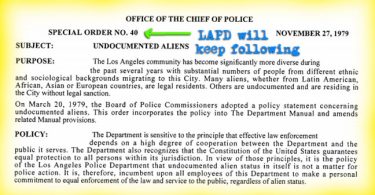
8. LAPD Chief Charlie Beck at LA Times forum says he guesses 13 to 17% of crime related to illegal immigrants. He supports special order 40.

9. Lapd Chief Charlie Beck says to do the policing he would like to do 12000 officers would be ideal. But he knows he isn’t abt to get that

10. New lapd Chief Charlie Beck says he won’t endorse candidates. Bill Bratton endorsed candidates and angered some.

11. Chief Charlie Beck tells LA Times forum his goal is to create an organization who success is not dependent on the leader.

12. Lapd chief charlie beck says of new lapd hq art “just glad it is on the times side of the building” the the art was dubbed cow splats

.

And the logical last and pièce de résistance Tweet:

13. When Edtr Jim Newton joked with Chief Charlie Beck that there are journalists sme lke to see in prison, Beck replied “where is Winton.”


So there you have it: Chief Charlie Beck in a lucky 13 Tweets—1820 characters or under.


And while we’re on the subject, here is that must-have book for your Christmas stocking. It is called, in all seriousness, Twitterature: The World’s Greatest Books in Twenty Tweets or Less, by LA writer David Rensin’s son Emmitt Rensin. David has just Tweeted that you should buy this book, 1. because it’s funny, and 2. because it’ll help pay for his son’s college education.

Posted in Chief Beck, LAPD, Los Angeles Times | 11 Comments »

More LAPD Command Staff Changes

November 30th, 2009 by Celeste Fremon

Shake-Up

Below you’ll find the release that announces the latest round of musical chairs going on at the LAPD
, as Chief Charlie Beck continues with his reorganization.

Other than the very depressing site of seeing Sharon Papa’s name being snatched away from the role of Assistant Chief to the position of Assistant Commander in the Valley Bureau (likely meaning around a $60 K pay cut), there are no monster surprises.

Since this is all being closely watched, (by those of us who watch such things, anyway) certainly as time goes along there will be more opinions surfacing—both praise and otherwise.

Right now, however, most on the list are getting good reviews.

Here’s the official statement:

Chief Beck Names Three New Commanders and Continues Reorganization

Los Angeles: Today, Los Angeles Police Department Chief Charlie Beck announced that Captains Blake Chow, Bob Green and Mike Moriarty will each be promoted to the rank of Commander.

In addition to the new members of his leadership team,
Chief Beck revealed the next phase in his effort to reorganize the Police Department for efficiency and effectiveness. The following changes, subject to budgetary review and approval, will be effective January 3, 2010.

Office of Operations

• Commander Dave Doan will become the Assistant to the Director, Office of Operations.

• Captain Blake Chow will be promoted to the rank of Commander and will become the Assistant Commanding Officer, Operations- Central Bureau.

• Captain Bob Green will be promoted to the rank of Commander and will become the Assistant Commanding Officer, Operations- South Bureau.

• Commander Andrew Smith will become the Assistant Commanding Officer, Operations- West Bureau.

• Commander Sharon Papa will become an Assistant Commanding Officer, Operations- Valley Bureau.

• Commander Jorge Villegas will remain an Assistant Commanding Officer, Operations- Valley Bureau.

More after the jump.

Read the rest of this entry »

Posted in Chief Beck, LAPD | Comments Off

« Previous Entries