Sunday, May 19, 2013
street news, views and stories of justice and injustice
Follow me on Twitter

Search WitnessLA:

Recent Posts

Categories

Archives

Meta

Sheriff Lee Baca


Supes Have Closed Door LASD Meeting …Valley Fever Flares in CA Prisons….Privacy Issues…And More

May 7th, 2013 by Celeste Fremon


LA COUNTY SUPERVISORS CANCEL TRAVEL TO HAVE CLOSED DOOR MEETING ABOUT LASD CONCERNS

There was to have been no Board of Supervisors’ meeting this Tuesday, because the Supes were scheduled to take their once-a-year joint trip to Washington DC instead. However, after last week’s LA Times interview with former Undersheriff Paul Tanaka in which Tanaka engaged in what can best be described as a verbal assassination attempt against Sheriff Lee Baca, the majority of the Board—Don Knabe, Gloria Molina, and Mark Ridley-Thomas—cancelled their respective trip plans and decided maybe a meeting was called for after all.

Or at least so we’ve heard. The meeting is to take place behind closed doors, so you and I won’t be able to observe first hand.

The agenda for Tuesday’s hastily planned meeting indicates the subjects up for discussion are “department head performance evaluations,” plus ” Significant exposure to litigation” and “Allegations regarding civil rights violations in the County jails.”

However, sources close to the board suggested that, more than anything, this meeting is about what Tanaka said, what the Feds might or might not be planning to do, what it all portends for the future of the department, and what actions—if any—might soon be required of the Supes given the storm around the LASD that is rapidly quickening.

We’ll let you know as we know more.


VALLEY FEVER FLARES IN CA PRISONS, JUST AS JERRY BROWN TELLS FEDS THAT CA’S PRISON HEALTH SYSTEM IS IN TIP TOP CONDITION

The AP has the story on this largely-hidden epidemic that endangers inmates in certain CA lock-ups. Here’s a clip:

As many as 3,000 prison inmates in central California deemed to be at risk from a potentially lethal lung disease may need to be moved to other regions under an order from a court-appointed federal overseer.

The directive, issued on Monday, marks the latest effort to stem cases of valley fever, or coccidioidomycosis, at two prisons where the disease was found to have contributed to the deaths of nearly three dozen inmates from 2006 to 2011.

But it could complicate court-ordered efforts to reduce overcrowding across California’s prison system, the nation’s largest…

And then here are a couple of clips from a more detailed story by John E. Dannenberg of The Prison Legal News:

In the past three years more than 900 of the 5,300 prisoners at California’s Pleasant Valley State Prison (PVSP) in Fresno County, plus 80 staff members, have contracted coccidioidomycosis, a fungus commonly known as “valley fever.” Over a dozen prisoners and one guard have died from the disease. Valley fever forms in the lungs, where inhaled fungal spores colonize.

The soil-based fungus, which is indigenous from California’s central valley down to South Texas, most often causes symptoms similar to the flu (and in the process confers lifelong immunity); however, in two to three percent of cases it metastasizes. Once it gets into the bloodstream it is often fatal.

Although valley fever has occasionally infected archaeologists digging in Utah’s Dinosaur National Monument and drug-sniffing dogs along the Mexican border, its statistical prevalence in California prisons is troubling. California reported 3,000 cases of valley fever in the general population in 2006, of which 514 were diagnosed at PVSP alone. This 17% morbidity rate among prisoners is astounding. Further, from a mortality standpoint, 12 deaths in 900 prison cases equals a 1.3% fatality rate – double the community rate of 0.6% (based on 33 deaths in 5,500 infections reported in Arizona in 2006). Put another way, if the general population had the same mortality rate as prisoners, there would have been another 38 valley fever-related deaths in the community.

[SNIP]

The high infection rate at PVSP (and to a lesser degree at other central valley prisons) has been correlated with two other factors: 1) importation of non-local prisoners and 2) prisoners with compromised immune systems. This has translated into a high rate of serious valley fever cases among HIV-infected prisoners from Los Angeles, many of whom are susceptible under both factors. As a result, prison officials have been preemptively moving such vulnerable prisoners from PVSP to other areas in the state…


YOUTH ADVOCATES HAPPY WITH JUVENILE JUSTICE FUNDING IN OBAMA BUDGET—BUT WILL THOSE SECTIONS PASS?

Youth Today has a column by the very-smart Liz Ryan of the Campaign for Youth Justice about the sections in the president’s budget that youth advocates see as the most crucial—namely the funding it provides for the 40-year old Juvenile Justice and Delinquency Prevention Act (JJDPA) that, in this go-round, focuses on three areas:

1. Keeping “status offenders” from winding up in the juvenile justice system. Status offenders kids who’ve done things that are against the law only because of their age—things like skipping school, running away, breaking curfew and possession or use of alcohol.

2. Getting kids out of adult jails and lock ups, whenever possible

3. Reducing the disparate treatment of youth of color in the juvenile justice system.

Here are the details.


LAPD & LASD LICENSE PLATE READERS KNOW WHERE YOU’VE BEEN, PRIVACY GROUPS SUE FOR INFO ON TRACKING PRACTICE

The idea that law enforcement may be compiling databases on the whereabouts of non-lawbreakers is making a lot of people jumpy, and has caused the ACLU and the Electronic Frontier Foundation to demand that both the LAPD and the LASD fork over information about how the data is being used.

Both Dennis Romero of the LA Weekly and the AP’s Tami Abdollah reported on the matter.

Here’s a clip from Abdollah’s story:

Two privacy rights groups questioning law enforcement’s use of automated license plate readers asked a judge Monday to order the Los Angeles Police Department and Los Angeles County Sheriff’s Department to provide more details on how they use the technology.

The American Civil Liberties Union Foundation of Southern California and the Electronic Frontier Foundation filed a writ against the city, county and its law enforcement departments after waiting more than eight months for a complete response to public records requests.

The groups are seeking one week of data collected by the readers, which are usually mounted on police cars and scan thousands of license plates in an officer’s shift. The readers – which collect the license plate numbers, the time, date, GPS location and a photo – alert law enforcement to stolen and wanted vehicles.

“If you’re not wanted for anything, it doesn’t do anything,” said Los Angeles County sheriff’s Sgt. John Gaw, who works in the advanced surveillance and protection unit. “It does collect that information, it does put it in our database, and we’re able to go back and review that information if you’re wanted in some type of criminal investigation.”

Privacy advocates are worried that about the growth of such law enforcement databases often outside the public’s eye and with little public oversight or information. They say the readers create a database that essentially tracks movements of innocent people, often long before any crime has been committed. But officials contend that the readers are a valuable piece of technology that helps solve crimes and simply speeds up and automates what would have been a slow, painstaking manual process only a few years ago.

Posted in ACLU, Board of Supervisors, Civil Liberties, Edmund G. Brown, Jr. (Jerry), LA County Board of Supervisors, LA County Jail, LAPD, LASD, prison, prison policy, Public Health, Sheriff Lee Baca | 43 Comments »

The Collateral Cost of CA’s Big Cuts to Mental-Health, LASD and Civilian Oversight…and More

May 6th, 2013 by Taylor Walker


EDITOR’S NOTE:
After a few months hiatus, Taylor Walker is back posting at WLA. And we’re delighted to have her!

(Matt Fleischer is working on some new WLA stories so you’ll be seeing him back here shortly, as well.)


THE AFFECT OF CA’S HUGE MENTAL HEALTH CUTS ON INCARCERATION

Amid all the kerfuffle last week over the interview with You-Know-Who, we missed a few important stories, most notable among them was a Mother Jones feature on cutting mental-health funding across the US, and the collateral affect on crime and incarceration. California was ranked among the highest budget-cutters with an alarming 21% cut over the last three years. The unintended consequences of those cuts that Mother Jones outlines should cause every policy maker to take note.

Here are some of the highlights:

California ($3,612.8 million in 2009 to $2,848 million in 2012, -21.2 percent): Inmates with severe mental illness often wait three to six months for a state psychiatric hospital bed. In 2007, 19 percent of state prisoners were mentally ill. By 2012, 25 percent were.

[SNIP]

For every $2,000 to $3,000 per year spent on treating the mentally ill, $50,000 is saved on incarceration costs.

Prisoners with mental illness cost the nation an average of nearly $9 billion a year.

In 1955, there was one psychiatric bed for every 300 Americans. In 2010, there was one psychiatric bed for every 7,100 Americans—the same ratio as in 1850.


LASD PERMANENT CIVILIAN OVERSIGHT PANEL

In 1992, the Kolts Commission recommended that a civilian oversight panel be established for the LA Sheriff’s Dept. In an Op-ed for the LA Times, civil rights attorney R. Samuel Paz points out that two decades—and a few more recommendations—later, there is still no permanent civilian oversight. The LAPD has the police commission; the LASD has nothing equivalent.

Here are some clips from Paz’s essay.

The Kolts Commission then, just as the jails commission now, rejected the sheriff’s argument that civilian oversight was unnecessary because, as an elected official, he was accountable to the public. The commission noted: “Indeed, we know of no major metropolitan police department in the United States which is not subject to some civilian oversight — except the Los Angeles County Sheriff’s Department.”

[SNIP]

The jails commission found the present oversight systems ineffective and inadequate. L.A. County Special Counsel Merrick Bobb’s frequent reports on systemic problems and the necessary reforms to fix them were ignored by the sheriff and lacked any enforcement mechanism or follow-up capability. The oversight by the Office of Independent Review, which was created in 2001 to monitor use-of-force and misconduct investigations, was found to be ineffective, ignored or changed by management. It also has been hampered by Sheriff’s Department officials withholding key documents on use of force in jails, in violation of the understanding that the Office of Independent Review was to have “unfettered access” to records. The ombudsman, which the jails commission described as the “clearinghouse for public complaints,” was found to be woefully inadequate in identifying patterns in complaints by civilians.


MILLION DOLLAR DETAINEE

The Pentagon spends an astronomical $900,000 on each Guantanamo detainee per year. Eek and egad! Surely this money can be put to better use elsewhere?

Reuters has the story. Here’s a clip:

The Pentagon estimates it spends about $150 million each year to operate the prison and military court system at the U.S. Naval Base in Cuba, which was set up 11 years ago to house foreign terrorism suspects. With 166 inmates currently in custody, that amounts to an annual cost of $903,614 per prisoner.

By comparison, super-maximum security prisons in the United States spend about $60,000 to $70,000 at most to house their inmates, analysts say. And the average cost across all federal prisons is about $30,000, they say.


LAPD INTERNAL AFFAIRS CHANGE-UP

LAPD Chief Charlie Beck is reassigning three deputy chiefs, including the head of Internal Affairs, Deputy Chief Mark Perez, to bring in “fresh perspective” to that bureau. It is not yet clear what the tweaking means regarding the department’s discipline policy, but we’ll keep an eye on it.

LA Times’ Joel Rubin has the story. Here are some clips:

Perez’s departure from the Professional Standards Bureau, which investigates officers accused of misconduct, is certain to raise some eyebrows within the department. Appointed to the post in 2006 by Beck’s predecessor, William J. Bratton, Perez moved the department away from its traditional approach to disciplining officers that was centered on giving officers incrementally harsher punishments for repeat offenses.

Instead, Perez put in place a system that, as he frequently said, emphasized “strategy over penalty.”

[SNIP]

In a brief interview, Beck said he is not looking for McCarthy to dismantle the current discipline system. Except in extreme instances in which he wants the officers fired, Beck said, “I still believe in using methods that reform behavior instead of punish it.”


REGISTER! VOTE!

By the way, today, May 6th, is the cut-off to register to vote in the Los Angeles mayoral runoff on May 21st. Go register! Quick! You can fill out the online application here.

Posted in Charlie Beck, elections, LAPD, Los Angeles Mayor, Sheriff Lee Baca | 6 Comments »

HOUSE OF CARDS: Former Undersheriff Paul Tanaka Trashes Sheriff Lee Baca

May 1st, 2013 by Celeste Fremon


EJECTED UNDERSHERIFF PAUL TANAKA ACCUSES SHERIFF BACA OF MISMANAGEMENT, OBSTRUCTION OF JUSTICE…AND A WHOLE LOT MORE


NOTE: FOR WED. PM UPDATE scroll to bottom of post.


Former LASD Undersheriff Paul Tanaka has given an interview with the LA Times’ Robert Faturechi
in which the powerful—and recently ousted—Tanaka accuses his former boss, Sheriff Lee Baca, of an amazing and disquieting list of faults and misdeeds:

Here are some of the highlights, in no particular order:


1. Tanaka describes the sheriff’s administrative style as disturbingly erratic and impulse driven—by turns, disengaged and focused only on his pet projects, then aggressively micro-managing, demanding that the department hire his friends, family, supporters and new acquaintances, still other times issuing whimsical and problematic orders, then forgetting days later that he’d issued them at all:

Tanaka said Baca frequently gave subordinates contradictory or foolish orders that they had to ignore because they violated department policy or common sense. A few months ago, for example, he said Baca was in a meeting with command staff, talking about the department’s budget shortfall, when he asked a subordinate to study the cost savings that would come from eliminating the agency’s community policing unit.

A week later, at another meeting, that captain began discussing his findings about cutting the unit, when Tanaka says Baca interrupted.

“He stops and he says ‘What did you say? What are you talking about?…I would never do anything like that,’ ” Tanaka recounted Baca as saying.

Tanaka said he had to call the sheriff later and remind him that the captain was “following your orders and you… embarrassed him.”

Tanaka said the sheriff was silent on the other end of the phone, before meekly saying “Oh.”


2. Near the end of the interview, Tanaka said that the sheriff ordered him to hide FBI informant Anthony Brown from the Feds until Brown could be debriefed by the LASD. In other words, Baca deliberately obstructed justice. In making this accusation, Tanaka tried to walk a tightrope by saying that, despite the sheriff’s orders, everybody only kinda, sorta broke the law, but not really, to avoid implicating himself. To wit:

A federal criminal grand jury has been investigating whether sheriff’s officials were hiding the inmate and the phone from the FBI, or whether they were protecting the inmate from retaliation by jail deputies he was “snitching” on, as a sheriff’s spokesman has said.

Tanaka said Baca ordered subordinates to keep the inmate from the FBI until the department finished with him. He said the sheriff explicitly denied a request from a federal official to return the phone.

“I want the inmate interviewed. I don’t want him leaving our custody. I want the phone, all of the information removed from it and I don’t want the phone to go anywhere,” Baca said, according to Tanaka.

Asked if the sheriff was obstructing the FBI investigation, Tanaka said that he and other subordinates “had to really weigh” Baca’s orders to avoid “cross[ing] the line of doing anything wrong.”

In this same vein, Tanaka said that Baca was in such a fit of pique over the FBI’s investigation of the county’s jails that he pulled the department’s participation in any joint crime-fighting task forces with the feds. “…an order Tanaka said he refused to carry out.”


3. Tanaka confirmed that he’s “considering a run” for sheriff against Baca in 2014.

In this context, “considering” means, one presumes, that he is planning to run, barring any force majeure, like, say, a federal indictment. (It has long been rumored that Tanaka has quietly put the pieces in place to, when the time comes, string together a patchwork coalition of voting blocks that he believes could allow him to win, even though he is not a well-known name.)

Otherwise, why so publicly and irrevocably blow-up his relationship with his former boss by inflicting the kind of switchblade swipes to Lee Baca’s person that the former undersheriff has just delivered via the Times? (Sorry for the mixed metaphor, but this interview is driving me to it.)

On the other hand, he may be cutting the sheriff in the hope that the sharks—read: feds—will circle around the bleeding guy and indict him, not the man holding the knife.

Or both of the above.


4. Asked about his reason for speaking out, Tanaka told Faturechi that he felt like he was unjustly scapegoated by the sheriff and by Baca supporters, in particular he mentioned the withering criticism he received by those department members who gave testimony before the Citizens Commission on Jail Violence. When the commission issued its report, it reserved its harshest assessments for the undersheriff.

Tanaka said his reputation was unfairly tarnished by sheriff’s officials who were upset that he was holding lazy supervisors accountable.

“They’re not used to that,” said Tanaka, who will remain on the county payroll as undersheriff until August. “In this organization, they’re used to the higher you go, the less responsibility.”

Miriam Krinsky, the executive director for the CCJV had this to say in response to Tanaka’s characterization of the commission’s findings:

The Commission conducted a comprehensive and thorough investigation. Our report reflects conclusions that stemmed from consistent and credible information. Our findings were not based on any single source or witness, but rather were the result of numerous reports, documents, memoranda and witnesses. It was based on the totality of that evidence that the Commission found that the Undersheriff had engaged in conduct — including troubling statements — that was inconsistent with the department’s Core Values and that undermined the ability of supervisors and others to address and remediate deputy misconduct and aggressive behavior that continued unabated for far too many years. And it was based on the totality of that evidence that the Commission recommended that the Undersheriff have no further responsibility for Custody operations or the disciplinary system.


POST SCRIPT: We were unable to reach Sheriff’s spokesman Steve Whitmore last night, although he’s usually very responsive. In the spokesman’s comments to the Times, however, he said, “the sheriff finds it very sad that his former undersheriff has raised these false charges motivated apparently by his personal disappointment and ambition. None of these allegations were made while he served as undersheriff. He raises them only now as he contemplates a run for sheriff.”


UPDATE – WEDNESDAY PM: Steve Whitmore did call back early this morning and we connected in the afternoon. He reiterated that the sheriff is “saddened” by former undersheriff Paul Tanaka’s actions. “But apparently Mr. Tanaka’s memory is clouded by his ambition. He’s welcome to his selective memory,” Whitmore added, “but it’s being driven by ambition.”

As to whether Sheriff Baca had any response to the fact that Paul Tanaka had pretty clearly accused him of obstruction of justice in his depiction of Baca’s having ordered the hiding and the debriefing of FBI informant Anthony Brown, Whitmore dismissed the notion altogether. “Sheriff Lee Baca has cooperated fully with this investigation from the beginning,” he said. “And he will continue to do so. The department’s doors are fully open to the FBI and the US Attorney’s office.”

Posted in LA County Jail, LASD, Los Angeles County, Sheriff Lee Baca | 83 Comments »

BETRAYAL OF TRUST – Part 1: Two Sheriff’s Deputies, Sons of Cop Fathers, Sue LASD for Threats, Retaliation, Conspiracy & More

April 29th, 2013 by Celeste Fremon


PROLOGUE

Last week two Los Angeles Sheriff’s Department deputies, Michael Rathbun and James Sexton—both the sons of law enforcement fathers—filed suit in federal court naming LA County, Sheriff Lee Baca, the former undersheriff Paul Tanaka, Lt. Greg Thompson, and a string of others.

The suit alleges retaliation, constitutional violations, malicious prosecution, conspiracy, harassment, direct threats—and a lot more.

It appears that Sexton and Rathbun tried every other possible route within the department to bring to light the alleged misconduct they said they witnessed, and to put a stop to the ongoing retaliation and agressive threats they reportedly experienced—but with no luck. So with much trepidation, the two brought this doozy of a lawsuit containing a laundry list of disturbing allegations, some of which we’ll cover in much more depth in the days to come.

For now here’s the overview:


RECKLESS ENDANGERMENT

To understand the whole of the 39-page lawsuit, which was filed on Tuesday April 23 by attorneys Brad Gage, Terry Goldberg, and Milad Sadr, all of Goldberg and Gage, it helps to remember that Rathbun and Sexton are the two deputies who were in the news some months ago, after a case they were working inside the jails allegedly got deliberately blown by their supervisor, Lt. Greg Thompson.

Sexton and Rathbun worked for the investigative unit inside the county jails known as Operation Safe Jails—or OSJ—an elite unit that develops intelligence sources and confidential informants among the inmates in order to better predict problems among the facilities’ gang populations.

The two, most particularly Sexton, were known for their facility at cultivating confidential informants—or CIs—who then yielded information that, in a great many cases, led to fruitful busts in the jails and, even more often, out in the street. Other units in the LASD, the LAPD and sometimes the FBI had all, at one time or another, been able to make use of Sexton and Rathbun’s information.

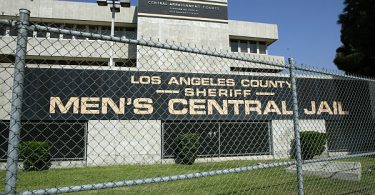
In the course of the investigation that would trigger the string of events leading to this lawsuit, the two had been told by a confidential informant, whom they had found in the past to be extremely reliable, that a deputy in Men’s Central Jail, whose name was Joseph Britton, was allegedly passing information—and possibly more—-to an inmate who was the primary white supremacist shot caller for the county jails. (Each racial group has its own gang hierarchy within each facility, and then an uber hierarchy in the county system as a whole.)

In return for his alleged favors for the white supremacist guy, who whose nickname is “Fritz,” Britton was allegedly getting expensive tattoo work for free by Fritz’s partner, who has a tattoo shop in the West Valley.

Sexton and Rathbun wrote up their detailed report on Britton, expecting their direct supervisor, Lt. Greg Thompson, to pass the information on to either Internal Affairs, or more likely, ICIB, the department’s internal investigative unit dealing with criminal matters, which would look into the allegations further.

Incredibly, Thompson did not pass the investigation up the line. Instead he took the un-redacted report—featuring Rathbun and Sexton’s name as investigators, and worse, the name of the confidential informant—and gave it to Britton, the deputy being investigated, plus others, thus effectively blowing the case to smithereens, and putting their CI potentially at lethal risk, since he was now in a position of being known as a snitch among Aryan Brotherhood types when he got out of jail. Being a snitch, in gang circles of any ethnicity, is traditionally a death sentence.

After Thompson leaked Sexton and Rathbun’s report, he reportedly did the thing that Sexton and Rathbun found the most unforgivable: He allegedly ordered one of his “acolyte” deputies to declassify their CI from a “K-10″ protected status, then to move him into the jail’s “general population,” meaning he was out among the masses, completely unprotected, thus his life would be immediately at risk—especially now that Lt. Thompson had liberally handed around the confidential investigative report that would unambiguously label the CI as a “snitch.” A rat.

Indeed, an attempt on the CI’s life was reportedly made almost immediately after the move: An inmate tried to shank him in the showers. The CI survived, according to Rathbun and Sexton, but only because he was larger and faster than his assailant.

The minute they heard of the CI’s exposure, Sexton and Rathbun pulled every string possible, and managed get their man back into a protected unit where they kept a close eye on him.

Stunned and furious at what they saw as their boss’s deliberate endangerment of their informant, Sexton and Rathbun went to internal affairs themselves and laid out what they knew.

That, according to the lawsuit, is when the threats and the retaliation began.

Months later, when an article about the Britton matter appeared in the LA Times, Rathbun and Sexton were subsequently called to testify in front of a federal grand jury.

After the feds entered the picture, the retaliation, the intimidation and the implicit and explicit threats became far more intense and frightening, according to the lawsuit.


SECOND GENERATION LAWMEN

Both Rathbun and Sexton are well-educated deputies, and second-generation cops, who appeared to come to the department with the idealistic view that the LASD was a place where they could make a positive contribution. Rathbun graduated from UC Santa Barbara, while Sexton began at West Point, finished up at the University of Alabama, and is now getting his master’s at USC.

Mike Rathbun is the son of 35-year LASD veteran, David Rathbun, now a reserve deputy. James Sexton is the son of Ted Sexton, the department’s newly hired Chief of Homeland Security, who left his longtime job as head of the sheriff’s department in Tuscaloosa County, Alabama, to come to work for his friend, Lee Baca.

In fact, when they had reportedly exhausted all other avenues, the lawsuit also alleges that each of the deputies talked multiple times personally with Baca whom they informed of everything that now forms the basis of the 39-page complaint. Sexton and Rathbun maintain they asked Baca for help, for advice as how best to proceed and, as matters deteriorated, they expressed fears for their personal safety.

Yet, it all came to nothing, they said.

Instead, the retaliation and threats against Rathbun and Sexton continued to get worse.


THE ANTHONY BROWN FACTOR: HIDING THE FEDERAL INFORMANT (FROM THE FEDS)

Even before the matter of Lt. Thompson, and the alleged endangering of the confidential informant, the lawsuit states that Rathbun and Sexton were ordered to participate in an “operation” that they quickly realized likely involved them in a crime—namely the hiding of FBI informant, Anthony Brown.

According to the lawsuit, the matter of moving Brown from place to place, clandestinely, inside the jail system, which LASD officials have claimed was done for Brown’s safety, was explicitly for the purpose of keeping him away from his FBI handlers and anyone from the U.S. Attorney’s office. Sexton and Rathbun know this because they were part of the team tasked with an extremely elaborate scheme of allegedly hiding Brown from any FBI agents or assistant US Attorneys, so that he could be debriefed by members of the sheriff’s department, who wanted to know for themselves what Brown had seen and heard that he was going to pass along to the Feds.

The lawsuit alleges that Lt. Thompson led the operation, but that he repeatedly stated to his troops that he did so at the direction of Paul Tanaka. Sexton and Rathbun describe multiple instances where Tanaka’s oversight was verified.

The deputies also report having knowledge of Sheriff Lee Baca being briefed on the operation.


WHITE POWER GANGS & RACIST DEPUTIES

Among its many disheartening allegations, the suit maintains that certain members of OSJ—the elit investigative unit within the LA County Jail system of which Sexton and Rathbun were members—have “an inappropriate relationship” with “various inmate gangs, particularly white supremacist gangs,” and that these department members use the inmate gangsters “as proxies or agents to retaliate against other LASD deputies or inmates” against whom they have a beef or grudge.

Sexton and Rathbun reportedly know this because they’ve witnessed it, and also because, once the Britton case came apart, they began being targeted.

The lawsuit outlines a quid pro quo system in which the Aryan Brotherhood-like types get special privileges that they are “otherwise legally precluded from.” In return, the white power gangsters do dirty work for a clique of racist deputies, a group in which Rathbun and Sexton say Thompson is included. (The suit also notes that Greg Thompson is a Viking from the same era as Paul Tanaka, and is reportedly very close to Tanaka. Thompson is named multiple times for wrongdoing in the famous class action lawsuit, Thomas v. the County of Los Angeles, settled in 1996 for $9 million.)

The lawsuit also alleges incidents in which OSJ deputies working in Men’s Central Jail would beat up inmates when it suited them, in one case, repeatedly harassing and injuring one of Sexton’s other confidential informants.

When Sexton reported the issues with his informant, having first vetted the claims to his own satisfaction, nothing was done. It was just bad judgement at most, he was told. Inmates lie.


THREATS & RETALIATION

The tale of the escalating threats and retaliation against Sexton and Rathbun that the lawsuit alleges is alarming and likely worth its own harrowing narrative. Here, however, is a sampling:

**In late February 2012, Sexton was “cornered” in a department office by two OSJ deputies, who were on duty in uniform, who told him that he and Rathbun “better shut up or else,’ about the Britton case.

**Also in February, Sexton was confronted around 1 am in the jails parking lot by a uniformed deputy who warned, his manner agressive, that he and Rathbun had better keep their mouths shut about the Britton case.

**At the same time, MCJ OSJ deputies referred to Sexton and Rathbun as “snitches” and told them that in moving “Fritz,’ the white power shot caller, the two were “fucking up their program.”

**In March 2012, Sexton conducted an audio-taped interview with a suspect in an unrelated case, in the custody facilities. Bizarrely, the audio was subsequently leaked and posted on YouTube. “Sexton’s ID was thus exposed, and his well-being placed in jeopardy.” Sexton asked Lt. Thompson to investigate the matter, but Thompson reportedly declined telling Sexton to ‘forget about it.”

**In April 2012, Rathbun, who had been struggling with drinking to cope with increasing job stress, had a bad night in which he drank a lot, and got into a “fender bender,” and was charged with a misdemeanor DUI. The video of the arrest, was anonymously posted on the LASD’s intranet network.

**“White power” literature was left on the front porch at Rathbun’s home in a manner that was seen as a threat. At the same time, white power inmates in MCJ began referring to Rathbun and Sexton as “race traitors.”

**The lawsuit reports several similar and aggressive warnings of “you better…or else” from OSJ deputies, including Lt. Thompson’s son, Matt Thompson.

**In April 2012, right before Sexton was due to be interviewed by Internal affairs about the Britton incident. Lt. Thompson himself called Sexton at home and asked if he was going to talk to IA and ICIB. Sexton said he was. Thompson then reportedly abruptly hung up.

**The threats continued, and included awkward meetings with Thompson who demanded to know what Sexton and Rathbun had told LASD personnel in this or that interview.

**In May, Thompson called Sexton into his office. “Have you been calling your dad back home about this?” he wanted to know. Yes, sir, said Sexton. “If I were you I’d quit telling your dad war stories about what’s going on in this jail.”

**Often now, according to the lawsuit, the threats came with explicit mentions of bodily harm.

** After Sexton and Rathbun were subpoenaed to testify in front of a grand jury, and indeed testified, two deputies cornered Sexton, one of them, Lt. Greg Thompson’s son, Matt Thompson, wanting to know what they’d talked about at the grand jury.

**In June, after Thompson was removed from the unit, two deputies announced at a unit party that whomever caused “the boss” to be transfered would “answer” for their actions.

**Sexton has allegedly been subject to frivolous retaliatory investigations by Internal Affairs, each time coming to nothing.

**And then there is the matter of Rathbun’s DUI, which was quietly upped to a felony, which would have likely meant prison time, although, according to the lawsuit, there was no factual basis whatsoever for the escalation of charges. The suit alleges that the charges were raised at the behest of LASD supervisors.

**Rathbun’s car was vandalized on LASD property.

**Sexton found men in an unmarked car across the street from his house, watching his home, attempting to take pictures. When Sexton approached them, they claimed to be “insurance inspectors,” but reportedly sped away when he asked for ID.

**In the summer of 2012, Rathbun was suspended without pay for the DUI, but assured by Baca that he would be able to return with no harm to his career.

**In September 2012 Sexton needed to make a work-related visit to the department’s Temple Station, where Thompson had been transferred after an LA Times article precipitated the opening of an IA investigation into his actions regarding the Britton matter. Upon arriving, however, Sexton was intercepted by Temple station’s Sgt. Larry Mead, who reportedly relayed a message from Thompson that Sexton should leave the premises, “to prevent an incident.”

**In late 2012, a high-ranking supervisor expressed concern that Sexton and Rathbun’s lives might be in danger.

**in late 2012, “Rathbun discovered that LASD personnel, including Detective Perkins,” were the ones responsible for escalating his DUI misdemeanor to a felony. (The charge was eventually dropped again by the DA to a misdemeanor, and the case settled.)

**In March of 2013,” reports the lawsuit, “Michael Rathbun was recommended for termination,” although the DUI was his first infraction, and according to a document obtained by WLA, at least 5 other LASD deputies and 4 non-sworn LASD staff members also got DUI’s in the first two quarters of last year, for which they received only 15 to 30-day suspensions.


BETRAYAL OF TRUST, Part 2 coming soon.


UPDATE:

Posted in jail, LA County Jail, LASD, race, Sheriff Lee Baca | 32 Comments »

Three High-Level LASD Supervisors Demoted Over Charity Foot Race Cheating Scandal

April 18th, 2013 by Celeste Fremon


While it doesn’t rise to the seriousness of illegal juicing for the Tour de France,
cheating on the once-a-year, 120-mile charity foot race known as Baker to Vegas, a competition open solely to law enforcement agencies from all over the country, is considered to be something approaching a sacrilege.

So when it was found that a Baker to Vegas team from the Los Angeles Sheriff’s Department may have put an especially skilled ringer in as one of their runners, all hell deservedly broke loose.

The discovery of the alleged cheating resulted in an internal affairs investigation and, as of this week, disciplinary action is being taken against five LASD members, including the demotion of two captains and one commander—-all of whom work for the Transit Policing Services Bureau (TSB), which is one of the bureaus that the LASD is contracted to run.

To demote so many command staff members at once is close to unprecedented, said department insiders.

“It’s an A bomb!” one department source told us.

According to several department sources in a position to know, the three demoted command staffers are Captain Matthew Rodriguez, Captain Holly Perez and Commander Pat Jordan.

An emergency meeting was reportedly held on Wednesday afternoon at Transit Policing Services to discuss the startling turn of affairs, which left staffers reeling.

The popular charity event known as the Baker to Vegas Challenge Cup Race, or B2V, is a competitive foot race through the Mohave Desert that has been in existance since 1985, and has grown to include law enforcement teams made up of probation officers and district attorneys along with the traditional police and sheriffs competitors. B2V is held each year on a weekend in March or April. (For instance, this year’s race was last weekend, on Saturday, April 13.)

The course begins 25 miles north of Baker CA. on Highway 127 and finishes inside the Hilton Hotel Convention Room in Las Vegas. It is run as a relay, with approximately 20 runners on a team, each running a leg, plus support team members to track and aid their runners with follow cars.

The highly festive event is a favorite of both the LAPD and the Los Angeles Sheriff’s Department, which each fields several teams every year.

The team from Men’s Central Jail won several years in a row from 2007 to 2011. Then for 2012 and 2012, the winning baton passed to the LAPD’s Elite team of runners.

Sources tell us that last year’s Transit team substituted a “ringer” for one of their officially listed runners. The alleged substitute runner was reportedly the son of a department member who did not himself work for the department, and thus was entirely ineligible to run. The ringer reportedly turned in one of the best times for any leg of the race.

When news of the alleged deception and the subsequent demotions surfaced, members of other law enforcement agencies expressed surprise and dismay.

“How freaking stupid can you be to do something like that?” an LAPD source wrote to WLA in an email.

According to department spokesman Steve Whitmore, the disciplinary action was made solely by Sheriff Lee Baca, although newly hired Homeland Security Chief Ted Sexton, who oversees the Transit Police along with Aero Bureau and other LASD units, was fully briefed on all stages of the decision making.

“The Sheriff takes matters like this one very seriously, and he acted accordingly,” said Whitmore, who also said he was prevented by the Peace Officers Bill of Rights from confirming any names or ranks of those disciplined.

EDITOR’S NOTE: While it’s commendable that the department took swift action on The Great Foot Race Cheating Scandal, we cannot help but note that it has seemingly been in no hurry to come to a conclusion on far more serious matters like, say, this one, which began in February of 2012, more than a year ago.


IN OTHER NEWS….MONTEREY COUNTY USES ALTERNATIVES TO INCARCERATION TO KEEP JAIL POPULATION DOWN, POST-REALIGNMENT

Although a 2012 civil grand jury in Monterey County was critical of the county’s handling of the additional inmates coming to the county’s jail, most of the county’s other stakeholders approved of the way Monterey’s sheriffs, DA, probation, public defender, and others, have effectively used methods such as own-recognizance release, pretrial screening and involuntary home detention, as well as pending plans to transfer inmates to other counties, according to a report by Jim Johnson of the San Gabriel Valley Tribune.

Here’s a clip:

Monterey County’s already overcrowded jail is not more packed than usual due to realignment of state prison inmates to local control, contrary to a county civil grand jury’s findings.

The efforts of local law enforcement officials to use alternatives to locking up inmates have helped keep it that way.

But the county jail is facing the prospect of a growing inmate population because of realignment in the near future until the effects of treatment and rehabilitation programs are fully realized.

That is the main message the Board of Supervisors indicated Tuesday it wanted to send to the 2012 civil grand jury in response to its findings and recommendations. The supervisors approved a modified response to the grand jury’s suggestion the jail was suffering from “gross overcrowding” largely because of the “increased incarceration of serious offenders and the additional population resulting from the implementation” of AB 109, the state legislation that transferred responsibility for a large percentage of state prison inmates to local oversight.

Supervisor Jane Parker asked county staff to include a list of efforts local law enforcement officials have undertaken to manage the jail population. She noted the jail has been stretched beyond its capacity for years, long before realignment, and could have been a bigger problem without management efforts.

“They’ve done a lot of work setting up” alternative methods, Parker said. “They’d be even more overcrowded
under AB 109 without those efforts.”


CITY ATTORNEY CANDIDATE HOLDS PRESS CONFERENCE IN RESPONSE TO WEDNESDAY’S SENATE DEFEAT OF ASSAULT WEAPON BAN.

City Attorney candidate Mike Feuer will hold a press conference Thursday at 2 pm with leaders of the Brady Campaign to Prevent Gun Violence, along with victims of gun violence, to discuss his plan to reduce gun violence as L.A.’s next City Attorney.

The press conferences is, in part, in response to the blocking by the US Senate, on Wednesday, of the assault weapon ban legislation.

Jonathan Weisman of the New York Times has a story on the Senate’s action. Here’s a clip:

A wrenching national search for solutions to the violence that left 20 children dead in Newtown, Conn., all but ended Wednesday after the Senate defeated several measures to expand gun control.

In rapid succession, a bipartisan compromise to expand background checks for gun buyers, a ban on assault weapons and a ban on high-capacity gun magazines all failed to get the 60 votes needed under an agreement between both parties. Senators also turned back Republican proposals to expand permission to carry concealed weapons and to focus law enforcement efforts on prosecuting gun crimes.

Sitting in the Senate gallery with other survivors of recent mass shootings and their family members, Lori Haas, whose daughter was shot at Virginia Tech, and Patricia Maisch, a survivor of the mass shooting in Arizona, shouted together, “Shame on you.”

President Obama, speaking at the White House after the votes, echoed the cry, calling Wednesday “a pretty shameful day for Washington.”

Opponents of gun control from both parties said that they made their decisions based on logic, and that passions had no place in the making of momentous policy.

“Criminals do not submit to background checks now,” said Senator Charles E. Grassley, Republican of Iowa. “They will not submit to expanded background checks.”

It was a striking defeat for one of Mr. Obama’s highest priorities, on an issue that has consumed much of the country since Adam Lanza opened fire with an assault weapon in the halls of Sandy Hook Elementary School in December.

Jeremy Peters of the NY Times reports here about the feelings of personal defeat felt by Senator Dianne Feinstein when she watched helplessly as her bill went down in flames, despite her efforts.

Posted in LA County Jail, LASD, Sheriff Lee Baca, Uncategorized | 96 Comments »

LASD Commander Accused of Sexual Harassment Allegedly Bragged About Running Illegal Errands for Baca

April 16th, 2013 by Celeste Fremon


As a part of the sexual harassment lawsuit filed in February by LASD Lieutenant Angela Walton against Commander Joseph Fennell,
Walton’s attorney filed a new motion on Monday requesting Fennell’s financial records, alleging that, in the course of trying to persuade or threaten Walton into bed, the commander bragged about running illegal errands for Sheriff Lee Baca, from which he benefited in terms of greatly enhanced power within the department, and also possibly monetarily.

WLA has previously reported that Walton, 44, a bright, personable department supervisor—who is also one of the “poster girls” for department recruitment—has alleged in a civil complaint for damages filed in mid-February that, for the past four years Fennell, who was Walton’s superior, “required sexual conduct as a condition of advancement” and engaged in a “lurid pattern of unwanted sexual conduct” toward Walton. The complaint further states that when she repeatedly dodged and refused his advances “in as respectful a manner as possible,” he “harassed, stalked, threatened and retaliated against” her.

Now in this new motion (that WitnessLA has obtained) Walton’s attorney, Okorie Okorocha, alleges that as a part of Fennell’s ongoing campaign to cajole/coerce/threaten Walton into having sex with him, the commander made references to power and influence he had acquired by running illegal errands during the period that he served as Sheriff Lee Baca’s driver.


THE VALUE OF BEING A DRIVER

To better understand exactly what is being alleged here, it helps to know that, to be the sheriff’s driver, while not an advance in rank, is generally considered to be a coveted jump up the department ladder, as drivers make a lot in overtime and, after serving the sheriff, one usually advances very rapidly since, among other things, the position gives an individual lots of chances to positively impress people at the top of LASD command staff.

Indeed, Fennell’s career appears to have been on an upward trajectory from the driver assignment onward.

However, the filing claims more, alleging that Fennell “explicitly told the Plaintiff that he was invincible and untouchable at the Sheriff’s Department and wielded unlimited power, because of the favors he did for Sheriff Lee Baca, while he was the driver/bodyguard” [for Baca] and this secret information he had on the Sheriff, was leverage…”

Some of the favors Fennell admitted to, according to the filing, are the following:

1. Being a courier for Sheriff Lee Baca, who would pick up and return with kickbacks, campaign donations, and bribes from various individuals in cash. As a courier, FENNELL would collect $30,000 to $100,000 in cash for the Sheriff and return it to him and would be compensated in many ways.

2. FENNELL drove Sheriff Lee Baca to engage in sexual liaisons and encounters with various women throughout the County of Los Angeles and while on the clock and witnessed the Sheriff’s affectionate tendencies towards these women.


ALLEGATIONS OF SPECIAL CONTRACTS & PEELING SUVS

In addition, the motion alleges that Fennell was part of his own kick-back scheme involving the “preferential awarding of contracts for the graphics placed on Sheriff’s Department vehicles.”

This allegation reportedly refers to special SUVs that are used for department recruitment and are “wrapped” with various recruitment photos. According to Okorocha, when Walton was working in the recruitment unit, she found that the quality of the “wrapping” done by the company that Fennell had selected, was inferior and tended to peel, so found other venders whom she concluded did better quality work, for a much lower price, and recommended that the existing company be replaced when the contract came up for renewal, but was told to back off, that the original company was inviolate.

Finally, the motion alleges that Fennell seemed to throw “large amounts” of cash around, including when, the motion states, he offered a “substantial amount of money in a failed attempted to purchase sex from the plaintiff,”, and booked expensive hotel rooms “on several occasions for the purpose of trying to coerce the Plaintiff into having sexual relations with him.”


THE DEPARTMENT RESPONDS

Following the filing of the lawsuit, the sheriff’s department launched an internal affairs investigation, according to department spokesman Steve Whitmore. “It will get to the bottom of the allegations.” It was a statement that Whitmore reiterated on Monday.

Fennell again declined to speak to WLA directly, but communicated through Whitmore that he is “looking forward to the IA investigation that will show that the lawsuit and its allegations are not grounded in fact.”

Joseph Fennell was one of the five supervisors handpicked in the fall of 2011 by Sheriff Lee Baca for his Commander Management Task Force, a sort of super group sent into the department’s scandal-plagued custody division to “effect positive change within the Los Angeles County jail system.”

In the department’s very recently reorganized command staff (which eliminates the role of undersheriff) Cdr. Fennell is working as a high level supervisor in the Countywide Services Division.

Lt. Walton is a supervisor at the Pitchess Detention Center in Castaic where, according to the lawsuit, she was assigned punitively during a period two years ago when her father was dying and she requested to be stationed closer to home.


IN THE PHOTO ABOVE, Lt. Angela Walton is standing at the far left.


AND IN NEWS THAT AFFECTS US ALL, THE NEW YORKER COVERS THE BOSTON MARATHON EXPLOSIONS

As we all still reel from the many-sided pain and confusion thus far wrought by the Boston Marathon explosions, here and here and here and also here are several moments in commentary from the New Yorker—all of which thankfully is not hidden behind a paywall.

Our thoughts are with Boston.

Posted in LA County Jail, LASD, Sheriff Lee Baca | 55 Comments »

Baca to Be Interviewed by FBI for Role in Hiding Federal Informant & More

April 11th, 2013 by Celeste Fremon


According to a new LA Times story, Sheriff Lee Baca
“played a significant role” in the department’s efforts to hide FBI informant, Anthony Brown, inside the jail system by moving him under various aliases from facility to facility.

Robert Faturechi also writes that, on Friday, Baca is being interviewed by the feds about the informant situation and other department issues.

Here’s a clip from the story:

Los Angeles County sheriff’s officials learned in the summer of 2011 that the FBI had enlisted an inmate in the Men’s Central Jail to collect information on allegedly abusive and corrupt deputies.

In an unusual move, sheriff’s officials responded by moving the inmate, a convicted bank robber, to a different jail under fake names, including Robin Banks.

They assigned at least 13 deputies to watch him around the clock, according to documents reviewed by The Times. And when the operation was over, the deputies received an internal email thanking them for helping “without asking to [sic] many questions and prying into the investigation at hand.”

Whether Pandora’s Box was intended to protect the inmate or neutralize him as an FBI informant is a key issue in a federal investigation into brutality in the jails.

Four sheriff’s officials told The Times that Sheriff Lee Baca played a significant role in the operation: After learning that an inmate in his jails may have been working as an informant for the FBI, Baca called a meeting and gave his staff orders on how to handle the situation. One of the four officials said Baca continued afterward to guide the operation and get updates.

On Friday, Baca will be interviewed by federal prosecutors examining jail abuse and other problems in the Sheriff’s Department. Part of the inquiry centers on whether by holding inmate Anthony Brown under aliases and moving him, sheriff’s officials were obstructing an FBI investigation.

In an interview this week with the Times’ Editorial Board, Baca said he’s been assured he’s not a target of the investigation….

Posted in LASD, Sheriff Lee Baca | 31 Comments »

Interview With LASD’s New Top Jailer…..a Profile of Former Gangster….New Probation Report Describes “Alarming” Misconduct…. Petersilia Speaks on Realignment

April 4th, 2013 by Celeste Fremon


PATT MORRISON TALKS TO THE LASD’S NEW JAILER-IN-CHIEF

The LA Times Patt Morrison did an interesting Q & A interview with Terri McDonald, the Los Angeles Sheriff’s Department’s newly appointed Assistant Chief in charge of LASD’s custody facilities—its jails.

Interviews like these are tricky both for the journalist and the subject because someone in McDonald’s position needs to sound serious, knowledgeable and substantive but not be particularly controversial, or in any way critical of the department or, heaven forbid, her new boss, the sheriff. Moreover, she must accomplish all this while navigating a path that is, due to the department’s ongoing scandals, investigations, and problems, loaded with extremely large bear traps. Thus the temptation is for the interviewee to say not much of consequence—which leaves the interviewer with a load of meaningless pablum.

But both Morrison and McDonald did much better than that.

There were no monster surprises or gasp-producing revelations. But it’s a smart conversation that is in a subtle way, quite revealing.

Below is a clip from the middle of the interview. But read it all—-especially that part about McDonald’s favorite prison movies.

In your new job, do you have the authority not just to make recommendations but to carry them out?

I believe the sheriff has given me full authority to do that. These aren’t easy problems, and fixes don’t happen overnight. Many solutions require resources, and it’s still a time of constrained resources. We just have to learn to be creative.

[SNIP]

Is there a philosophy of incarceration that you embrace?

Three kinds of offenders come into the system. One group of offenders are just criminally entrenched. They tend to be rather sociopathic, predatory, violent, very difficult to manage and very dangerous. The second group has made a situational mistake. They’re coming in to serve their time. They have abilities, and when they get out [they won't] return. The third group lands somewhere in between. If they can be reached, they’re likely to be successful. If you don’t provide those services, they’re likely to go on to a lifetime of criminality.

How has realignment changed the system?

Post-realignment, parole violators are serving time locally. They’re referred to in the state prison system as churners — they come in, they serve 45 days or so, then out they go. That’s the same population sitting in county jails now. [Some] 60% of those have a substance abuse problem that hopefully you can address.

Just this past week, The Times wrote about a 2009 email from a sheriff’s deputy to two black colleagues about the “Black Panther LASD.”

It is currently under investigation. But I consider it inappropriate behavior.

Late last year, a couple of deputies exchanged pictures of beaten-up inmates. One message read, “Looks like we did a better job.” How do you change these mindsets?

[The state] system had similar allegations. I was one of the folks who rolled out the new use-of-force training policy [there] and also developed and implemented a statewide policy eradicating the code of silence. [You have to] tell people what will not be tolerated.

L.A. County’s already put together an excellent use-of-force policy, not just when and where you use force but how you track it and monitor it.

Unfortunately, no matter how hard executives and managers work, occasionally a stray employee is the wrong employee for any law enforcement agency.

Read on!


FORMER GANG MEMBER AGUSTIN “TIN TIN” LIZAMA TALKS ABOUT LOSING HIS ARM, HIS BEST FRIEND AND HIS BROTHER TO GANG VIOLENCE. NOW HE HELPS OTHERS RECOVER HOPE

Tin Tin Lizama is one of the best men I know. I met him in 2006 when my novelist friend Leslie Schwartz and I managed to rope ourselves into running a poetry writing class at Homeboy Industries. The thing was co-sponsored by PEN USA (where I was on the board of directors) and funded primarily by the California Council for the Humanities. The idea was to help former gang members, and young, at-risk wannabe gang members find their individual voices through writing, and also through interviewing each other for oral histories—all culminating in a couple of performances where the homeboys and homegirls read their work, plus the publication of a book that anthologized a poem or three from each student, plus the best of the interviews.

(I wrote a little about the class here and here.)

Back then, Agustin Lizama—called Tin Tin for short— was one of the class’s shy but budding talents. Yet I noticed that he never took his left arm out of his pocket. What I know now, but didn’t know then until he disclosed the secret in his writing, was that he was hiding the fact that both his left hand and part of his arm was missing, blown off by another gangster in a drive-by shooting when he was 12.

Now a gifted public speaker, the head of Homeboy’s domestic violence program, and a devoted father, Tin Tin has no such reticence. He has learned the power of revealing himself—his arm, his once-buried emotions, his intelligence, and his enormous sense of compassion.

I tell you all this because I happened to notice that Kathleen Miles at the Huffington Post has written a a very nice profile of Tin Tin.

Here’s how it opens:

When Agustin Lizama was 11 years old, he joined a gang. When he was 12, he was shot.

He remembers coming home from school that day and heading down to the corner store, where his brother, then 15, was hanging out with their other fellow gang members.

A car drove by and one of the occupants fired a 12-gauge shotgun at close range. “I looked down and saw half my thumb and a couple pieces were still there, but everything was pretty much hanging,” said Lizama, now 33.

A pellet had gone directly into his skinny forearm. “I started screaming so loud. Then I was in shock, numb. I couldn’t answer people’s questions. The pain was so bad I don’t think my body or brain could really take it.”

At the hospital, doctors had to remove about half of his left forearm and hand. Instead of compelling him to turn away from gun culture, the injury forced Lizama further into the gang. “At the time, my support was already the gang. So it just drove me deeper,” he said.

Lizama grew up in the northeast LA neighborhood of Glassell Park as one of seven children, all raised by their single mother. Because his mother juggled several jobs, it seemed that the only attention he got from her was a beating if he did something wrong, he said.

“That’s why I joined a gang. I was so hungry for attention, and they gave it to me,” he said.

The first thing Lizama did once he recovered from the shooting was to buy a gun — a black market .22-caliber revolver for $44. “I wasn’t going to get caught slippin’ again,” he said. “It was the most empowering feeling.”

Read the rest.


REPORT FINDS EMPLOYEE MISCONDUCT STILL TOO HIGH AT PROBATION DEPARTMENT

The Los Angeles Office of Independent Review (OIR) issued its yearly report assessing LA County Probation and found that, while there was a slight improvement in employee misconduct over 2011, there was still way too much, especially when it came to those who supervised kids.

Here are a couple of clips on the just-released report from the story by Christina Villacorte of the Daily News.

An alarming number of Los Angeles County Probation Department employees were accused of misconduct both on and off duty in 2012, though the figures are down slightly from the year before, according to a report Wednesday by the county Office of Independent Review.

Robert Miller, deputy chief attorney at the OIR, which the county Board of Supervisors appointed to monitor misconduct investigations at the department, said, “A constant concern is their use of force in the juvenile institutions.”

[BIG SNIP]

The OIR report profiled several incidents of on-duty misconduct, including an officer stealing public funds from youths making the transition from foster care to independent living, and another using a department computer to search for an ex-wife in violation of a court order.

The off-duty misconduct included Carl Washington, a high-ranking manager and former state assemblyman, being arrested at Probation headquarters in Downey, accused of stealing about $200,000 from financial institutions by claiming to be a victim of identity theft.

One employee was investigated for, but not charged with, attempted murder after he shot a man he had argued with at a bar. Another employee was arrested for indecent exposure and lewd conduct after being caught masturbating at a public park.

Not cheering at all.


STANFORD’S PRISON & PAROLE EXPERTS, JOAN PETERSILIA AND ROBERT WEISBERG, SAY REALIGNMENT CAN SUCCEED, JUST GIVE IT A MINUTE

In an Op Ed for the Sacramento Bee, Joan Petersilia, and Robert Weisberg, write about how California’s inmate realignment is doing, what it is doing, and where it needs to go.

Petersilia is one of the nation’s top corrections system experts and, along with colleague, Weisberg, she runs Stanford’s Criminal Justice Center.

She has also been given a grant to assess how realignment is faring in each of the counties.

All this is to say that her sober-minded, unfrilled analysis of the issue is worth reading.

Here’s a clip from the essay.

…Since realignment went into effect 18 months ago, the state prison population has declined by roughly 25,000. Quite predictably, the local jail population has simultaneously increased, and by some projections, the jail increase might soon roughly equal the prison population decline.

If the total number locked up in state prisons or jails turns out to be about the same in the near term, should we conclude that realignment isn’t succeeding? We think the answer is no, because that’s the wrong metric for evaluation.

First, even if accurate, the projection that the overall incarceration population in California may not change doesn’t diminish realignment’s success. The law’s primary and most immediate goal was to satisfy the federal injunction to cure unconstitutional overcrowding.

Of course, the Plata case is not yet resolved; the plaintiffs contend many illegal conditions persist. But given the dramatic decrease in the number of state prisoners, and the overhaul of health care and mental health care, and other operations, we know that in time the injunction will terminate.

When it does, realignment will deserve much of the credit. Moreover, many felons who would have entered state prison on new crimes or re-entered following parole revocations, but instead have been “realigned” under the new law surely pose some risk to public safety. Realignment wasn’t intended to change the length of sentences, only the place where sentences are served. If prosecutorial and judicial decisions lead to most of those realigned felons being in jail, then realignment will have solved a constitutional problem without reducing public safety.

Finally, the Eighth Amendment violations in Plata were hardly legal technicalities. Overcrowding caused shocking numbers of preventable deaths from disease and even suicide, serious spread of contagious disease, and a lack of even minimal mental health care. It also exposed inmates and guards to violence, and deprived educational and rehabilitation programs of minimal space to operate.

If realignment helps address those problems, it will help achieve an undeniable social good while also potentially reducing recidivism – for both jail and prison inmates

Posted in jail, LA County Jail, LASD, Sheriff Lee Baca | 1 Comment »

Realignment Battles…..and LA’s Jail Dogs

April 3rd, 2013 by Celeste Fremon


ASSEMBLY DEMS REJECT FIRST ROUNDS OF ATTEMPTED REALIGNMENT ROLL-BACKS

After decades of general spinelessness on criminal justice reform (and I mean that in the nicest possible way), certain California democrats are energetically slapping down a rash of ill-conceived pieces of legislation that would roll-back parts of realignment.

The chief of those doing the slap-downs is Public Safety committee Chairman Tom Ammiano (D. San Francisco).

For instance, on Tuesday, Ammiano led the majority of his committee members to reject a bill that would return to prison sex offenders who violated parole, rather than sending them to jail for a shorter term.

The bill the Ammiano-led vote knocked down was, as the LA Times Paige St. John points out, nearly identical to a bill rejected by the committee last month.

In rejecting the bill, Ammiano expressed concern about the positive gains of realignment being dismantled, while at the same time acknowledging that, under realignment, some county sheriffs are slashing the jail terms of certain parolees far more than is wise.

Here’s what St. John writes on the matter:

[Ammiano] also expressed concern about how county officials decide who to release early from jail, and that California takes a “one size fits all” approach to sex offenders. Ammiano said he plans to file his own legislation on the matter later this year.

“You have identified a problem. There’s no doubt about that,” Ammiano told [Republican Assemblyman Mike] Morrell. “I disagree on your solution.” Morrell’s bill died on a 2-4 party-line vote, with Democrats in the majority.

This is heartening. Ammiano acknowledged that there are, indeed, some problems with the current law that need to be addressed. But he appeared to be looking for fact-based, targeted solutions with which to reform AB109—rather than simply throwing fear-based, reactive “tough-on-crime” bills at the matter, damn the consequences or the collateral damage.

(By the way, I don’t mean to slam Republicans on these issues. While a great many conservative California lawmakers have been annoyingly fact-challenged when it comes to the topic of realignment, on a national level a growing number of conservatives have shown real leadership in criminal justice matters, most notably the Right on Crime movement.)


AND IT SHOULD BE NOTED THAT TWO OF THE NEW REALIGNMENT ROLL-BACK BILLS ARE AUTHORED BY DEMOCRATS

A bill authored by Sacramento Assemblyman (D) Ken Cooley would send “drug traffickers” to prison, not jail—which on the surface sounds…reasonable. (I mean, whom among us wants big time drug traffickers to be given mere wrist slaps.) On the other hand, we’d like to drill down into this one a bit, and do some fact checking. In the meantime, Melody Gutierrez of the Sacramento Bee reports on Cooley’s bill, which would provide sentencing enhancements for certain kinds of drug dealers.

(Now see that’s a red flag right there: Sentencing enhancements. In California, we have not had a problem giving big time drug dealers big bad sentences. To the contrary, our prisons are loaded with small time drug dealers doing big nasty sentences. So what is it exactly we need to “enhance” anyway? Once WLA has had a chance to poke around a little bit, we’ll have a better idea if this bill has merit, or is playing to the cheap seats.)

Cooley also plans to co-introduce a bill that would send certain parole violators back to prison. WLA will be looking into that one too.


AND WHILE WE’RE ON THE SUBJECT OF REALIGNMENT….CUSTODY CANINES

With all the noisy grandstanding about the need to roll back the purported evils of realignment, what usually gets lost is the fact that a large part of the purpose of AB109 is for certain inmates and parolees to be taken out of the hands of the state and put in the care of the various counties. The reason for this (in addition to lowering the state’s prison populations like SCOTUS told us we must do—or else), is the belief that the counties are potentially better able to help these inmates and parolees succeed as they leave custody and reenter our communities. Rehabilitation and reentry is a task at which the state has roundly and repeatedly failed (hence our high recidivism rate, which led to our out-of-control prison population). AB109 challenges the counties to step up and do better.

Some counties, like San Francisco, have managed to coordinate their various agencies—probation, the sheriff’s department, and the rest— in order to grab hold of the challenge with some good early results.

Other counties (like LA)…not so much.

Nevertheless, there are a few bright spots. Which brings us to….Custody Canines.


MCJ’S JAIL DOGS

Right now, thirty-six Los Angeles County Jail inmates are participating in what is called the Custody Canine Program, housed—of all places—at Men’s Central Jail. Inmates volunteer for the 3-5 week program that teaches them to train dogs. Each of the dogs that come to the program has languished unwanted at a kennel or shelter. The idea is for the inmates to take these rejected critters and, through intensive training and interaction, to prepare them to be successfully adopted.

The program was started in August of last year in partnership with Belmonte’s Dog Training and Equipment, whose professional trainers provide the requisite instruction for the incarcerated humans who in turn work with the orphaned dogs. The participants, who are all part of the Sheriff Lee Baca’s Education Based Incarceration program, stay in 18-person dorms, with one dog to a dorm—meaning that everybody gets to take regular turns at hound duty.

The program kicks off at 6:30 a.m. each day, with a different person from the cell working with the dog every half hour, thus helping with the beast’s socialization, while both human and canine are gaining skills.

Custody Canine is funded through the Inmate Welfare Fund, which in turn is funded through the proceeds from inmate vending, commissary, and collect phone calls. (The “bonus” that the department receives every year for its collect phone call contracts amounts to big bucks.)

Similar programs are housed in various prisons around the nation, and have been widely praised for their success in rehabilitating troubled dogs, while helping inmates reconnect with themselves in such a way that increases the likelihood that they will succeed after they are released. However, few if any such programs have been tried in county jails, making LA’s Custody Canine unique—and promising.

KTLA also did a short story on the Custody Canine Program that’s worth watching to see the inmates and dogs working together.

EDITOR’S NOTE: We’ve not seen the program up close, but WLA plans to visit Custody Canines in person in the next few months as we survey various county programs that work with AB 109 prisoners and parolees—in LA County and elsewhere in the state. We’ll let you know what we see.

Posted in jail, LA County Jail, LASD, Realignment, Reentry, Sheriff Lee Baca, Uncategorized | 3 Comments »

Paul Tanaka’s Exit: the Sequel….and Possible Plans for 2014

March 25th, 2013 by Celeste Fremon


The LA Times’ Robert Faturechi and Jack Leonard report that Undersheriff Paul Tanaka did not,
in fact, announce his retirement earlier this month because “he felt it was time,” (as department spokespersons then maintained). To the contrary, Tanaka left, not by his own choice, but because Sheriff Baca insisted rather firmly that his second in command pull the plug.

This revelation is not exactly news since the sheriff himself said as much to the LA News Group editorial board last week (which we pointed out on Friday).

Moreover, we reported on the issue more than two weeks ago, based on information from a variety of insider sources. We did so here at WLA, and on Warren Olney’s Which Way LA? (although, at the time, we were admittedly a bit more circumspect, in order to politely allow room for the “wanted more time for his family” meme put forth by department spokesman Steve Whitmore).

However, there is one genuinely meaningful piece of news embedded in Monday’s LA times story and that is the last sentence in this paragraph:

One source close to Tanaka said the undersheriff believes Baca views him as a political liability and is trying to use him as a scapegoat for the jail’s problems as the sheriff seeks reelection to a fifth term. That same source, who has spoken with Tanaka, said Tanaka has not ruled out running for sheriff himself, challenging his boss in the 2014 election. [Italics mine]

The fact that Paul Tanaka still believes he can be the next sheriff is both flabbergasting and, sadly, not a surprise at all. Despite the growing string of scandals that follow Tanaka like an elaborate and ever-expanding kite tail, as recently as February, according to well-placed sources inside the department, the undersheriff was still maneuvering to get his own loyalist slates elected to the various boards of the two LASD unions—ALADS and PPOA—–plus LA county’s main law enforcement fraternal organizations, namely BPOA (Black Peace Officer’s Association of Los Angeles County) and HAPCOA (Hispanic American Police Command Officers Association)—with the idea that their combined support could provide signficant help him in a bid for sheriff in 2014.

What a race that would be!—especially if someone untainted by the current scandals comes in from the outside, like Long Beach Chief, Jim McDonnell.


Posted in LA County Jail, LASD, Sheriff Lee Baca | 43 Comments »

« Previous Entries