Monday, May 21, 2012
street news, views and stories of justice and injustice
Follow me on Twitter

Search WitnessLA:

Recent Posts

Categories

Archives

Meta

Propositions


LA Rolls Out an Are-U-Ready-to Get-Out-of Gangs? Test….& other Must Reads

January 9th, 2012 by Celeste Fremon


This month LA’s Gang Reduction and Youth Development office (GRYD)—which runs the city’s gang intervention and prevention programs
—will roll out a brand new strategy ostensibly designed to determine how ready a gang member is to get out of his or her gang, and thus how ready they are to receive services that might aid them in turning their lives around.

With this in mind,some well known gang researchers who have been working working with GRYD, came up with a written test. Christina Hoag of the AP has a story on the new tactic. Here’s a clip:

USC researchers came up with measures of the strength of a gang member’s allegiance and to what extent he derives his identity from the gang.

“The group exerts a powerful influence on the individual. With gangs, we want to try to reduce that group influence,” said Karen Hennigan, assistant psychology professor at USC who developed the questionnaire. “So the question is ‘how well can you hold your own against the group?’ We call it the ‘I position’.”

Anti-gang counselors, who are often former gang members, will ask questions ranging from participation in sports and church groups to the number of family dependents to reactions to such statements as “being in a group is an important part of my life.”

One challenge may be finding gang members willing to take the survey, particularly if it’s perceived as judgmental.

Hennigan said anti-gang counselors will approach gang members saying the survey will be used to help improve their lives. At the very least, the aim is to get gang members to stop violent behavior, if they can’t exit the gang altogether.

I’ve heard some about this new test, but I’ve not actually seen the thing. I do know that it is similar, in intent and nature, to the existing GRYD questionnaire that at risk kids are asked to take to determine if they are at risk enough to merit receiving the city’s gang prevention services.

Matt Fleischer reported for WitnessLA on this earlier test—known as the YSET (Youth Services Evaluation Tool) or “The Tool”—and we found that many experts were critical of the strategy. (We were pretty critical ourselves.)

There is a list of reasons why this “tool” is potentially problematic too. In order to better determined its possible pros and cons, we’ll be reporting on it further in the days and weeks ahead.

In any case, stay tuned.


HAS CALIFORNIA’S LAW-AND-ORDER MADNESS FINALLY STARTED TO ABATE

Our state has been in a law and order frenzy since the mid 1980’s, but the law-passing part of the frenzy reached a fever pitch up in the past 15 years.

The Sac Bee’s senior editor, Dan Morain (who is in general a smart writer and savvy about the political winds that cyclically blow through the state) has a column that suggest that the madness may finally be beginning to play itself out.

Here’s a clip:

Not that many years ago, California legislators worked themselves into a law-and-order frenzy, and with voters’ help, infused the justice system with steroids by approving the nation’s toughest “three-strikes” sentencing measure.

How the pendulum has swung.

After unrelenting prison growth dating back decades, Gov. Jerry Brown proposed a budget last week that would slash $1.1 billion from the California Department of Corrections and Rehabilitation, paring its annual budget to $8.7 billion. Brown is calling on the Legislature to reduce the 66,000-position corrections department by 3,782 spots in the coming year and contemplates reducing the number of jobs by 10,200 over the next five years.

The inmate population never reached the 230,000 projections made in 1994 when California adopted the three-strikes law. But the number of inmates did top 174,000 in 2006. Now, the population sits at 132,000, and will to 112,000 if all goes as planned in the next five years.

“I cannot think of a word that would overstate it,” said Stanford professor Joan Petersilia, a criminal justice expert who has long studied California’s prison system. “We have never seen anything like this in California.”

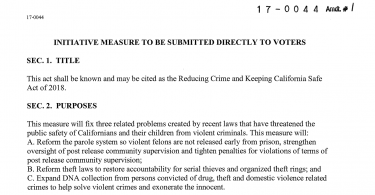
Morain also points out that the new proposition likely headed for the ballot that is aimed at modifying California’s ultra strict 3-Strikes law , does not seem to be garnering all the usual opposition. (Surely there will be opposition, but some of the usual suspects may not be part of it.)


CONNIE RICE SAYS : “POWER CONCEDES NOTHING”

An autobiographical book by LA civil rights attorney Connie Rice titled Power Concedes Nothing: One Woman’s Quest for Social Justice in America, from the Courtroom to the Kill Zones is being released on Tuesday. More on this tomorrow (after I go to the book party celebrating its publication). In the meantime, here’s a clip from Carolyn Kellogg’s review of the book for Sunday’s LA Times.

Yet from a young age, she was aware that not everyone shared her fortune. The light-skinned Rice tells the story of a darker boy on an Arizona playground who asked, “What IS you?” — he couldn’t believe that they were both black. With an uneasy sense of commonality, she pushed — something she does again and again in her life — and visited his home; it was her first genuine encounter with the deprivations of poverty. Rice looks back to that encounter not because of their shared identity but for what it revealed to her: the disparity of opportunity and circumstance. By her teens, steeped in the teachings of the Rev. Martin Luther King Jr. and moved by Rep. Barbara Jordan, she was convinced she must “end the inequality conspiracy, not join it.”

This passionate conviction drove her to Harvard-Radcliffe, then law school at New York University. The summer internships that law students take their second year have classically been thought of as a tacit line to a career with that firm, and Rice landed one at the NAACP’s Legal Defense Fund. That was 1982, the summer that decisions by the Supreme Court meant that states could renew their pursuit of death penalty cases. “We had vowed to do whatever it took to keep everyone alive,” Rice writes of the stance that she and a pair of determined fellow interns took. “We were too inexperienced to know that it could not be done.” She recounts their near round-the-clock work, including late-night filings and Southern court conflicts, with breathless detail.


STATE INMATES ARRIVE IN LA COUNTY (AND OTHER CA COUNTIES) WITH COSTLY MENTAL ILLNESSES

The LA Times’ Anna Gorman reports on this problem, which is neither easy nor cheap to solve.


NOT QUITE AMERICAN ENOUGH

Luis Luna has lived the U.S. since the age of three when his mother smuggled him across the border from Mexico. Then at 20, he was deported after a cop stopped him for a broken headlight. Now he’s trying to slip back in to the only country he sees as home. Be sure to read the LA Times’ Richard Marosi’s excellent story of Luna’s dilemma.

Posted in Gangs, Must Reads, Propositions, Sentencing, prison policy | No Comments »

What the Newest Field Poll Favoring 3-Strikes Reform Really Means

June 17th, 2011 by Celeste Fremon


On Thursday a new Field Poll was released that indicated
Californians favor a reform of the state’s Three-Strikes law by a 3 to 1 margin. Specifically, Field showed that 74 percent of Californians would like the law to be modified.

While more Democrats than Republicans favor the reform, the majority of Republicans and independents are ready to retool the law too— with 46 percent of voters favoring reform “strongly.”

This week Tracey Kaplan of the San Jose Mercury News reported that a Three-Strikes reform initiative is, indeed going forward for the November 2012 ballot. (Kaplan has the details about the Stanford lawyers and others who have thus far signed on to launch the initiative).

The Field poll would appear to bode well for the 2012 effort.

However, in 2004 there was an earlier attempt to reform the Three-strikes law through the initiative process. Then too, the idea scored very high in a series of Field polls, and yet when election day came the initiative went down to defeat.

I called Field Poll Director Mark DiCamillo, and asked him about the 2004 gap between the opinion polling and the vote.

“Yeah,” DiCamillo, said, “the proposition had a 40 point lead until one month before election. Then Governor Schwarzenegger and some other respected figures including, as I remember, Jerry Brown, came out strongly against it, and I watched opinion change on a dime. That’s what happens when you have credible sources arousing fear. Often the public can be greatly swayed.

“I don’t think public opinion has changed all that much.” DiCamillo continued. They favored reform then by a big margin, and they favor it now. “But right before the election they got scared. It was a little like [George H. W.] Bush with Dukakis and that whole thing with Willie Horton.

“It’ll be interesting to see what happens this time.”

This time, the reformers may be developing sharper elbows. Tracey Kaplan reports that political consultant Averell “Ace” Smith will be leading the campaign, a signal that the initiative’s backers are gearing up for hardball. Smith, who has run California campaigns for such successful candidates as Antonio Villaraigosa, Hillary Clinton and Kamala Harris, has a well-earned reputation for being a very tough adversary.

California’s Three Strikes law is the harshest of the 24 similar laws in the nation in that any felony—even the theft of a video game—can qualify as a third strike.


Q: IN THIS LOUSY ECONOMY WOULD YOU LIKE TO PAY MORE TAXES IN ORDER TO MOVE FELONS AROUND?

CALIFORNIA VOTERS: UH, NO.

Elsewhere in the Field Poll, California voters were asked if they agreed withGovernor Brown’s proposal to comply with the U.S. Supreme Court ruling by transferring lower-risk inmates from state prisons to local county jails and other community-based facilities.” (The majority agreed.)

But then they were asked if they: “…agree or disagree with the governor that taxes will have to be increased to pay for this or not?”

Naturally most people said, Nope. Don’t think so.

All well and good—except for the fact that Jerry Brown has not suggested raising taxes, but is asking to extend some existing taxes. Second of all, the tax extension money would go to support a list of programs, education being the most prominent among them. And, yes, it would would also help pay for the inmate transfers.

‘Twould have been nice if the Field folks had asked the question a bit more accurately.


SUPREMES SAY THAT AGE MATTERS WHEN POLICE QUESTION STUDENTS

The LA Times’ David Savage has the story. Here’s a clip:

The Supreme Court bolstered the rights of juveniles for the second year in a row, deciding by a 5-4 vote that police officers who remove a student from class for questioning about a crime usually must warn him or her of the right to remain silent.

The decision Thursday did not set a strict rule for all cases involving police questioning of minors, but the justices said young people deserved extra protection because they would feel they had no choice but to answer….


WHY IS THE STUPID, SEXIST, RACIST ANTI-JANICE HAHN VIDEO TAKEN SERIOUSLY?

When an anti-Janice Hahn video surfaced early this week, many of us exchanged emails about the thing, but concluded that it deserved merely to be roundly ignored for the attention-seeking, tasteless, talent-free stunt that it was.

But, for some reason the normally sensible Larry Mantle devoted part of Wednesday’s Air Talk show on KPCC to discussing the thing. (Even my wonderful reporter pal Frank Stoltze contributed to the show’s discussion.)

Guys: Just ignore the children until they stop spitting their food on the floor.

Here’s the video. You tell me if you think it merits a serious discussion.

(Okay, here’s what we’re going to do: Let’s make a campaign ad that has the heads of Charlie Mason and some unidentifiable gangsters from the 1930’s randomly floating past a white lady pole-dancer’s bouncing butt while some embarrassed-looking rappers wearing 4th-of July shirts and plaid golfer hats yell “KILL! KILL!” And then we’ll show Janice Hahn with devil eyes and that cool, red, blood-drippy typeface! Yeah! Awesome, dude! This going to make our careers, I’m telling you!!!)

(sigh.)

Posted in Propositions, Sentencing, prison policy | No Comments »

THURSDAY MUST READS

November 13th, 2008 by Celeste Fremon

six-flags.jpg


FOUR IMPORTANT READS from the LA Times:

1. FINALLY SOMEBODY HAD THE GUTS TO SAY IT: DAVID BREWER NEEDS TO GO

Everybody’s known this for what now seems like ever. But no one would say so publically: LAUSD Superintendant David Brewer is way, way over his head, and has been from the get-go. Now he needs to step down. Here’s the opening of LA Times editorial calling it for what it is.


The Los Angeles Unified School District is not without accomplishment.
It has recently seen student test scores improve, and it is on track with a vast, long-term effort to build enough schools for all of its students. But along with much of California, the district is heading into troubled times — largely financial — that threaten its classrooms and students, and that will test its management and educational skills. This is a treacherous moment for a school district that has long operated on the edge of failure, and it demands unimpeachable leadership. In such a moment, the district cannot afford a superintendent who holds the title but isn’t up to the job.

2. PROP 8 STRATEGIES—-BEFORE AND AFTER

The LA Times’ Jessica Garrison writes a smart, thoughtful news story about the evolving nature of the strategies used by the Prop. 8 opponents—then and now. Here’s how it starts:

Leaders of the campaign against Proposition 8, which banned gay marriage in California, raised nearly $40 million and ran a careful, disciplined campaign with messages tested by focus groups and with only a few people authorized to speak to the media.

They lost.

In the week since, California has seen an outpouring of demonstrations ranging from quiet vigils to noisy street protests against Proposition 8, including rallies outside churches and the Mormon temple in Westwood as well as boycotts of some businesses that contributed to the Yes on 8 campaign.

Many of those activities have been organized not by political professionals and established leaders in the gay community, but by young activists working independently on Facebook and MySpace.

The grass-roots activism is a tribute to political organizing in the digital age, in which it is possible to mobilize thousands of people with a few clicks of a mouse. It has generated national attention — and set up a series of Saturday demonstrations that organizers hope will attract tens of thousands of people to city halls throughout California.

But the demonstrations also have raised questions about whether the in-your-face approach will alienate voters
….

Read the rest of this entry »

Posted in Education, LAUSD, LGBT, Propositions, State government | 5 Comments »

Prop 8 Demonstrations Go Nationwide- UPDATED

November 12th, 2008 by Celeste Fremon

prop-8-protests-1.jpg

This Saturday, November 15, the Prop 8 Protests
are scheduled to go nationwide.

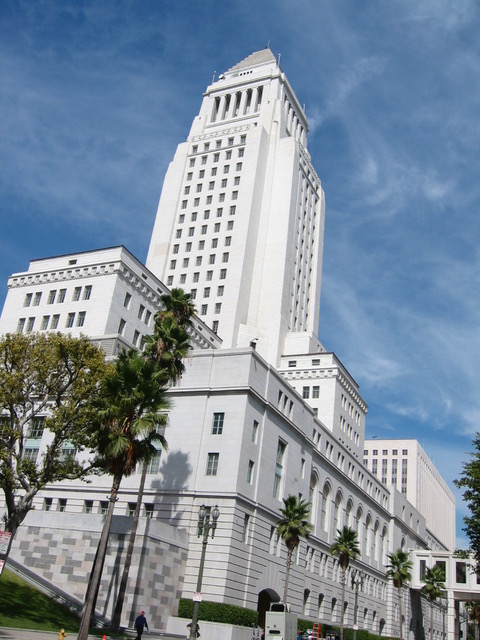
The largest of the protests is expected to be the Los Angeles march, which begins at 10:30 a.m. at City Hall.

***************************************************************************************************************

This time, word of the march seems to be spreading rapidly. Notices are speeding around Facebook and other venues. (I’m already hearing from actor and writer friends who are going.)

For more LA info, go here.

UPDATE: Taking at least one step in the direction of answering the question, What will elections-centric Blogs Like FiveThirtyEight do now that Obama has won? FiveThirtyEight’s Nate Silver does an excellent analysis (best one I’ve seen to date), of who voted for an against Prop 8, so that we can stop with this Who’s the Most to Blame? business and get back to solving the problem.

Posted in Civil Liberties, Propositions | 19 Comments »

PROP 8 and Equal Protection

November 10th, 2008 by Celeste Fremon

prop-8.jpg

The fury and the hurt continues to grow
in response to the passage of Proposition 8, and to the fact that, on the same night that the nation made a historic step away from bigotry, over half of those voting in the State of California opted to take rights away from their fellow Californians, if those Californians happen to be gay or lesbian.

Most recently, however, some members of the state’s black gay and lesbian community–and some blacks generally—are speaking out about what they feel is unfair and corrosive blame being leveled at California’s African American voters—particularly on the part of the media.

Blogger, writer Jasmyne A. Cannick had an Op Ed on the issue in yesterday’s LA Times.

Bloggers sparkymonster and Shanikka over at Daily Kos and Browne at LA Eastside also have posted angrily on the subject.

(I should warn you that some of these posts are a bit over the top. But that isn’t the point.)

It does seem, that if one wants to place blame, a better focus would the Morman Church that behaved like a political PAC and urged its members to both donate money and to go to California to work for the passage of Prop. 8. It is estimated that somewhere between 40 percent and 70 percent of the tens of millions of dollars spent on passing the measure came from donors in the state of Utah.

Most to the point, of course, is how the rights that Prop. 8 took away, might most effectively be restored.

In today’s LA Times, UC Berkeley law school professor and associate dean, Goodwin Liu, outlines the various possible legal considerations at play in the battle to get Proposition 8 tossed out by the courts.

Arnold Schwarzenegger is also quoted this morning as saying the Prop. 8 battle is far from over.

In the meantime, the kind of harm done by this proposition was perfectly and sadly demonstrated by the ten-year-old boy whose two moms were among the 18,000 who got married this year. “Why…?” asked the boy the day after the Tuesday vote when he was talking to a friend of mine who knows his moms.

“Why do all these people want to ruin my family?”

Why indeed?

Posted in Civil Liberties, LGBT, Propositions | 25 Comments »

Still Hoping For Prop. 8 to be Miraculously Gone by Morning

November 5th, 2008 by Celeste Fremon


So tell me again why letting other people get married threatens your marriage?

Posted in Elections '08, Propositions | 5 Comments »

Proposition 8: Too Close to Call

November 4th, 2008 by Celeste Fremon


Proposition 8 is running very, very close right now
.

Talk to people you know. Walk up talk to strangers, if need be. Ask them very kindly to do the right thing.

Do not allow the lies and fear—spread by commercials bought with millions of dollars in out-of-state money—to talk our fellow Californians into taking away the right to marry the person one loves from our sons, our daughters, our brothers, our sisters, our friends. Please.

Posted in City Government, Elections '08, LGBT, Propositions | 3 Comments »

Witness LA Endorsements 2008

November 3rd, 2008 by Celeste Fremon

vote-smart-button.jpg


(It’s a dirty job, but somebody’s got to do it.)


NOTE: THERE’S A VERY SHORT VERSION AT THE END
in case you want to print it out.

(Thank you again to the always fabulous, Alan Mittelstaedt, and to my USC J202 students who researched the issues so intelligently and well.)

**************************************************************************************************************

1A High speed rail: YES

Oh, I suppose the opponents and naysayers have a point, in an Eeyore-ish sort of way. But California needs to move itself into the future, transportationally speaking. I want a bullet train. You should want a bullet train. The LA Times wants a bullet train. (Even if the Daily News doesn’t.) Yes on infrastructure. No on prisons. What kind of tomorrow do you want anyway?

2. Humane farms: YES

Prop 2 requires that caged farm animals have enough room to be able to stand up in their pens or cages, turn around—and flap their wings if they happen to have wings. In other words, we can kill ‘em and eat ‘em, but we can’t torture ‘em. It’s pretty much that simple. You’ve no doubt seen all the commercials warning you that hideous things will happen if this proposition passes. Salmonella will run rampant, California will have to get its eggs from Mexico, food prices will skyrocket. And all goodness and light will disappear from the earth. (Yes, I made that last part up. But the rest is claimed by the NO-on-2 TV ads paid for by big agribusiness.)

The facts say otherwise. First of all, confining animals to over-small spaces spreads diseases (and pathogens like salmonella) more easily between the animals, and extreme stress makes creatures additionally disease-prone. In other words, humane treatment of chickens, pigs and veal calves, et al, will make our food safer not the reverse. In terms of price, a California-based poultry economist cited by the Humane Society has figures indicating that eggs will, at most, cost a penny more (per egg). Sure, in this sucky economy, even pennies add up, but unhealthy food is never a bargain.

The LA Times says to vote no, but they’re on the wrong side of this one. My brilliant pal, LA Times columnist and KPCC radio talk show maven, Patt Morrison, who is extremely well informed on these issues, says yes—-as does a slew of other organizations beginning with the Humane Society, the Sierra Club and the California Democratic Party.

The poultry industry, in particular, has had plenty of time to reform itself—as the beef and the veal industries have pretty much already done. But poultry has failed to come into the 21st century. It seems those poultry farmers need a nice firm nudge (or peck), which Prop 2 thoughtfully provides.

3. Children’s Hospitals: YES

Do I really have to explain this? Okay, Children’s hospitals throughout the state are overflowing with seriously ill and injured children, and you will find no serious organized opposition to this proposition. There is a good reason for that.

4. Parental notification: NO

Every few years this thing gets on the ballot and then gets voted down.

For the details, see the write-ups from my USC students here.

Then listen to our state’s daughters and deep-six this puppy.

5. Rehab not prison for certain drug offenders: YES

Our prisons are crowded with nonviolent low-level drug offenders, who often cycle in and out for parole violations, not additional crimes, because they go back in every time they test dirty—or are afraid they’re going to test dirty—on the drug tests mandated by the conditions of their paroles. And we pay the tab for their inability to get off the conveyer belt. Is that really any way to run a railroad?

Prop. 36 is terming out, and this would replace it. No matter what Arnold Schwarzenegger and Jerry Brown say (the latter who should know better), this proposed system is not going to send a plague of criminals running rife through the streets.

We need this initiative. It’ll save us money, and prison beds, and it will keep low level offenders in the community where they have a chance at recovery, not in prison where they are further broken—and then we and their families get to pay the tab for the damage.

The truth is, we need a state commission that can come up with binding sentencing reform, but the stage legislature is too chicken and/or politically hamstrung to authorize such a commission (because of the pressure of certain unions we could mention—cough….CCPOA….cough), so we are left with the proposition process.

(NOTE: I part with my smart USC students on this one, but their intelligent summaries are very much worth reading and, heck, you may find you agree with them, not me.)

UPDATE: WLA commenter, Reg, has just pointed out that Jeanne Woodford has endorsed Prop. 5. Woodford is the former warden of San Quentin, the former director of the California Department of Corrections, and now, post-retirement, the chief of adult probation in S.F.—and as smart as they come on corrections policy. In terms of knowledge and experience of the entire system, there can be no better endorsement.

(The rest after the jump.)

Read the rest of this entry »

Posted in Elections '08, LGBT, Propositions | 7 Comments »

THE PROPOSITIONS: Measure R – Alan Mittelstaedt says: YES

November 3rd, 2008 by Celeste Fremon

EDITOR’S NOTE: Nobody I know is better informed on all things transportation-related than friend and sometimes WLA guest blogger, Alan Mittelstaedt. So I asked him to give his take on Measure R. He kindly agreed, and you’ll find the result below.

Read. And heed.

Measure R: Flawed, but forgivable – Vote Yes

*******************************************************************************************

Let me see if I have this right: Measure R would place Orwellian restrictions on automobile owners. L.A. County residents would be forced to burn or bury their cars and take public transportation to work the three days a week they aren’t biking or walking. A major intrusion into your life, big, bad Measure R tosses to the side of the road any sense of fairness in government’s role in addressing traffic and air pollution.

Wrong, Wrong, Wrong.

If any of this were true, the opposition coming from county supervisors Gloria Molina and Michael Antonovich, Singleton’s running-on-vapors San Gabriel Valley newspapers and the Bus Riders Union wouldn’t be so petty and shortsighted. Get real, folks. Clogged freeways and streets are a No. 1 threat to our health and sanity, and the measure represents the best chance in a long time to do something about it. In reality, R’s main flaws are lack of ambition and courage and failure to promote a public-transit-only spending plan. Too many road projects http://www.metro.net/measurer/project_index.html are included in a calculated way to make voters everywhere believe their neighborhood somehow will benefit.

But don’t reject Measure R because of these weaknesses. They’re a distraction and prove that R is a product of the political cowards running government at a time when we need visionaries who can plot out a mass transit system and sell it to residents, business owners and state and federal governments – all of whom must pay for it. Our plight demands inspiring leadership reaching across L.A. County’s neighborhoods into the halls of Congress and the state Legislature, but we get Measure R instead.

It’s a worthy start, but R won’t take us to our destination of car-free commuting and healthy lungs for all. All it would do is raise the sales tax by half a penny and collect anywhere from $20 billion to $40 billion over 30 years. The cost to you: about as much as six cupcakes. For $25 a year, you can help the region take small steps to catch up on several decades of lost time when we should have been building a complete network of subways and light-rail systems. Time lost by squabbling among some of the same career politicians who now disagree over whether their communities get a fair share.

Read the rest of this entry »

Posted in Elections '08, Propositions | 2 Comments »

THE PROPOSITIONS: Prop 9 – Victims’ Rights

November 3rd, 2008 by Celeste Fremon


USC students Kelsey Clark, Steffi Lau, and Maria Niklas
wrote about the very confusing Proposition 9, the so-called Crime Victim’s Bill of Rights. (Frankly, I thought they each did a better job in explaining the issue than the talking head who was talking about Prop. 9 on NPR station, KPCC the other day.)

After writing their stories on Prop. 9, both Kelsey and Maria decided they would vote NO on the measure, while Steffi was on the fence. Eventually she decided she would go with a YES vote.

Read what they have to say, and decide what you think.

Read the rest of this entry »

Posted in Elections '08, Propositions | 1 Comment »

« Previous Entries