Saturday, May 25, 2013
street news, views and stories of justice and injustice
Follow me on Twitter

Search WitnessLA:

Recent Posts

Categories

Archives

Meta

Innocence


Juvenile Solitary in CA, Gov. Brown’s Office Appeals Prison Pop. Order…and More

May 14th, 2013 by Taylor Walker

ADDRESSING THE ISSUE OF LOCKING KIDS UP IN SOLITARY

While severe and overused in the adult justice system, solitary confinement is most destructive for still-developing youths. There have been numerous reports on the devastating effects of locking kids up for twenty-three hours a day (and WitnessLA has linked to them often), yet California still hasn’t defined what constitutes solitary, much less regulated it.

In an LA Times editorial, our pal Rob Greene lays out in unusually clear terms the consequences of putting kids in solitary confinement and what we need to do adequately address the issue. Here’s a clip (but be sure to read the whole thing):

Juvenile justice officials should at the very least have to certify that mental health evaluations were part of the decision-making process for each juvenile, and they should document all instances of solitary lockdown, under consistent standards and definitions. SB 61 by state Sen. Leland Yee (D-San Francisco) would require such standards and documentation. It’s a bill that deserves to move forward.

The Senate has been wary, and appropriately so, of moving forward on any bill that could impose costs on counties — costs that would be passed along to the state. The budget has been cut year after year, and now, when there may be some funding available, lawmakers must decide carefully what to do with it.

In making that decision, they should keep in mind that the state’s failure to meet the mental health needs of so many Californians has led directly to the prison overcrowding crisis, and that the failure to meet the mental health needs of inmates for decades has resulted in the court order to beef up in-prison care (at enormous cost) and to release tens of thousands of prisoners. The juvenile justice system is inextricably linked to the adult system and must deal with a similar, although more vulnerable, population.


GOV. BROWN’S OFFICE BEGINS APPEAL PROCESS TO GET SUPREME COURT INTERVENTION ON PRISON POP. CAP

Monday, California officials appealed the federal court decision to uphold an order that, by the end of 2013, the CA prison population must be further reduced by 9,000 inmates.

KPCC’s Julie Small has the story. Here’s a clip:

Deborah Hoffman of California’s Department of Corrections and Rehabilitation said Monday the state has appealed to the U.S. Supreme Court because the panel of federal judges “did not fully or fairly consider the evidence that with our greatly reduced prison population, prison health care now exceeds constitutional standards.”

In 2011, the legislature enacted California’s Criminal Justice Realignment law, which diverts lower level felons to the counties. Today the prisons hold 30,000 fewer inmates than they did when the federal judges ordered the state to reduce the prison population.

Monday’s filing is a notice of appeal to the district court stating California’s intention to ask the U.S. Supreme Court to intervene. It’s the first step in an appeals process that could take years — if the nation’s highest court decides to take up the case.


BRADY V. MARYLAND…FIFTY YEARS ON

Fifty years after Brady v. Maryland—the SCOTUS ruling that dictates prosecutors must present defendants with any and all known exculpatory evidence—there is little incentive and still no real accountability in place to keep prosecutors from breaking the Brady rule.

The Atlantic’s Andrew Cohen breaks down why Brady is flawed, and what can be done to reinforce it. Here’s how it opens:

Last Thursday evening at a dinner in New Orleans, Keith Plessy and Phoebe Ferguson came together again to bestow an award on John Thompson, the noted death row exoneree, who was being feted by the Innocence Project New Orleans after nearly two decades of false imprisonment. The names of the presenters probably don’t ring a bell to you until you put them together and separate them with a “versus,” as in Plessy v. Ferguson. The descendants of the litigants of one of the worst Supreme Court decisions ever wanted to pay homage to a litigant who had belatedly benefited from one of its best. Who says irony is dead?

The timing of the Project’s 12th anniversary “gala” was propitious. It came just four days before the 50th anniversary of the Supreme Court’s decision in Brady v. Maryland, decided on this day in 1963, in which the justices unanimously declared that prosecutors have a constitutional obligation to share with criminal defendants all “exculpatory” evidence officials may have. “Society wins not only when the guilty are convicted but when criminal trials are fair,” wrote Justice William O. Douglass, for the Warren Court, as it again sought in those progressive days to enhance individual rights at the expense of government power.

Thompson is a free man today because of the so-called “Brady” rule. But he likely would have been a free man all along — without spending 14 years on death row — had his prosecutors obeyed the law in the first place. That dichotomy is what makes Thompson such a poignant symbol of the Brady rule. He proves both that it works and that it is deeply flawed; that it saves innocent people from being railroaded by prosecutors and that countless others are wrongly convicted and imprisoned anyway. The sad truth is that 50 years after Brady, in an increasingly complex criminal justice system, too many prosecutors still hide exculpatory evidence, and too few judges do anything about it.


AND MINNESOTA MAKES TWELVE…

The Minnesota Senate voted Monday to legalize gay marriage, and Governor Mark Dayton immediately announced he would sign the bill, allowing gay couples to marry by August. Go Minnesota!

The NY Times’ Monica Davey has the story, if you missed it today.

Posted in Edmund G. Brown, Jr. (Jerry), Innocence, juvenile justice, LGBT, prison, Supreme Court, Uncategorized | 2 Comments »

Foster Mother’s Day, LAUSD Voting to Reign in School Discipline…and More

May 13th, 2013 by Taylor Walker

FAMILIES AND ADVOCATES GATHER TO CELEBRATE FOSTER MOTHERS

This past Sunday, the non-profit organization Foster Care Counts hosted the Fifth Annual Foster Mother’s Day event in LA, home to the nation’s largest foster care system. Fifteen-hundred foster moms and their families gathered to celebrate Mother’s Day and National Foster Month with food, family activities, and entertainment.

We received some excellent photos of the festivities, like this foster mother with her sweet baby…

…and this happy group of kids getting ready to play some carnival games:

As journalists, we so often cover the tragedy and letdowns in foster care, it’s nice to take a moment and recognize the many decent folks who are giving kids homes.


WILL LAUSD VOTE TO BAN SUSPENSIONS FOR “WILLFUL DEFIANCE?”

Tuesday, the LAUSD Board of Education will vote on a resolution authored by LAUSD Board President Monica Garcia to ban suspensions for “willful defiance,” and to provide new guidelines for school discipline. (For more on the resolution, hop over to our April post.)

The LA Times’ Teresa Watanabe has the story. Here’s how it opens:

Damien Valentine knows painfully well about a national phenomenon that is imperiling the academic achievement of minority students, particularly African Americans like himself: the pervasive and disproportionate use of suspensions from school for mouthing off and other acts of defiance.

The Manual Arts Senior High School sophomore has been suspended several times beginning in seventh grade, when he was sent home for a day and a half for refusing to change his seat because he was talking. He said the suspensions never helped him learn to control his behavior but only made him fall further behind.

“Getting suspended doesn’t solve anything,” Valentine said. “It just ruins the rest of the day and keeps you behind.”

But Valentine, who likes chemistry and wants to be a doctor, is determined to change school discipline practices. He has joined a Los Angeles County-wide effort to push a landmark proposal by school board President Monica Garcia that would make L.A. Unified the first school district in California to ban suspensions for willful defiance.


BROOKLYN D.A. REVIEWING FIFTY MURDER CONVICTIONS INVOLVING RENOWNED NYPD DETECTIVE

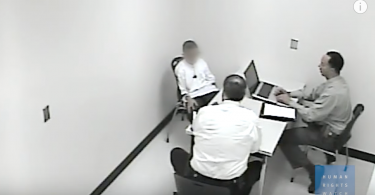
The Brooklyn D.A.’s office has ordered a review of around fifty closed homicide cases involving retired NYPD Detective Louis Scarcella. The review comes after the release of wrongfully convicted David Ranta, who was locked up for twenty-three years on a false confession obtained by Scarcella. It was also triggered by the findings from an NY Times review of a dozen other cases.

We urge you to read the entirety of this wild and alarming tale.

The New York Times’ Frances Robles and N. R. Kleinfield have the story. Here’s a clip:

The office’s Conviction Integrity Unit will reopen every murder case that resulted in a guilty verdict after being investigated by Detective Louis Scarcella, a flashy officer who handled some of Brooklyn’s most notorious crimes during the crack epidemic of the 1980s and 1990s.

The development comes after The New York Times examined a dozen cases involving Mr. Scarcella and found disturbing patterns, including the detective’s reliance on the same eyewitness, a crack-addicted prostitute, for multiple murder prosecutions and his delivery of confessions from suspects who later said they had told him nothing. At the same time, defense lawyers, inmates and prisoner advocacy organizations have contacted the district attorney’s office to share their own suspicions about Mr. Scarcella.

The review by the office of District Attorney Charles J. Hynes will give special scrutiny to those cases that appear weakest — because they rely on either a single eyewitness or confession, officials said. The staff will re-interview available witnesses, and study any new evidence. If they feel a conviction was unjust, prosecutors could seek for it to be dismissed.

Posted in criminal justice, Foster Care, Innocence, LAUSD, Zero Tolerance and School Discipline | No Comments »

2012 Was a Good Year for Exonerations…..D.C. Kids Use Cameras to Protest More School Cops… More Sloppy Realignment Reporting

April 5th, 2013 by Celeste Fremon


Light posting today. Working on a number of interesting thing for next week and the following week.


COPS AND PROSECUTORS HELP MORE IN EXONERATIONS IN 2012

According to a new report released Wednesday, 2012 was a good year for exonerations, with California adding the most exonerations to the list last year.

On notable difference in last year’s innocence cases is that more police and prosecutors assisted in the exonerations.

Maggie Clark has the story for Stateline.


D.C. STUDENTS SHOOTING PICTURES TO PROTEST ADDED SCHOOL SECURITY

Gotta love the proactive attitude of this group of students using their cameras to protest what they view as an overzealous security, post Newtown. Annie Gowen at the Washington Post has the story. Here’s a clip from the opening:

The small band of guerrilla photographers spread out in schools across the District, snapping photos of metal detectors, police pat-downs, and scuffles between security guards and students.

The dozen or so teens, who hail from some of the area’s most troubled neighborhoods, are trying to document the kind of school security issues that have taken center stage in the wake of the Newtown, Conn., shootings.

Since the December tragedy, the question of whether schools are safe has gained new urgency, with the Senate weighing $40 million in funding for school security plans and the National Rifle Association — which has called for armed teachers, administrators or guards in every school — releasing recommendations from its experts Tuesday.

But H.D. Woodson High School senior Mike Ruff and other classmates have armed themselves with cameras to make the opposite point. They say that their learning environment has been scarred by relentless security. They say their high schools, among an estimated 10,000 nationwide with police on campus, feel like prisons….

Read the rest here.


MORE SLOPPY REALIGNMENT REPORTING, THIS TIME HAVING TO DO WITH THE NORTHRIDGE CHILD ABDUCTION

Tobias Dustin Summers is suspected of kidnapping the 10-year old Northridge girl last week, and is now on the run. It seems, however, that when Summers finished his most recent prison term and got out, he was assigned to a probation officer, not a parole officer, under AB 109. His practical requirements were basically the same. And he, reportedly, hit most all his marks. He drug tested when he was required to do so. He didn’t test dirty. He met with his PO on schedule.

Then the day after one such meeting, he went out and allegedly abducted a little girl.

Unfortunately, the horrific abduction is being blamed—with a blithe lack of fact-checking—on realignment. Scads of reporters are advancing this sloppy theory, as is LA County Supervisor Mike Antonovich.

In the midst of all this misinformation, WLA sends a gigantic thank you to Rina Palta at KPPC for reporting on the story like the smart, hard-working, clear-minded professional she is–(AKA someone who thinks that accuracy and logical thought are both good things).

You can read Palta’s story here


Posted in District Attorney, Innocence, media, Realignment, School to Prison Pipeline, Zero Tolerance and School Discipline | 1 Comment »

New Openly Lesbian LASD Custody Commander…What Factors Lead to Wrongful Convictions…Taxes & Trucks….Dreamers & Healthcare

March 13th, 2013 by Celeste Fremon

LASD Captain Kelley Frazer (see above video) is scheduled to be promoted to the position of commander and will be working under Assistant Sheriff Terri McDonald, the recently recruited head of the Los Angeles Sheriff’s Department’s Custody Division.

Frazer is an openly lesbian officer.

To take the promotion, Frazer will leave her post as the highly-regarded head of the LASD’s West Hollywood station, which she has led since April 2010.

When Frazer was promoted to captain and given charge of WeHo she was, at that time, the first openly gay person in department history to serve as an LASD branch commander.

Prior to WeHo, Frazer worked for the department’s Emergency Operations Bureau, and at Carson, Lennox and Temple stations, among other postings.

So what do her troops think of her?

“She’s Amazing!” said watch commander Lt. William Nash, when I called West Hollywood to get a reading. “It’s really bitter-sweet for us. We’re happy for her, and we know she deserves this opportunity but….she will be missed. She’s a great person. Ask anyone here.”

According to Nash, Fraser “cares for everyone in her command,” really looks out for their well being, and knows how to get the best out of people. “But she’s also a tough as nails as a cop,” said Nash. “She wants to make sure we’re on top of our jobs. She wants us to be safe, but she wants this community to be safe. And she really wants to get the bad guys off the street.”

West Hollywood Mayor, Jeff Prang, told the WeHo News that,”That an out member of the LGBT community now is in the highest ranks of the sheriff’s department is really good for West Hollywood and it’s good for LGBT people.”

Indeed. And with any luck Frazer will be good for the LASD Custody Division.


PREDICTING WRONGFUL CONVICTIONS

In a fascinating new study, the National institue for Justice looked at 460 erroneous convictions and “near misses,” in which “factually innocent” defendants were released or acquitted post-indictment, and found that there were 10 factors that were most most often led to a wrongful conviction. We’ve long known the elements that most often went wrong in a wrongful conviction (mistaken or coerced eyewitness testimony, false confessions, perjured informant testimony, etc.) but the study concluded that it was incorrect to call those factors “causes.”

Causes, they found, were different. So what elements, if they appear in combination, are most likely to cause a wrongful conviction? Here are the ten factors they found:

*A younger defendant
*A criminal history
*A weak prosecution case
*Prosecution withheld evidence
*Lying by a non-eyewitness
*Unintentional witness misidentification
*Misinterpreting forensic evidence at trial
*A weak defense
*Defendant offered a family witness
*A “punitive” state culture

Anyway, to find out more, here’s the 410-page study itself. (Scroll to the executive summery.) And here’s a quickie look at the study’s contents at The Crime Report.


THE RIDICULOUS MATTER OF THE SHOT-UP-AND-NEARLY-KILLED NEWSPAPER WOMEN, THEIR LAPD-PROMISED REPLACEMENT TRUCK…AND THE HOT POTATO OF TAXES (!!!)

Surely someone at the LAPD can find a way to cut through this idiotic tax-related impasse… But, evidently so far, they haven’t.

The Huffington Post’s Anna Almendrala has the story. Here’s a clip:

Accusations are flying over the Los Angeles Police Department’s bungled effort to replace a bullet-ridden pickup truck that belonged to two women who were mistaken for fugitive Christopher Dorner one horrifying morning.

Margie Carranza, 47, and her mother, Emma Hernandez, 71, were delivering newspapers in Torrance, Calif., during the early hours of Feb. 7 when members of the LAPD mistook their blue Toyota Tacoma for Dorner’s getaway car, a gray Nissan Titan pickup. Officers fired 102 bullets into Carranza’s truck. While Carranza was injured by the shattered glass, Hernandez was shot in the back.

Two days after the almost-deadly case of mistaken identity, LAPD Chief Charlie Beck visited the victims’ homes to apologize, and the department publicly promised to give them a new pickup truck by the next week.

Now, more than a month after the shooting, the police still haven’t replaced Carranza’s truck. A prominent car dealership owner and a lawyer representing the two women are pointing fingers about whose fault it is….

Read on.


YOUNG UNDOCUMENTED “DREAMERS” WANT TO KNOW WHY THEY DON’T CAN’T HAVE ACCESS TO AFFORDABLE HEALTHCARE SINCE THEY ARE, THEY SAY, FOR THE MOMENT ANYWAY, LEGAL

The video above was just released by the The California Endowment, in partnership with a group of undocumented youth in Southern and Central California. It kicked off the Endowment’s new #Health4All campaign, “an effort to drive a dialog about providing a health care solution for the remaining uninsured.”

This earlier story by Drew Joseph for the San Francisco Chronicle explains the issue from the Dreamers’ perspective. Here’s a clip:

California’s young immigrants who have been granted reprieves to stay in the country stand to gain little from the federal health reform law that the state Legislature is working to implement.

The Affordable Care Act excludes illegal immigrants from accessing the law’s benefits, but some immigrant and health advocates are angry that the young people known as Dreamers have been left out, saying the policy contradicts the law’s intent of expanding coverage to more people.

“It really defeats what the goals of the ACA were to begin with,” said Sonal Ambegaokar, health policy attorney at the National Immigration Law Center….

Read the rest (and watch the video!)


Posted in health care, immigration, Innocence, jail, LA County Jail, LASD, LGBT, Sheriff Lee Baca | 3 Comments »

Will TX Hold a Prosecutor Accountable? …..Can Local CA Gov’ts Legally Ban Med Pot Dispensaries? ….and a Look at Mental Illness & Lock-Up

February 5th, 2013 by Celeste Fremon


TEXAS USES AN ARCANE LAW TO POSSIBLY—JUST POSSIBLY—HOLD ACCOUNTABLE A PROMINENT FORMER PROSECUTOR, NOW A JUDGE, FOR OBSCURING AND WITHHOLDING EVIDENCE THAT LIKELY WOULD HAVE KEPT AN INNOCENT MAN FROM GOING TO PRISON FOR 25 YEARS

The LA Times’ Molly Hennessy Fiske drew our attention to this story with her write-up
that runs on Tuesday. Here’s a clip:

In emotional testimony Monday, a Texas man told a judge how it felt spending 25 years in prison for a murder he did not commit.

“Brutal,” Michael Morton said. “But after a couple decades, I got used to it.”

Morton, 58, who grew up in Los Angeles, was convicted in the 1986 beating death of his wife, Christine, at their home. He was exonerated and released almost a year and a half ago after DNA tests confirmed his innocence. Another man has since been charged in connection with the killing.

Now the man who prosecuted Morton, Williamson County District Judge Ken Anderson, faces an unprecedented “court of inquiry” about 30 miles north of Austin in which a judge will decide whether the then-district attorney lied and concealed evidence that could have cleared Morton.

It is the first time the state has convened such a hearing for prosecutorial misconduct. Although part of Texas law since 1965, the court of inquiry has typically been used to consider allegations against elected officials. Some hope this week’s hearing will lead to a greater examination of alleged misconduct by prosecutors not just in Texas, but nationwide.

However, it is Texas Monthly’s Pamela Colloff whose reporting we must follow on this story. Last fall, Colloff wrote a stunning two-part series on Morton and his case.

Now she is following the unusual court proceedings examining the actions of former prosecutor Ken Anderson.

She writes:

Starting on Monday, Anderson will be the subject of a “court of inquiry,” an arcane legal procedure unique to Texas that can be used to investigate wrongdoing, most often on the part of state officials. It has never been used before to probe allegations of prosecutorial misconduct. The unprecedented legal proceeding will try to determine whether Anderson withheld critical evidence from Michael’s defense attorneys which would have helped Michael prove his innocence more than a quarter-century ago.

Anderson is now a state district judge. That a former prosecutor, much less a sitting judge, will face such intense scrutiny is remarkable. Prosecutorial misconduct rarely results in even disciplinary action from the Texas bar. But if the presiding judge in the court of inquiry finds probable cause to believe that Anderson broke the law, he will face criminal charges and a warrant will be issued for his arrest….

It is not just that prosecutors are rarely held accountable in Texas; they are rarely held accountable anywhere. If a surgeon is careless in an operation and thus paralyzes you, there are legal remedies. But if a prosecutor deliberately withholds crucial evidence that would almost certainly have cleared you, and instead your family is shattered, your young son is raised by someone else, and you go to prison for life, lose 25 years, then by wonderful luck you are released through work by the Innocence Project —there is no legal way to hold the prosecutor to answer.

However, this week in Texas, perhaps there is a way. If so, perhaps, as Molly Hennessy-Fiske suggested, it will have resonance beyond the lone star state’s boundaries.


IS IT LEGAL FOR CALIFORNIA’S LOCAL MUNICIPALITIES TO BAN MEDICAL MARIJUANA DISPENSARIES? THE CALIFORNIA SUPREMES WILL DECIDE

This article by the always excellent Howard Mintz, Legal Affairs guy for the San Jose Mercury News, lays out this interesting issue in lively and informative terms. Here’s a big clip from the story’s opening:

California’s experiment with medical marijuana has sparked a hazy version of the old Not-in-My-Backyard syndrome.

From Hollister to Antioch, from Scotts Valley to Petaluma, from Seaside to Moraga, city after city has banned medical marijuana dispensaries, sending a message that even the sickest of patients must go elsewhere for that state-permitted dose of prescribed medical weed.

But on Tuesday, this fear-and-loathing approach to outlawing medical pot providers will face an unprecedented test in the California Supreme Court. The seven justices are to hear arguments on whether local governments can ban the dispensaries in view of the state’s 1996 voter-approved law legalizing pot for medical use.

The case involves the Inland Empire Patients Health and Wellness Center, which more than two years ago sued to block Riverside’s dispensary ban, arguing that cities and counties cannot bar activities legal in California. A state appeals court sided with Riverside, and now the Supreme Court, faced with similar legal tangles across the state, has jumped into the fray.

The stakes are high in California’s ongoing struggle pitting medical marijuana advocates against cities worried about problems associated with some of the dispensaries, such as lax control over the distribution of a drug that remains illegal under federal law.

“The Riverside case is a fascinating example of our ‘laboratories of democracy’ in action,” said Julie Nice, a aw professor at the University of San Francisco, where the Supreme Court will hear the arguments. “It illustrates the difficulties created when each level of government … stakes out a different regulatory position on a controversial subject….”

Read more here. And naturally, we’ll be keeping an eye out for the Cal Supremes’ ruling on this question.


TOO MANY MENTALLY ILL IN STATE AND COUNTY LOCK-UPS

One topic on which justice reform advocates, custody experts and county sheriffs tend to agree, is that a large portion of those incarcerated in California’s jails and prisons are mentally ill, and that this is not a good thing. Put more plainly, in most cases, jails and prisons are the most costly and the least effective places for the mentally ill to be.

As we look at reforming our budget-draining and problem-plagued incarceration systems in ways that balance public safety and basic justice, one of the areas that requires a hard look is the intersection between jails and prisons and mental illness.

Monday’s Huffington Post’s Alana Horowitz has a good overview of the issue. Here are some clips from her story:

….A 2006 study by the Bureau of Justice Statistics found that over half of all jail and prison inmates have mental health issues; an estimated 1.25 million suffered from mental illness, over four times the number in 1998. Research suggests that people with mental illness are overrepresented in the criminal justice system by rates of two to four times the normal population. The severity of these illnesses vary, but advocates say that one factor remains steady: with proper treatment, many of these incarcerations could have been avoided.

“Most people [with mental illness] by far are incarcerated because of very minor crimes that are preventable,” says Bob Bernstein, the Executive Director of the Bazelon Center for Mental Health Law. “People are homeless for reasons that shouldn’t occur, people don’t have basic treatment for reasons that shouldn’t occur and they get into trouble because of crimes of survival.”

Bernstein blames these high rates on a lack of community mental health services. In the past three years, $4.35 billion in funding for mental health services has been cut from state budgets across the nation, according to a recent report. Because of the cuts, treatment centers have had to trim services and turn away patients.

State hospitals have also been forced to reduce services. A report by the Treatment Advocacy Center even found that there are more people with severe mental illness in prisons and jails than in hospitals.

[SNIP]

Once people with mental illness are incarcerated, Bazleon’s Bernstein says, it becomes a tough cycle to break.

“Most people are there for minor crimes but then they deteriorate,” he explains. “They can’t follow the rules there and so they stay a long time, and they become difficult to release.”

According to the Bureau of Justice Statistics report, most inmates with mental illness don’t receive treatment while in prison.

Patti Jones’ nephew Tony Lester was sent to state prison in Tucson, Ariz., for aggravated assault. Like Armando Cruz, Lester heard voices. He told his aunt that before he was incarcerated, he had only heard two voices. After he was admitted, there were seven.

Lester was diagnosed with schizophrenia. He was prescribed medication but didn’t always take it while in prison, Jones said. Lester was placed among the general prison population with little treatment available.

His symptoms grew worse….


Posted in How Appealing, Innocence, Marijuana laws, Medical Marijuana, Mental Illness, prison, prison policy, Prosecutors | No Comments »

Guidance, Not Guns….More on Aaron Swartz…A Cold Case Leads to Revelations of Forensic Misconduct

January 17th, 2013 by Celeste Fremon


POST SANDYHOOK, LIZ RYAN ABOUT WHAT WORKS TO PROTECT KIDS FROM VIOLENCE

Liz Ryan, president and CEO of the Campaign for Youth Justice (among other accomplishments), has this thoughtful and informative essay at The Crime Report on the initiatives that, in combination—–according to some of the nation’s best youth advocates—are the most likely to reduce gun violence against children and teenagers, in addition to reducing violence in our communities.

Yet, one of the advantages of this essay is that, while Ryan is very knowledgeable, she does more here than opine. She provides lots of good links to recent and relevant studies and reports, thereby giving you the resources with which to make up your own mind about the issues.

Here’s a clip from Liz’s essay:

….the nation’s educational leaders, including the National Education Association and the American Federation of Teachers, have stated emphatically that, “Guns have no place in our schools.”

Others have suggested more police presence.

But research has shown that increased police presence has not made schools safer. In fact, it has resulted in the criminalization of young people in the justice system.

University of Delaware Professor Aaron Kupchik, author of “Homeroom Security” says that while armed guards are already in many schools, “their presence has effects that help transform the school from an environment of academia to a site of criminal law enforcement.

Instead of more guns and more police presence, education experts such as Barbara Raymond of The California Endowment point to the importance of counselors, social workers, psychologists and evidence-based programs. One example is the school-wide positive behavior support program to improve learning environments in schools and help children resolve conflict.
The Sandy Hook killings also underscore the need to improve access to quality, community-based behavioral mental health services for children and young people.

An interdisciplinary group of more than 200 violence prevention researchers, practitioners and professional associations recommends that, “these efforts should promote wellness, as well as address mental health needs of all community members while simultaneously responding to potential threats to community safety.

“This initiative should include a large scale public education and awareness campaign, along with newly created channels of communication to help get services to those in need.”
Additionally, a comprehensive approach must address the root causes of violence, and focus resources on proven violence prevention and juvenile delinquency prevention programs such as the University of Colorado’s Center for the Study and Prevention of Violence’s “Blueprints for Violence Prevention” programs.

Easy access to guns that kill 7 young people a day and injure 43 more is a challenge addressed by the bipartisan national coalition of 750 mayors led by Mayor Michael Bloomberg of New York City and Mayor Thomas Menino of Boston. The coalition has created comprehensive recommendations to severely reduce the easy access to guns and assault weapons in the U.S.
Finally, there must be a focus on healing….

There’s more. Ryan points to the huge report that was just released by the Attorney General’s National Task Force on Children Exposed to Violence, that looks at the affect that deleterious effects that exposure to violence has on kids, and what we can do about it. Anyway, take a look.


US ATTORNEY SAYS PROSECUTION OF AARON SWARTZ WAS “APPROPRIATE”

Massachusetts U.S. Attorney Carmen Ortiz evidently spoke to reporters after an unrelated news conference, saying she was terribly upset about Aaron Swartz’s suicide, but that the federal prosecutors acted appropriately.

David Kravets at WIRED has the story about the MA U.S. Attorney’s . Here’s a clip:

Carmen Ortiz, the U.S. attorney in Massachusetts, said Thursday the government’s “conduct was appropriate” in its handling of the Aaron Swartz prosecution.

The President Barack Obama appointee’s first public comments on the matter come nearly a week after the internet sensation, who was under federal indictment in Massachusetts on hacking and other charges, hanged himself in his Brooklyn apartment.

Swartz’s family, in part, blamed the suicide of the executive director of Demand Progress on what they said was an overzealous prosecution. Prosecutors in Ortiz’s office had offered the 26-year-old a six-month prison sentence in exchange for his guilty plea to more than a dozen counts of computer hacking and wire fraud over the illicit downloading of millions of academic articles from a subscription database at MIT. It was a plea agreement Swartz rejected.

“As a parent and a sister, I can only imagine the pain felt by the family and friends of Aaron Swartz, and I want to extend my heartfelt sympathy to everyone who knew and loved this young man. I know that there is little I can say to abate the anger felt by those who believe that this office’s prosecution of Mr. Swartz was unwarranted and somehow led to the tragic result of him taking his own life,” Ortiz said. “I must, however, make clear that this office’s conduct was appropriate in bringing and handling this case. The career prosecutors handling this matter took on the difficult task of enforcing a law they had taken an oath to uphold, and did so reasonably.”

The Boston Globe (among others) also has a report that, for those slightly obsessed with this story, is worth a read.

Also, while—whether one agrees with her legal POV or not (I don’t happen to at all), Ortiz at least handled the press interaction with dignity and respect.

Not so, it seems her husband, Tom Dolan, who early on took his feelings about criticism of his wife to Twitter. (His account has since been deleted.)

FireDogLake (among many others) has that story.

Dolan evidently forgot that in such unbearable circumstances the grieving family gets to say whatever they want, especially about a public figure, like a U.S. Attorney. The public figure’s spouse does not have such license, and certainly does not get to start shooting back through social media at the people who lost their son/brother/friend.

One more thing, just to be clear, yes, Aaron Swartz was offered a plea deal (as we mentioned in an earlier story), but when the defense and the prosecution couldn’t agree upon a deal, the 35 year sentence comes back into play.

So to those who contended that a 35 year was not in fact a threat, it was, actually. The big bad possible sentence is the gun that prosecutors hold to a defendant’s head, to get him or her to plead out. That’s the game. And it’s an ugly one.


A TALE OF A MISSISSIPPI COLD CASE AND A DECADES OLD MISSISSIPPI SCANDAL THAT MAY HAVE COMPROMISED A FRIGHTENING NUMBER OF CASES OVER DECADES

Huffington Post’s talented criminal justice writer/reporter, Radley Balko has this fascinating two-parter about the solving of the 15-year-old murder of Kathy Mabry by the unlikely team of two Innocence Project attorneys, in the course of which, a brewing subrosa scandal involving a pair of shoddy forensic analysts has been brought irrevocably into the light, finally (hopefully) making it impossible for Mississippi officials to ignore.

Here’s a clip:

The [Mabry] case went unsolved for 15 years, until December, after a casual courtroom conversation led lawyers from the Mississippi Innocence Project to investigate it. That two attorneys for an organization better known for getting the wrongly convicted out of prison would take it upon themselves to solve a cold case is remarkable enough. Their search covered the state, from Columbus in the northeast, to Oxford in the northwest, to the crime lab in Jackson, to a dusty attic in the Humphreys County courthouse, deep in the belly of the Delta.

The reason they felt compelled to act is part of a larger scandal currently unfolding in Mississippi. The original police investigation into Mabry’s murder hinged on the forensic analysis of Steven Hayne, a longtime Mississippi medical examiner, and Michael West, a dentist and self-proclaimed bite-mark expert. Hayne was a doctor in private practice who at the time performed nearly all of the state’s autopsies. West was one of his frequent collaborators. The two men have been at the heart of the Mississippi death investigation system for two decades. West has testified in dozens of cases, Hayne in thousands, including a number of death penalty cases.

Media investigations over the years, however, including my own for The Huffington Post and Reason magazine, have revealed that both Hayne and West have contributed critical evidence that led to the convictions of people who were later exonerated, and routinely and flagrantly flouted the ethical and professional standards of their respective fields. West, for example, once claimed he could match the bite marks in a half-eaten bologna sandwich found at a murder scene to the teeth of the prime suspect. In a more recent case, Hayne claimed the bullet wounds in a murder victim showed that two people held the gun when it was fired, not one. In the Mabry case, West used bite-mark analysis to nab an innocent man for Mabry’s murder. That man spent nearly a year in jail. But the Mabry story also shows that the victims in this scandal include not just the wrongly accused, but the families of the victims, the future victims of the actual perpetrators, public officials like Roseman, and even entire towns.

Mississippi officials have thus far resisted calls for a thorough review of Hayne and West’s work. In particular, the Mississippi Supreme Court has shown little concern over the possibility that Hayne and West may have put an untold number of innocents behind the razor wire at Parchman penitentiary. Neither has Attorney General Jim Hood, whose office continues to defend convictions won primarily on the testimony one or both of the men have given on the witness stand. To concede there’s a problem would implicate many state officials who used the two men during tenures as prosecutors. It would also open hundreds, perhaps thousands of cases to review.

Tucker Carrington, the director of the Mississippi Innocence Project, says he and his colleague Will McIntosh decided to pursue Mabry’s killer themselves after they attempted to bring the case to the attention of the prosecutor in Humphreys County, and then to Hood’s office, and received no response from either.

“When you take on a case and it reveals a glaring injustice like this — something that could easily be taken care of if someone would just give it some attention — you can’t just turn a blind eye to that,” Carrington says. “In the end, I guess we saw this through because no one else would.”


Photo from Library of Congress collection, 1930-1940, (Creative Commons)

Posted in crime and punishment, criminal justice, guns, Innocence, Prosecutors | No Comments »

Living in LA’s World of Guns, Restorative Justice & School Suspensions, Obama’s Lousy Clemency Policy, Restorative Justice & Murder…..and More

January 7th, 2013 by Celeste Fremon


NOVELIST JERVEY TERVALON TALKS ABOUT WHAT IT’S LIKE TO GROW UP WITH GUNS ALL TOO FREQUENTLY POINTED YOUR DIRECTION

This Op Ed by novelist Jervey Tervalon appeared over the weekend in the LA Times and is assuredly worth your time. Here’s a clip.

…The time after that my high school girlfriend’s drunken stepfather aimed a double-barreled shotgun at me at close range after seeing me hug his stepdaughter while she made French fries for the family. She grabbed the gun from him. Only later did she tell me they had already taken the precaution of hiding the shells.

I accepted these and other encounters with guns as what happened in my neighborhood, even to kids like me who stayed on the right side of the line, the ones who didn’t drink, didn’t get high and were college-bound.

At UC Santa Barbara, where I went to college, the only time I saw a gun was when the Isla Vista police approached me, and that gun was at least holstered. But then I returned to Los Angeles to teach at Locke High, and I was back in the world of guns. I took over a class for a teacher who had threatened his students with a 9mm pistol. During my time at Locke, one student was shot in the face and left to die at a phone booth, and another was shot for a leather jacket she wouldn’t give up….


THE OAKLAND SCHOOL SYSTEM HOPES TO COMBAT RISING SUSPENSIONS WITH A FIVE YEAR RESTORATIVE JUSTICE PLAN

Ana Tintocalis has this excellent story for KQED’s California Report about an Oakland model for cutting down on school suspensions that, if it works, could set the standard for the state.

Here’s a summary:

A number of new education laws in California tackle a particularly alarming issue: the state’s schools now issue more suspensions to students than diplomas, especially to African-American students. Nowhere is that more apparent than in the Oakland Unified School District. But now, district officials are pinning their hopes on a new approach to student discipline, called “Restorative Justice.”

But listen here.


NY TIMES SLAMS OBAMA’S PATHETIC CLEMENCY POLICY

This editorial, which appeared in the New York Times on Sunday, speaks for itself.

Here’s a big clip:

Mr. Obama has pardoned only 22 people, fewer than any president since the modern era of pardons began in 1900. [EDITOR'S NOTE: !!!!!] He has granted a pardon for 1 out of every 50 applicants, compared with 1 out of 33 for George W. Bush, 1 of 8 for Bill Clinton and 1 of 3 for Ronald Reagan.

In part, this has been a reaction to Presidents Clinton and Bush, both of whom compromised the pardon power with cronyism. But the basic problem may be that Mr. Obama allowed himself to be crippled by the pardon process itself. That process is managed by the Justice Department, which receives applications for clemency and makes recommendations to the White House.

Presumably, the president is willing to use acts of clemency to right the wrongs of the sentencing and judicial systems. Yet the same cannot be said of the Justice Department, which has a prosecutorial mind-set. It has undermined the process with huge backlogs and delays, and sometimes views pardons as an affront to federal efforts to fight crime.

Over the years, too, the process appears to have been tainted by racial bias. As ProPublica documented in an analysis of Bush administration pardons, whites benefited from pardons four times as often as members of minority groups, even though blacks alone made up 38 percent of the federal prison population. That report prompted a continuing Justice Department review by its Bureau of Justice Statistics.

In addition, the department’s pardon office is run by a Bush-appointed lawyer, Ronald L. Rodgers, whose professional conduct has been excoriated by the Justice Department’s own inspector general and referred to the deputy attorney general for possible administrative action. In 2008, in transmitting a proposed pardon to the White House, Mr. Rodgers misrepresented the views of both the United States attorney who made the recommendation and the judge who seconded it. The prisoner was denied a pardon.


RESTORATIVE JUSTICE MAY HELP WITH SCHOOL SUSPENSIONS, AND LOWER LEVEL CRIMES, BUT WHAT ABOUT MURDER

Also in the NY Times, this story by Paul Tullis in the Sunday Magazine asks if forgiveness in the form of—restorative justice—-can help parents of a murder victim/

The answer seems to be yes, in this particular case.

But it’s complicated.

Clipping doesn’t really do this story justice. Just read it.


KIDS PARTICULARLY VULNERABLE TO FALSE CONFESSIONS, EXONERATION EVIDENCE FINDS

This story by Joyce Lee for the Juvenile Justice Information Exchange looks at the tendency of underage suspects to make false confessions.

Here’s a clip:

Carl Williams was 17 years old when Cook County police arrested him in January of 1994. Williams was charged with two counts of murder and one count of sexual assault. He confessed to the crime after a police interrogation and along with four co-defendants, Williams was sentenced to life imprisonment without parole in 1996.

Now, 18 years later, Williams, who claims he is innocent, has been granted an evidentiary hearing and a re-sentencing by the 1st District Appellate Court of Illinois. “The case of the wrong Carl” is a prime example of change in the way Illinois judges view confessions, said Steven Drizin, director of the Center on Wrongful Convictions – and co-founder of the Center on Wrong Convictions of Youth – at the Northwestern University School of Law.

The Cook County justice system interrogates its juveniles as they do its adults. And the center is quite certain that of the 100-plus juveniles currently serving life without parole sentences in the state, many of their convictions were based on false confessions.

Posted in guns, Innocence, juvenile justice, Obama, Restorative Justice | 1 Comment »

Thoughts on SCOTUS & Prop 8 Possibilites…Victims of the False Confession Capital…and Wolves

December 10th, 2012 by Celeste Fremon


Now that we know that the US Supreme Court will, indeed,
consider the issue of California’s Proposition 8 (along with the Defense of Marriage Act case, the United States v. Windsor), the handicapping has begun as to what the Supremes might decide and why.

With Prop 8 the justices have at least three possible choices:

1. They could elect to reverse the 9th Circuit’s ruling that Prop. 8 is unconstitutional and, in so doing, outlaw same sex marriage in California by letting Prop 8 stand.

2. Alterately, there is the best case scenario: the court could find that Prop 8 violates the U.S. Constitution. And that’s the ball game; same sex marriage will be legal throughout the nation.

3. There is, however, a third option, a sort of trap door that lets SCOTUS out having to make one of the two blanket decisions on constitutionality. With option 3, they could reach in and rule, not on the issue, but on whether the Prop 8 defenders have the “standing” to have appealed the lower court ruling that declared Prop 8 unconstitutional. If the Supremes go for option 3, then wedding bells may ring in California, without affecting the rest of the nation one way or the other.

One of the more upbeat essays analyzing the various possibilities is this op ed in the Sunday LA Times by Harvard Law prof, Michael Klarman, in which Klarman basically says that the most likely options are #2 and #3, that even the most conservative justices can see the way the wind is blowing culturally in the U.S., and they’re not likely to want to have to explain in 10 years to their grandchildren why they voted on the resoundingly wrong side of history. Thus, if they’re not ready to open the doors to marriage rights, nationwide, they’ll kick it back to the states.

Here’s how he ends it:

….Many state legislators have explained their votes in favor of gay marriage on the ground that they wanted to be on the right side of history and to have their children be proud when reflecting on their parent’s legislative record. Judges authoring opinions in support of gay marriage have frequently invoked examples of courts being on the right side of history. Chief Justice Margaret Marshall, the author of Massachusetts’ pioneering gay-marriage ruling, has compared it to that court’s 1790s ruling that barred slavery under the very same constitutional provision. Similarly, the California Supreme Court’s decision in favor of gay marriage proudly invoked its landmark 1948 ruling that invalidated a state ban on interracial marriage.

In 1954, the court’s ruling in Brown vs. Board of Education, which invalidated racial segregation in public schools, split the nation in half. Within two decades, however, it had become iconic. A high court ruling in favor of marriage equality would similarly divide the nation in 2013. Yet, given how quickly public opinion is evolving, within a decade or so such a decision would probably also be almost universally applauded. What justice would not be tempted to author the opinion that within a few short years likely would become known as the Brown vs. Board of Education of the gay rights movement?

However, Adam Liptak is not nearly as chipper in his outlook in Monday’s New York Times.

Here’s a clip:

…The cautious move for the justices would have been to hear just one of the cases they were asked to consider, the one posing the relatively modest question of whether the federal government can discriminate against same-sex couples married in the places that allow such unions.

But the court went big on Friday, also taking the case from California filed by Theodore B. Olson and David Boies. Their case seeks to establish a constitutional right to same-sex marriage in the remaining states, almost all of which have laws or constitutional provisions prohibiting it.

“We are now literally within months,” Mr. Boies said Friday, “of getting a final resolution of this case that began three and a half years ago.”

The speed with which the court is moving has some gay rights advocates bracing for a split decision. The court could strike down the federal law, the Defense of Marriage Act, saying that the meaning of marriage is a matter for the states to decide. At the same time, it could reject the idea that the Constitution requires states to allow same-sex marriage, saying that the meaning of marriage is a matter for the states to decide.

That may be why supporters of traditional marriage sounded pretty cheerful on Friday.

“I’m ecstatic,” said Brian S. Brown, the president of the National Organization for Marriage. “Taking both cases at the same time exposes the hypocrisy on the other side.”

It is entirely possible, then, that the votes to grant review in the California case came from the court’s more conservative justices. They may have calculated that they had a shot at capturing the decisive vote of the member of the court at its ideological center, Justice Anthony M. Kennedy, at least in the California case.

AND WHILE WE’RE ON THE TOPIC, HERE ARE the coolest photos of the first wave of same sex couples getting married in Washington.


CHICAGO IS THE FALSE CONFESSION CAPITAL OF THE NATION: 60 MINUTES SHOWS SOME OF THOSE WHO WERE PRESSURED TO FALSELY CONFESS

60 Minutes has an excellent and disturbing story about the prevalence of false confessions, particularly in Chicago, and about two groups of teenagers, now adults, who were pushed into confessing to murders they didn’t commit.

Here’s a clip from the transcript:

Why would anyone confess to a crime they did not commit? It happens so often in Chicago, defense attorneys call the city the false confession capital of the United States. Chicago has twice as many documented false confession cases as any city in the country. One reason may be the way police go about questioning suspects. And 60 Minutes has learned the Chicago Police Department is now the subject of a Justice Department investigation into its interrogation practices.

Two cases we examined involve several teenage boys who were arrested and they say forced or tricked into confessing to violent crimes they never committed. Each spent nearly half their lives in prison. They are free now, and told us their story together for the first time.

Terrill Swift: We all of us got one thing in common. We did an extensive amount of time in jail for something we didn’t do. And that’s the bottom line.

They each would serve sentences that ranged from 15 years to life. Terrill Swift, Michael Saunders, Vincent Thames, and Harold Richardson were convicted in one rape and murder. James Harden, Robert Taylor and Jonathan Barr, in a different one. All were found guilty based solely on confessions.


YELLOWSTONE’S MOST FAMOUS WOLF IS KILLED BY HUNTERS

The latest instance of a tagged and monitored wolf that are part of Yellowstone’s wolf study program being killed makes clear that some better system needs to be designed that protects these wolves during hunting season.

The New York Times’ Nate Schweber has the story about the shooting of 826F—popularly known as ’06, the rock star female wolf.

Yellowstone National Park’s best-known wolf, beloved by many tourists and valued by scientists who tracked its movements, was shot and killed on Thursday outside the park’s boundaries, Wyoming wildlife officials reported.

The wolf, known as 832F to researchers, was the alpha female of the park’s highly visible Lamar Canyon pack and had become so well known that some wildlife watchers referred to her as a “rock star.” The animal had been a tourist favorite for most of the past six years.

The wolf was fitted with a $4,000 collar with GPS tracking technology, which is being returned, said Daniel Stahler, a project director for Yellowstone’s wolf program. Based on data from the wolf’s collar, researchers knew that her pack rarely ventured outside the park, and then only for brief periods, Dr. Stahler said.

This year’s hunting season in the northern Rockies has been especially controversial because of the high numbers of popular wolves and wolves fitted with research collars that have been killed just outside Yellowstone in Idaho, Montana and Wyoming….

Photographer Jimmy Jones has photos of ’06 here.

Posted in Civil Liberties, Civil Rights, How Appealing, Innocence, LGBT, Supreme Court, wolves | No Comments »

The WitnessLA November 2012 Elections Endorsements

November 2nd, 2012 by Celeste Fremon


With voting day looming on Tuesday,
a quickie rundown of our thoughts and recommendations.


THE BALLOT PROPOSITIONS


30 – YES! Jerry Brown’s must-pass initiative is a desperately needed budget patch providing funds for California’s educational system—both K-12 and higher education—while also funneling fiscal aid to other crucial state programs.

Prop 30 looked like it would pass easily, mainly because most Californian’s understand that our schools and other essential programs are in need of $$$, and the governor has devised the least painful way to raise the necessary bucks.

Unfortunately, wealthy Californian Molly Munger muddied the water by floating a competative ballot proposition (Prop. 38) then, along with her brother, using tens of millions of her own money to blast voters with TV ads designed to shake confidence in 30, in the hope of getting voters to embrace 38. Now, while 38 looks unlikely to pass, it has managed to erode just enough of Prop. 30′s support to put it in serious jeopardy.

So here’s the deal: Not only should you vote for Prop 30, but you should threaten, cajole, emotionally blackmail everyone you know, are related to, or pass randomly on the street into voting for it. Otherwise, we’re in for some dark days in terms of public education. (Not to put too fine a point on the matter.)


31 – NO. A messy and badly conceived attempt to reform the way the state legislature behaves. Heaven knows some serious reform is needed, but this ain’t it. Prop 31 will cut money from schools and other vital programs and create a pile of bureaucracy. Read what the Courage Campaign has to say here.

Even CA’s conservative newspapers are fleeing from this badly written item.


32: NO WITH EXTREME PREJUDICE – If you loved Citizen’s United then you’re going to adore Prop 32. Listen, many of us are furious when certain unions (cough) CCPOA, prison guards (cough, cough) swing their weight around to ill effect. But this proposed law is a union-hating, Koch Brother’s special that pretends to rein in corporate campaign spending and special interests. Instead, it favors big corporate interests and hobbles everybody else.

For a humorous (and kinda scary) look at Prop 32 supporters read our own Matt Fleischer’s account of what he heard when he parachuted in behind the lines of Prop. 32 central—namely the Lincoln Club.


33: NO! – This creepy little piece of work is auto insurance bait and switch that is the baby of Mercury Insurance founder George Joseph, and does not have your and my best interests at heart. Run!


34: YES – Replaces the death penalty in California with life without the possibility of parole.

I’ll let Jeanne Woodford (the former head of the CDCR and former Warden of San Quentin who oversaw four executions), plus my friend Frankie Carrillo speak on the topic, as they each are uniquely qualified to do so.


35: NO – The sex trafficking and slavery initiative is extremely well meant but is a morass of unintended consequences. Yes, of course, we must do everything possible to take the predators it targets off the streets and put them behind bars. But this problematically-structured law, the project of former Facebook privacy officer, Chris Kelly (who would like to ride this law into the office of CA Attorney General), causes more problems than it solves—sadly.

The good news is that it opens the dialogue on this pressing issue, where victims remain tragically unprotected.


36: YES – Reforms 3-Strikes so that bad guys get put away, and the people who don’t need to be the guests of the state for the rest of their lives (on our tab) don’t. Even LA DA Steve Cooley & SF DA George Gascon like this prop that fixes the flaws in a well-intentioned but overbroad law.


37: YES– Requires that genetically engineered foods (GMOs) be labeled before being sold in California.. The LA Times is against it. We disagree.

The issue is not whether GMOs are good or harmful. Many likely are not, and may have great benefit. The point is that, as a consumer, I’d like the right to know what’s in my food and whether or not the items I buy contain GMOs. Wouldn’t you?

Alice Waters of Chez Panisse and some of the most famous chefs in America are in favor of GMO labeling.

So is the Food and Agricultural Organization of the United Nations.

Monsanto, Dupont, Pepsico and Dow are not and have thrown upwards of 40 million to try to persuade you that their opinion is the righteous one.

For a lengthier and highly informed counter-opinion to that expressed by the LAT and some of the other CA papers that are urging a NO vote, read what NY Times food writer Mark Bittman has to say about Prop. 37—and the missinformation put out by its mega-buck-funded opposition.

You also might want to read this also from the NY Times, by Michael Pollan (one of the gurus of the food movement, and author of the Omnivore’s Dilemma, among other food-related books)

Oh, yeah, and if you don’t believe those guys, you might want to see what Bill Moyers has to say on the topic.


38: NO/YES.or WHATEVER. This prop, which has set itself up as the alternative to Jerry Brown’s Prop 30, is a scheme to raise some taxes in order to fund the state’s ailing public school system. The prop, as mentioned above, has been almost exclusively funded by wealthy civil rights attorney Molly Munger. Munger is the co-head of the Advancement Project, along with the excellent Connie Rice, and we really, really like Munger for that, and for her many other accomplishments as a lawyer and an advocate. However, we are extremely vexed at her I-know-better-than-all-of-them-Sac’to-fools-do attitude in this instance, which could mean that neither prop passes, and that California schools suffer terribly as a result.

Karin Klien, the editorial board writer for education lays the matter out perfectly:

Proposition 30 is a superior measure on several fronts. It would avoid trigger cuts that would cause immediate and drastic harm to schools, which would probably be forced to cut the school year by up to three weeks, as well as $250 million in cuts to the University of California and an equal amount to the California State University system.

Beyond that, one aspect of Proposition 30 that has been little noticed is that it also provides money for community colleges; right now, more than 200,000 students at those colleges cannot find a seat in a single class, let alone enough courses or the courses they need to graduate. There’s little point to rescuing only K-12 schools when the graduates would have nowhere to go.

Polls suggest that Prop 38 doesn’t have a chance. And, yet, Munger’s ads and those of her conservative brother, wrongly claiming, as Klien writes, “…’politicians’ would get their hands on money intended for schools..” are still running. The non-passage of 30, once a sure thing until the Mungers threw tens of millions at the issue, is now hanging by a thread.

So vote for 38, don’t vote for it. Just make sure you vote for Prop. 30.


39: YES – Would remove a tax break that mainly benefits multistate companies based outside of California, a tax loophole that has actually encouraged these companies to take their jobs out of state. As KCET points out, Prop 39 would level the playing field by making multistate companies play by the same rules as companies that employ Californians, and would produce an extra $1 billion for the state coffers.

That’s the short version. If you want more, KCET has the details.


40: YES - Basically re-approves California’s newly redrawn state Senate districts. Every major newspaper in the state, whether conservative leaning or liberal leaning, urges a YES vote. A few disgruntled politicians urge otherwise, but most of them have quietly gone away.


THE RACES:

In terms of candidates, we favor Janice Hahn, Howard Berman, Julie Brownley, Henry Waxman, if you’re in an area where they are on the ballot.

FOR DISTRICT ATTORNEY…..

We firmly recommend Jackie Lacey.

Look: Alan Jackson is a skilled prosecutor, but he does not appear to have the temperament or the experience to manage the District Attorney’s office effectively. During the campaign, he has consistently tailored his message to the crowd, rather than giving us a clear idea of what his policies would be, if elected.

Lacey is more conservative than we would like, but she’s a listener, and has already appeared to grow in the course of the campaign. In short, she’s up to the job now and we believe would become stronger and better, while in office.

For more, read the very smart LA Times endorsement that I’m guessing was written by our pal Rob Greene.


OH, YEAH, AND FOR THE OFFICE OF PRESIDENT OF THE UNITED STATES, WE RECOMMEND: Barak Obama.

(But you probably knew that.)


In any case, whatever and whomever you vote for: PLEASE VOTE


Posted in CCPOA, Civil Liberties, crime and punishment, CTA, District Attorney, Edmund G. Brown, Jr. (Jerry), elections, Innocence, Presidential race, Propositions, Springsteen, unions | 8 Comments »

Willingham Family Wants Posthumous Pardon, Gov. Brown and Madeleine Brand Talk Prop 30, and Underground Education

October 29th, 2012 by Taylor Walker

FAMILY OF EXECUTED MAN SEEKS PARDON EIGHT YEARS LATER

We are just over a week away from voting on California’s list of ballot propositions, among them Prop 34, the measure that would replace the death penalty in the state with a sentence of life without the possibility of parole. Therefore it is interesting timing that the now famous case of Todd Willingham, the Texas father of three who was executed in Texas in 2004 for setting a house fire that killed his daughters, is back in the news again.

Willingham is believed by many to be the first provably innocent man executed in the US—at least in modern times. (We wrote about the Willingham case here and here. Also, be sure to read the original 2009 New Yorker story—here.)

Now, eight years after his death, members of Willingham’s family are requesting a public hearing to clear his name.

Ethan Bronner of the New York Times has the story. Here’s a clip:

The case of Cameron Todd Willingham of Corsicana, Tex., has drawn attention because it seems to offer evidence that an innocent man was executed based on flawed science. Spurred partly by this case, the Texas fire marshal recently agreed to re-examine questionable arson convictions.

The battle to clear Mr. Willingham’s name has symbolic value for those fighting to end the death penalty. Six years ago, Justice Antonin Scalia of the Supreme Court wrote that he was unaware of “a single case — not one — in which it is clear that a person was executed for a crime he did not commit.”

Mr. Willingham’s conviction was based heavily on testimony by the Texas state fire marshal, who asserted that the scene offered clear signs of arson. Recent research has raised substantial questions about his conclusions and led to a review of other arson convictions in Texas. That research is scheduled to be presented to a panel of fire experts by January, and advocates say it could lead to the reversal of several wrongful convictions.

“Todd’s last words were: ‘Please clear my name. I did not kill my children,’ ” said Stephen Saloom, policy director of the Innocence Project, which has led the work on this case, with the pro bono assistance of the New York law firm Schulte Roth & Zabel. The Innocence Project is affiliated with Cardozo Law School at Yeshiva University.

“All the evidence against him has been disproven,” Mr. Saloom said. “There have been nine reports issued about this case over the years. We are saying to the board: you couldn’t have known before, but now you have all this evidence before you.”

By the way, Jimmy Carter has an op-ed for the LA Times on why he believes CA voters should pass Prop 34. In another LAT op-ed, former prosecutor and judge, James A. Ardaiz, tells readers why he thinks Prop 34 deserves a “no” vote.


JERRY BROWN DISCUSSES PROP 30 ON SOCAL CONNECTED

KCET SoCal Connected’s contributor Madeleine Brand will interview Gov. Jerry Brown on the first show of the season and Brand’s first outing since she left KPCC. Brand and Gov. Brown will be focusing on Prop 30, which would provide much-needed money for CA schools, including programs to keep kids from dropping out. Prop 30 would also provide money to the counties for reentry and rehabilitation under realignment, programs which aren’t adequately funded in many counties including Los Angeles. The show airs tonight, Monday, at 7:00p.m. and 10:30p.m. Here’s a clip from the KCET announcement:

They will talk about the propositions on the November ballot and the race for the presidency. Gov. Brown has been campaigning hard for Proposition 30, which would raise taxes to pay for funding gaps in the state, especially in education. Passage of Prop 30 seemed like a sure thing, but the latest polls indicate a very close contest. If Prop 30 fails, it automatically would trigger additional budget cuts to education. Political observers not only see Prop 30 as a referendum on whether California voters will support higher education through tax hikes, but a referendum on the Governor himself.


UNDOCUMENTED STUDENTS BANNED FROM GEORGIA COLLEGES ATTEND UNDERGROUND SCHOOL

A new underground (literally) school, Freedom University, has sprouted up in response to a Georgia law that bans undocumented students from attending the top five GA universities and requires out-of-state tuition be paid at other public colleges.

NPR’s Cathy Lohr has the story. Here’s a clip:

About 35 students meet every Sunday at an undisclosed location in Georgia to study. They are undocumented and banned from attending some of the most prestigious colleges in the state.

Georgia is one of three states to bar undocumented students from attending schools. But a group of professors at the University of Georgia has created a fledgling school to provide a place for students to learn.

They call it Freedom University, named after the schools set up during the civil rights era to teach African-Americans in the Deep South. University of Georgia history professor Pam Voekel is one of the volunteer instructors.

“They really do see this as a civil rights struggle,” she says. “They are being excluded from higher education, and so we went with that as part of that kind of tribute to that prior struggle.”

Posted in Death Penalty, Education, immigration, Innocence | No Comments »

« Previous Entries