
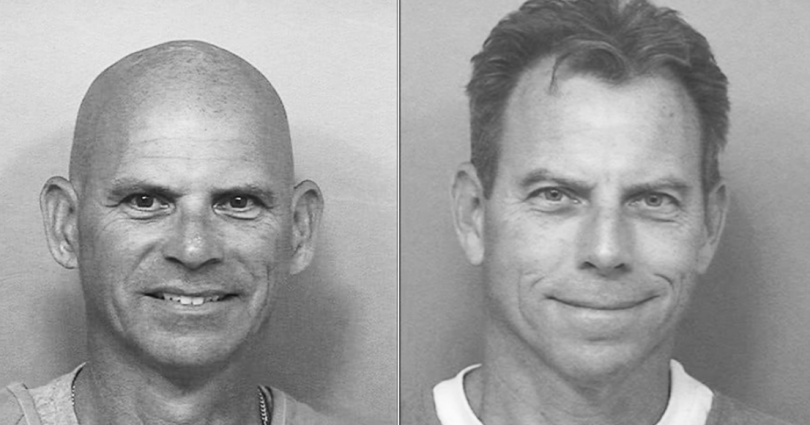

Editor’s note: Whatever you do or don’t think about the controversial and complex case of the Menendez Brothers, a look at their recent bid for parole opens the door to an examination of how well or poorly our systems of prison discipline presently work. So read on!
PS: If you’ve not already read Part 1 of this 3 part series by, our friend Chandra Bozelko, begin there.
****
While hopes were high for the Menendezes as they headed into their parole hearings, their disciplinary records were destined to pose a problem for each of the brothers.
Historically, California has one of the lowest parole rates in the nation. In 2024, only 1154 out of 8001 candidates—or 14.4 percent—were approved. As 2025 comes to an end, the state’s Board of Parole Hearings has approved only 11% of aspiring parolees in 2025.
For comparison, eight of the 29 states with available data had parole approval rates above 50 percent, according to the Prison Policy Initiative and only three other states — Alabama, Maryland and South Carolina — had grant rates below 20 percent for 2022, a year when 13.9 percent of California petitions were granted.
Cracking the code
The best predictor of whether someone will be granted parole in California is the results of the Comprehensive Risk Assessment (CRA), a clinical evaluation completed by a forensic psychologist employed by the California Department of Corrections and Rehabilitation’s (CDCR), who rates an inmate at low, moderate, or high risk of reoffending.
These Forensic Assessment Division psychologists are often known to put a great deal of weight on someone’s disciplinary history when assessing the likelihood of future violence. Thus, people with better histories are more likely to receive a low CRA score.
Unsurprisingly, people with low CRA ratings are more likely to make parole. Both of the Menendez brothers scored as moderate risk of future violence, not the more desirable, low ratings, so each went into the hearings at a slight disadvantage.
CRA ratings, however, are not the only important markers that affect parole.
Disciplinary reports are one of the variables that can mitigate or erase the advantage of a low CRA rating. The Board usually denies release to people with a disciplinary report in the previous six years regardless of their CRA score.
For her doctoral dissertation at Stanford University, biostatistician Jenny Hong examined 35,105 transcripts of parole hearings that occurred between 2007 and 2019. Only about 1% of candidates with recent discipline and moderate/high CRA scores make parole.
Discipline more common in high security prisons
Another issue when it comes to CRA scores, is the fact that it is much more difficult for people housed in higher security prisons to make parole because discipline is meted out more often in these settings.
In the case of the Menendez brothers, they are both currently housed at Donovan Correctional Institution. Lyle has been there since 2013 and Erik since 2018. Before that Lyle was at Mule Creek and Erik was housed at Folsom. Mule Creek used to be a Special Needs Yard, a special housing unit for prisoners at risk in the general population. Now it is developing a reputation as one of the worst in California’s correctional constellation. In 2025, two women were murdered by their husbands during conjugal visits within months of each other.
The authors of the Department of Justice’s 2019 Federal Correctional Facilities study, which is one of the few studies on prison discipline, found that high-security facilities experience violent incidents (e.g., assaults on staff or inmates) up to 2-3 times more often than medium-or low-security prisons.
This pattern filters down to even low-level infractions. Part of the issue is that high-security prisons issue disciplinary reports for all violations, including non-violence-related ones, at a rate that is 1.5 times more often than violations are given at medium-security facilities, and over twice the rate as that of low-security prisons.
Simply put, the harsher the prison, the more likely a prisoner is to get in trouble.
That each brother spent decades in these high security environments is an important context to their behavioral histories. Sometimes people in prison break the rules to feel safer.
For instance, although Lyle lived in more protected housing, he admitted that he engineered a system whereby his family mailed in jeans and sweatpants to other inmates to “get along” with the other men.
It’s easy to assume that the elevated rates of discipline reflect men convicted of more serious crimes’ inability to behave but that’s not necessarily true. Essentially, violence contributes to a cycle of discipline where heightened tensions lead to more sanctions for everyone.
Chandra Bozelko covers the criminal justice system. She is a member of the Society of Professional Journalists’ Ethics Committee and serves as Vice President of Board of the New York Press Club. She won the 2021 Sigma Delta Chi award for Online Column Writing.