South LA Community Meeting on LAPD & Dorner…Paul Tanaka Running & Not Running for Gardena Mayor…and Facts Vs. Fears on Realignment
Celeste Fremon
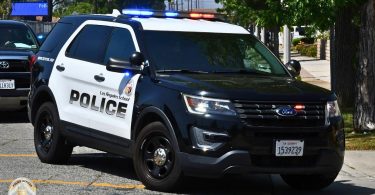
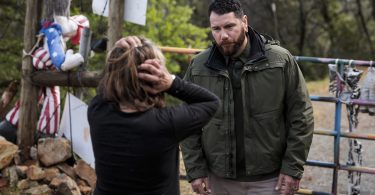
Last Wednesday night, a gathering of South LA community members met with LAPD Chief Charlie Beck and several members of his command staff to discuss the concerns, angers, old wounds and fears relating to the Los Angeles Police Department that the situation with Christopher Dorner had brought to the surface. The meeting was moderated by Skipp Townsend, head of 2nd Call, a non-profit that helps parolees, at risk youth and others turn their lives around.
When notice of the meeting went out, community organizers used Facebook to urge attendance: “Get involved or don’t complain,” they said.
LA Times columnist Sandy Banks was at the event and wrote an unusually sane and thoughtful story on the myriad complex emotions that swirl in the wake of the Dorner nightmare, many of which were talked about last Wednesday night.
Here are some clips from Banks’ story:
I expected fireworks in South Los Angeles this week, when LAPD Chief Charlie Beck showed up at a community meeting to talk about Christopher Dorner, the ex-cop turned killer whose manifesto cast the department in an ugly light, resurrecting decades of buried wrongs.
The crowd at the Vermont Avenue community center was small, about 100 people. But the line to speak stretched from the stage to the back of the room. Some came for answers, some just to vent.
There were stories of ugly street stops and police harassment. Half a dozen people — black, white and Latino — said they’d had family members injured or killed by cops. An old man carried a poster of Dorner. A young man told Beck that the LAPD’s legacy runs so deep, “babies cry when they see your uniform.”
They had read Dorner’s manifesto, which blamed his firing from the LAPD on racists, liars and cowards. There were nods all around when one man declared, “I don’t defend what Dorner did, but like many in the community, I believe what he said.”
But no voices were raised, no insults hurled. Nearly everyone prefaced their comments to Beck with some version of “thank you for coming.”
[BIG SNIP]
A lot has been made of the ways the LAPD has changed since Rodney King and Rampart. The institution is more accountable, with video cameras in patrol cars and officers equipped with microphones. And the ethnic makeup now reflects the city’s demographics: 43% of officers are Latino, 35% white, 12% black, and 9% Asian American. Twenty percent are women.
Still, it’s unrealistic to believe that the LAPD has cleared its ranks of bullies and bigots.
Beck acknowledged that in South L.A. this week. “You will never have a perfect department,” he said. “We hire from the human race and we hire the best people we can, and sometimes they make mistakes.”
Some officers can be redeemed through discipline and training, but those with a “malignant heart” have to be let go, Beck said.
But how do you see into an officer’s heart and who determines its darkness? And how does an officer wind up fired for reporting misconduct?
[BIG SNIP]
Clearly, given his actions later, his was a “malignant heart.” Dorner was unfit to be a police officer.
But the account of his termination is troubling enough that it makes me wonder if the process was used to seek truth or simply to root out a troublemaker.
It looks like a Catch-22: Officers are subject to discipline for not reporting misconduct. But if you make the claim and it doesn’t stick, you can be fired because your bosses doubt you.
That’s a message with the potential to punish a whistle-blower. It seems to validate the “no snitching”
[BIG SNIP]
I can’t imagine how painful it must be for the LAPD’s rank and file to absorb this blow to the family. I understand the rumbling among officers who feel that giving any credence to Dorner’s claims risks turning a maniacal killer into some sort of martyr.
But I’ve also heard from officers who feel shamefully relieved that Dorner expressed publicly the frustrations some have been carrying privately for years.
Read the rest.
LASD UNDERSHERIFF IS RUNNING & NOT RUNNING, CAMPAIGNING BUT NOT CAMPAIGNING FOR MAYOR OF GARDENA
For the last few months, LASD Undersheriff Paul Tanaka, who also happens to be the mayor of Gardena, has been not running for a third term as mayor, although he didn’t manage to make the not-running decision until he’d already put his name on the ballot.
More recently, he has modified his stance and now says that he isn’t going to campaign, and doesn’t want to run, but will be happy to accept the job as mayor if people really, really, really want him so much that they can’t help but elect him.
(There are two other candidates. One who is on the ballot as well as Tanaka. Another is a write in who didn’t sign up originally because he thought Tanaka was running.)
A few days ago, Tanaka reiterated this message that he is not campaigning to Daily Breeze reporter Sandy Mazza. And then he went on to list for Mazza all the reasons one might want to vote for him. To wit:
Tanaka’s main argument for re-election is his record. Since he first captured the mayor’s seat in 2005, the city has added about 35 police officers, balanced its budget, put away $10 million in a rainy day fund, and negotiated an affordable repayment for a crippling $26 million debt racked up from two failed city initiatives in the 1990s.
“My record speaks for itself,” Tanaka said. “The decision for people to make is, `Do you like what you’ve seen in the last eight years?’ We’ve erased the deficit, gotten back in the black, and increased our surplus.”
Also, although Tanaka isn’t running or campaigning, his good friends at the Gardena Police Department are raising money and campaigning for him, according to Mazza.
WitnessLA has reported extensively on Tanaka’s longstanding habit of soliciting/accepting campaign contributions for his mayoral campaigns from Los Angeles Sheriff’s department members whose careers he has had the power to affect. These revelations have, in turn, been a cause for concern and criticism by the members of the LA County Board of Supervisors, the Citizens Committee on Jail Violence, and finally—indirectly—by Sheriff Baca.
And then there is the LA Times’ recent story about an odd incident in which the sheriff’s department, namely Tanaka, used the Gardena PD to surreptitiously ship a bunch of bullet proof vests to Cambodia.
So, what does all this have to do with the Gardena mayor’s race? Oh, who knows. Likely nothing. It is simply that, as the undersheriff has demonstrated himself to be a man who often has a purpose for his actions other than what is publicly stated, it hard not to wonder what all this running/not running business is really about.
CRIME CONTINUES TO DROP IN LOS ANGELES AND MOST CALIFORNIA COUNTIES, EVEN THOUGH CRITICS INSIST THAT THAT REALIGNMENT IS CAUSING A RISE IN CRIME
On Sunday, the San Jose Mercury News ran an op ed that compares some of the realignment fears with facts.
Here are a couple of clips:
There are two major complaints: One is that crime rose as realignment cut the inmate populace by more than 24,000. The other is that some criminals are being released earlier than before the program began in October 2011, in part because local jails in a few counties are overcrowded.
A typical gripe comes from Tyler Izen, president of the Los Angeles Police Protective League, the state’s largest police union. “Our members are terribly concerned that we are allowing people out of prisons who are likely to recommit crimes and victimize the people of our city,” he said in a telephone interview.
He claimed probation departments have lost track of some former prisoners, but could offer no specific examples. “All I have is anecdotal information,” he conceded.
It turns out that only one of those big gripes has any proven merit: In a few counties, Fresno being a prime example, prisoners are often released after serving minimal jail time. But sheriffs and the state Department of Corrections insist the releases never involve violent or sexual criminals and that ex-convicts get the same level of parole and probation supervision they did before.
As for crime being up? Well, in LA violent crime isdown for the 10th year in a row, as the essay points notes:
….dropping 8.2 percent to a total of 18,293, with significant decreases in robbery and aggravated assault. There were 152 gang-related homicides — the fewest in more than 10 years.
But property crime was up slightly in L.A., by 0.2 percent, with Police Chief Charles Beck attributing the uptick to a 30 percent increase in cellphone thefts. Beck said some of the small increase in property crime might be due to realignment.
In surrounding Los Angeles County, homicides were at 166, the lowest number since 1970,
Murders are up in Oakland, San Jose and San Francisco—which could be due to realignment.
Or not.
“Taken together, those three cities lost more than 850 police officers to budget cuts in the past three years, which may help explain some of their homicide increase.
The other dozen reporting cities in the region had 24 percent fewer murders during that period, and, overall, Bay Area slayings remain well below historic highs.
Let us hope that sometime in the next year we will have the results of some kind of study that involves serious numbers crunching and analysis to tell us—from a fact-based, rather than fear-based perspective—exactly how AB109 has affected the state and counties.
Joan Petersilia’s team at Stanford University is, we know, working on study. But it seems to be a slow process.
Photo/Najee Ali
Posted in Charlie Beck, LAPD, Police, race, racial justice, Realignment |
8 Comments »