Sunday, May 11, 2008
street news, views and stories of justice and injustice

Sections

Recent Posts

Categories

Archives


Search:

Meta

Los Angeles history


MS-13….The Armed and Dangerous “Children” of War

October 11th, 2007 by Celeste Fremon

hijos-de-la-guerra.gif

[NOTE: I’M IN THE MIDST OF A PESKY DEADLINE
so this will be a short one. Back in stride tomorrow morning.]


More than any other street gang in America,
MS-13 has been portrayed by both the FBI the media as the most dangerous gang in the world.

While that specific characterization is mostly overblown hyperbole,
there is no doubt that the international street gang known as Mara Salvatrucha or MS-13 has a complicated history that makes it different than any of the other Hispanic gangs that have sprung up in the last 60 years on the streets of Los Angeles. Its difference is grounded in the fact that most of its first members were refugees who had recently escaped the horrors of the civil war in El Salvador.

I mention the subject of MS-13 because,
this coming Friday night, an award-winning and powerful feature-length documentary called Hijos de la Guerra will be showing at 9 pm at the Latino Film festival.

The film explores the history of Mara Salvatrucha
in the US and Central America, and the sociological reasons for its proliferation. The filmmakers got remarkable access to their subjects, both here and in Central America, and the result is a fascinating piece of film making.

So if you have any interest
in the subject of gangs and gang violence, or simply in sociology, I recommend that you attend the screening. (Hey, I’ll definitely be there.)

Here’s the information:


Hijos de la Guerra
9:15 p.m.
Friday, October 12
Arclight Cinemas
6360 W Sunset Blvd
Los Angeles, CA

**********************************************************************************

ALSO….

Be sure to read the LA Times editorial titled “The Human Cost of Secrecy. This is a disturbing case that deserves far more attention. Here’s a ‘graph from their essay:

With no explanation, the Supreme Court has denied a day in court to a German citizen of Lebanese descent who says he was kidnapped by the CIA and imprisoned and tortured, all because he was mistaken for a terrorist with a similar name. The justices on Tuesday refused to review a decision by a federal appeals court that Khaled El-Masri couldn’t sue former CIA Director George J. Tenet for damages because a trial might reveal “state secrets.”

And here’s a link to the Constitution Project’s summary of the El-Masri case, including a link to the amicus brief they filed in El-Masri’s behalf.

Secrets and lies, lies and secrets.

Posted in Gangs, Los Angeles history | 6 Comments »

A New Dose of Hope on Alameda Street - UPDATED

October 3rd, 2007 by Celeste Fremon

homeboy-opening-1.jpg

Yesterday at noon, the new Homeboy Industries building
officially opened its doors. Hundreds of people showed up to celebrate the new bakery, cafe, office building, jobs and rehabilitation center located in Chinatown on Alameda, two blocks from Union Station. Antonio Villaraigosa and Bill Bratton were there, as was Sheriff Lee Baca, LAPD Central division Chief, Sergio Diaz, the mayor’s head gang guy, Jeff Carr, a judge or two and a lot, lot more. (Mandalit del Barco has a good story about the opening on NPR this morning, as does Rick Coca of the LA Daily News) and a nice photo slideshow by LA DN photog, John McCoy.)

sergio-and-jeff-carr.gif

Prominent among the crowd were the scores of homegirls and homeboys, past and present, who gazed at the building with obvious personal pride. In fact, so many people came to check the place out that fire marshals began regulating the number of people allowed inside. At one point even two of Father Greg’s sisters were among the crowds waiting in line to get in the building.


One of the speakers (I forget who out of the list above)
and said of the bright, mustard colored facility, “This is hope’s new address.” And for the day, anyway, nearly everyone there believed the characterization to be true.

“Now what we need to do,”said the Mayor’s designated gang violence reduction specialist, Jeff Carr,
in a conversation outside on the sidewalk, “we need to make sure that hope has an address a lot of other places in the City of Los Angeles,” With that he reeled off a string of hot spot addresses all over town that could assuredly use more hope.

baker-at-restaurant.gif

Thinking in that same vein, this morning’s LA Times printed a lovely unsigned editorial (written by the Times Editorial page chief, Jim Newton). Here’s a snippet”

Nine years ago, The Times surveyed some of Los Angeles’ most thoughtful, civic-minded leaders for their ideas on what ailed this city. Most responded with insights into the power structure — the authority of the mayor, frustrations with the City Council and the Board of Supervisors and the like. Father Gregory Boyle saw it differently. “If government’s heart could be broken by the things that break the heart of God,” he said, “then government would be better.”

Boyle knows what he’s talking about when he contemplates the landscape of heartbreak. In his ministry to L.A.’s gang members, he has buried 156 of his flock. He struggled through what he refers to as the “decade of death” — the years from 1988 to 1998, when gang violence took a devastating toll in Los Angeles and beyond. And he has been forced to move Homeboy Industries, which he founded to help those amid that violence, four times, most recently because its Boyle Heights headquarters was destroyed by a fire.

old-homeboy-bakers-2.gifnew-bakery.gif

In the end, the people most blown away by the opening, and the classy new building, were the guys and young women who work here. The homeboy pictured below is Anthony Henderson, a 38-year-old who said he recently got out of prison. “Nobody else would give me a job,” he told me. “Then I heard about Homeboy from a friend.” Now he’s working on the Homeboy Maintenance crew. “We have contracts to clean law firms, some homes, and other businesses. It’s great. I’m really happy here. They gave me a chance.”

(To see Anthony and more of the homeboys and homegirls click below.
Read the rest of this entry »

Posted in Gangs, Los Angeles history, Life in general | 17 Comments »

A Prescription for County Supervisors UPDATE***

June 20th, 2007 by Alan Mittelstaedt

You gotta wonder how much L.A. County supervisors really want to save Martin Luther King Jr.-Harbor Hospital, formerly known as King-Drew. Next month federal inspectors could very likely shut down the horror house, where substandard care has killed and maimed dozens of people over the years. Here are three steps supervisors could take today if they really care about the hospital and serving the thousands of consitutents who, for better and often worse, depend on it.

–Convene their regular meetings in one of the hospital’s now vacant wings. This not only will boost the supervisors’ goodwill in the community, but will offer up-close views of their efforts to improve care.

–Order all hospital employees who are holdovers from the old, killer regime to wear black armbands. Not only will this make them visible to supervisors, who claimed to be surprised this week by the lack of progress on-site adminstrators have made replacing them, but it will show the public who they need to stay away from.

–Cancel the supervisors’ health insurance plans and require them to see doctors at King-Harbor for all of their medical needs.

*** The Father’s Day celebration that almost didn’t happen. Read Celeste Fremon’s latest story in the L.A. Weekly on the emergency-room saga of Juan Ponce.

Posted in Government, Los Angeles history, health care | 10 Comments »

Memories of Insurrection

May 1st, 2007 by Celeste Fremon

la-riots4.jpg

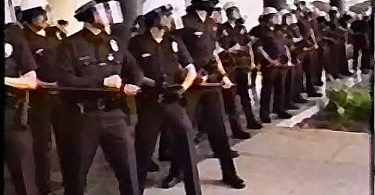
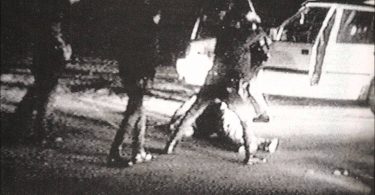
1992 was a terrible and amazing year in Los Angeles
. It was the height of the city’s gang crisis. More then 2000 people were murdered in LA County within 12 months, nearly half of them dead as a result of gang violence — a bloodier tally than we’ve seen before or since. The famous Blood/Crip truce was also forged that year.

And, then, of course, there were the riots, the insurrection, the uprising, whatever you want to call those days at the end of April into May that, like the Watts riots before them, changed how our city saw itself.

Sunday and yesterday, as I read some of the articles and opinion pieces assessing what has and has not changed in the fifteen years between then and now, I found some of my own 15-year-old memories floating to the surface.

The first section that appears below is excerpted from G-Dog and the Homeboys, the book about Father Greg Boyle and the gang members of the Pico Aliso housing projects of East Los Angeles, that I was, then, researching.

Pico Gardens and Aliso Village, until their renovation a few years ago, combined to form thelargest public housing project west of the Mississippi. In the years that I drove to Pico-Aliso daily to research the book, the community known to locals as “the projects” had the highest level of gang activity in Los Angeles—and, frankly, the nation.

When the verdicts were announced, for projects residents—and for me by extension—the possibility of citywide violence was a secondary concern. The primary issue on that day was a murder that had occurred three nights before between two projects gangs. A kid from the Latino gang, The Mob Crew, shot and killed a kid from the East Coast Crips, the Crip set that claimed territory in Aliso Village. It was a particularly cold, near-execution-style murder, and we all feared there would be deadly retaliation on the night of the 29th of April.

But then the city preempted all such micro concerns when it exploded into conflagration. Fifty people died, thousands were injured, and—in an odd weave of blessing and curse—the open wounds caused by the individual gang killing in Pico-Aliso were cauterized by the heat.

The following is my own small shard of the collective LA story of the day our city exploded.

Read the rest of this entry »

Posted in Gangs, Police, Los Angeles history | 6 Comments »