Sunday, May 19, 2013
street news, views and stories of justice and injustice
Follow me on Twitter

Search WitnessLA:

Recent Posts

Categories

Archives

Meta

Families Locked Out of Juvenile Justice Process, High School Sports Participation Reduces Suspensions and Serious Crime…and More

September 11th, 2012 by Taylor Walker

INCLUDE FAMILIES IN JUVENILE JUSTICE PROCESS, SAYS REPORT

Justice for Families released a report Monday analyzing the areas in which the juvenile justice system lets kids down by not actively involving families in each step of their contact with the justice system. It also lays out a “Blueprint for Youth Justice Transformation” with solutions to specific problems within the system, including the lack of parental involvement.

The Juvenile Justice Information Exchange’s Kaukab Jhumra Smith has more info on the report. Here’s how it opens:

Every day, nearly 50,000 children are forced to spend the night away from their families because of their involvement in the juvenile justice system, according to a new report.

It’s not as if these youth have no one to care for them. Families of young detainees care deeply about their children, but often feel helpless when their children get into trouble — especially in the face of high adult incarceration rates, zero-tolerance school policies and reduced social services, which can make it difficult for families to offer support. Add to this a juvenile court system that practically shuts out family members from receiving or offering input, and the feelings of frustration and helplessness multiply.

These are the findings of Families Unlocking Futures: Solutions to the Crisis in Juvenile Justice, a report released Monday that offers a blueprint for reforms that involve family members at every step when a child gets into trouble, whether at school or in the juvenile justice system. It’s based on the belief that timely and appropriate intervention, with the help of families, can prevent the inexorable march for some children from school to juvenile court, and ease their transition from detention back into society.

Such detention doesn’t just take an economic and mental toll on detainees and their families; it also affects taxpayers and state budgets. Each day a youth spent in a juvenile facility cost taxpayers $241 in 2007, the report finds. Multiplied by 64,558 youth, states across the county spent a total of $5.7 billion for detention that year.

Family members surveyed for the report said they frequently felt ignored at proceedings in juvenile courts, overlooked by probation staff and shut out of their children’s lives in correctional facilities, even when it was time for their children to be released.


REPORT SAYS INVOLVEMENT IN HIGH SCHOOL SPORTS PROGRAMS MEANS LOWER SUSPENSION AND SERIOUS CRIME RATES

High schools that have high participation rates in sports programs see fewer suspensions and major crimes on campus, according to a recent report from the University of Michigan. (WitnessLA previously posted on a similar planned study to evaluate the effect of sports programs on kids in juvie detention facilities like Camp Kilpatrick.)

Here’s a clip from U-M’s article on the report:

The research includes violent behavior and attempted rape among major crimes, and suspensions involving five or more days out of school.

“Sport participation opportunities within a school might operate to slow down or stop more major forms of delinquency within a school environment from occurring,” said Philip Veliz, a postdoctoral fellow at the U-M Substance Abuse Research Center and the study’s lead author.

He co-wrote the research with Sohaila Shakib, an associate professor of sociology at California State University-Dominguez Hills.

The suspension rates also were reduced in schools with more sports participation opportunities, but this could be related to violent crimes being more likely to result in a long-term suspension, Veliz said.

The study can be found in full (but, unfortunately, behind a pay wall) in the current issue of Sociological Spectrum.


THE SIGNIFICANCE OF THE AFFORDABLE CARE ACT FOR THE CORRECTIONS SYSTEM

A new report from the Sentencing Project details how the Affordable Care Act could impact corrections and public safety. Here’s a clip:

Expanded Health Care Coverage — The Affordable Care Act gives states the option of expanding Medicaid eligibility and makes prevention, early intervention, and treatment of mental health problems and substance use essential health benefits. In states that opt to expand Medicaid coverage, the Federal government will cover 100% of expenditures for the newly eligible population from 2014 to 2016, with the amount of federal funds decreasing yearly to 90% by 2020 and thereafter.

Reducing Recidivism — Because of the role mental health and substance abuse problems play in behaviors that lead to incarceration and recidivism, the Affordable Care Act could help states reduce the number of people cycling through the criminal justice system.

Addressing Racial Disparities – The new legislation may contribute to reducing racial disparities in incarceration that arise from disparate access to treatment.


WHICH WAY LA? ON THE JAILS COMMISSION

Celeste appeared on Warren Olney’s Which Way LA? Monday night, along with Miriam Krinsky, Executive Director of the Los Angeles Citizens Commission on Jail Violence, to discuss Friday’s jails commission meeting and the commission investigators’ findings thus far. (Celeste’s story on the Friday hearing can be found here.)

Posted in criminal justice, families, health care, juvenile justice, LA County Board of Supervisors, LASD | No Comments »

Update On the Fate of LA Juvenile Probation’s Sports Program, GOP Platform Calls for More Inmate Rehabilitation…and More

August 30th, 2012 by Taylor Walker

LA SUPERVISORS DISCUSS THE FUTURE OF CAMP KILPATRICK’S SPORTS PROGRAM

There are concerns that Camp Kilpatrick, an aging LA County juvenile probation camp scheduled to undergo a $41M renovation, will not resume its well-known sports program once the facility is rebuilt. Kilpatrick is the only juvie detention facility that has a sports program for the kids. (You can read WitnessLA’s previous post on Kilpatrick here.) The issue was discussed Tuesday during the Board of Supervisors meeting.

Zev Yaroslavsky, who coauthored a motion with Mark Ridley-Thomas, urged the board to proceed with a motion that would have Probation Chief Jerry Powers commission a study gauging the benefits of sports programs for incarcerated youth. (Apparently there are few, if any, studies on the ability of inter-mural sports programs to lower recidivism in incarcerated kids.) All members seemed to agree that the sports program should resume once Kilpatrick reopens. Ridley-Thomas had this to say:

“The sports program at Camp Kilpatrick has already been widely acknowledged… The work that is happening at Camp Kilpatrick to make it a better environment is essentially the principle cause for the temporary—and I want to underscore ‘temporary’—termination of the sports program there… I think it’s fair to suggest that there is no intention on the part of this board to terminate the sports program…”

Sup. Knabe suggested looking at another evaluation of a different program that the Supervisors had previously ordered up a couple of years ago, this one of the outcomes for probationers who, after they were released, went through a program at Homeboy industries. “…If I could make a friendly amendment to include that comparison,” he said.

The question seems to be whether or not a study is necessary to include sports programs in the “evidence-based” treatment programs that the DOJ requires. (We at WitnessLA think that including money for program evaluation in funding is a good thing! These studies and evaluations allow us to see what works, what doesn’t, and give us an idea of what might work better.)

Here’s a clip from Yaroslavsky and Ridley-Thomas’ motion:

The County Probation Department is under ongoing U.S. Department of Justice scrutiny of the facilities and programming it provides for its young wards. The U.S. DOJ requires that the county offer “evidence-based integrated treatment programs.” While such activities as group therapy sessions and mental health counseling have been proven through rigorous study to help the plight of these teenagers and reduce recidivism, intermural sports programs have not been similarly studied. There is apparently no “evidence” to show that participation in team sports can play a positive role in rehabilitating these young people.

Recent history, however, suggests otherwise. The 2006 film “Gridiron Gang” portrayed real-life Camp Kilpatrick wards learning to play football and win together despite coming from rival gangs. In 2010, the Camp Kilpatrick basketball team made the state play-offs, failed to advance to the championship game but nonetheless won its league Sportsmanship Award. In 2011, a team from neighboring Camp David Gonzalez competed successfully in an intermural contest to design, build and race a solar-powered boat. While these small triumphs may not speak to long-term therapeutic advancement or reductions in recidivism, they do seem to provide concrete “evidence” of pro-social behavior among these troubled youth.

Also, if you feel so inclined, you can read Tuesday’s Board of Supervisors meeting transcript here.


GOP PLATFORM CALLS FOR BETTER REHABILITATION STRATEGIES…AMONG OTHER THINGS

While the newly adopted Republican platform supports capital punishment, the Defense of Marriage Act, and Arizona’s immigration laws, it also called for better inmate rehabilitation and recidivism reduction strategies—which is one thing that both parties can agree upon.

The Crime Report’s Ted Gest has the story. Here’s a clip:

The platform endorsed “new approaches, often called accountability courts,” and said, “government at all levels should work with faithbased institutions that have proven track records in diverting young and first time, non-violent offenders from criminal careers.” Republicans back state and local initiatives “trying new approaches to curbing drug abuse and diverting firsttime offenders to rehabilitation.” The platform assailed federal “overcriminalization,” noting that the number of U.S. criminal offenses has jumped from 3,000 in the early 1980s to 4,450 in 2008. It says Congress “should withdraw from federal departments and agencies the power to criminalize behavior, a practice which, according to the Congressional Research Service, has created tens of thousands of criminal offenses.”

You can access the complete GOP platform here.


NY PRISONS USE NEW VIDEO VISITATION FOR INMATES

New York prisons are implementing a new video conference visitation system for those prisoners who are locked up in facilities far away from their families. This would be great to see instituted in CA, where most prisons are in remote locations, making visits for working family members and kids extremely difficult.

The New York Daily News’ Oren Yaniv has the story. Here’s how it opens:

Tayshona McDuffie used to meet her inmate mother only twice a year after making a grueling, 400-mile journey to a prison near the Canadian border.

These days, the daughter gets to see her mom twice each month while sitting in a videoconference room in downtown Brooklyn.

“It improves our relationship,” said McDuffie, 19, whose mother is nearing the end of a 12-year sentence for an assault conviction. “I look forward to it every month.”

The fledging program of prison visits via closed-circuit TV — the first one in the state — is set to more than quadruple in size this fall, the Daily News has learned.

“The research shows that people will do better when they’re released if they stay connected with their families,” said Elizabeth Gaynes, executive director of the Osborne Association, a nonprofit that has been conducting the meetings known as televisits for the past two years.

Posted in 2012 Election, Homeboy Industries, juvenile justice, LA County Board of Supervisors, prison | 1 Comment »

LA Juvenile Probation Camp to Drop Well-known Sports Program, CA Supreme Court Rules Against Overlong Juvie Sentences, and More

August 20th, 2012 by Taylor Walker


EDITOR’S NOTE: For decades, LA County’s juvenile probation camp system has catastrophically failed most of the kids it took into its care, as demonstrated by the system’s lousy recidivism rate, its repeated scandals and multiple civil rights lawsuits, and the fact that the camps have been under Department of Justice scrutiny for more than a decade.

Now, however, LA County Probation (with the approval of the LA County Board of Supervisors) plans to completely redesign and rebuild one of its juvenile facilitates, Camp Kilpatrick, to the tune of $41 million. The idea is to transform the 50-year-old Malibu facility from its present dilapidated prison barracks-like atmosphere into a cluster of homey cottages, which will house therapeutic programs that borrow from the famed “Missouri Model”—developed by the State of Missouri, and hailed as the most widely respected juvenile justice system for rehabilitating kids in residential facilities.

The Missouri Model has already been replicated successfully in other locations including Washington, D.C. and Santa Clara, California.

The fact that LA County Probation plans to embrace some version of Missouri’s system is, of course, wonderful news—presuming that the County really follows through and, rather than make cosmetic changes, truly embraces a transformative model.

There is one other worry: Kilpatrick has offered one of the few bright spots in LA County’s otherwise dismal record with its juvenile facilities, and that is the camp’s sports program, which has been life-saving for many kids over the years, but is now slated for cancellation, as you’ll see from the story below.

We at WitnessLA applaud the proposed Kilpatrick transformation, and hope that LA County Probation, and related county agencies, find a way to stay faithful to their stated aspirations without killing Kirkpatrick’s sports program, which could be transferred to one of the other juvenile camps, at the very least.

We will, of course, continue to track this important story.


CAMP KILPATRICK RENOVATIONS DO NOT INCLUDE SPORTS PROGRAM

Camp Kilpatrick’s sports program will see it’s last season this fall before the facility undergoes rebuilding. Kilpatrick, currently the only juvenile detention facility in the county with a sports progam, will see renovations that provide more therapeutic conditions for the kids, but leave out the sports.

LA Times’ Sandy Banks has the story. Here’s a clip:

The sports program is simply collateral damage in a long-overdue campaign to make the troubled probation camps more responsive to delinquent teenagers’ needs.

“If we can get them to think in a more positive logical manner, in the long run they’ll make better decisions and won’t get themselves in trouble again,” Remington said.

But can’t a sports program teach those lessons, too? A bad attitude can get a player benched; a bad choice can get him dropped from the team.

Sports has plenty to offer wayward kids. Even probation honchos agree. “We certainly see the value in discipline, in learning to be a team member,” Remington said. “But no one has studied the sports program” to quantify its impact on delinquent kids.

So maybe it’s time they did — before they turn their camps into sports-free zones on the misguided notion that athletics don’t count and only “therapeutic” things make a difference.

It’s common sense that teenage boys need an outlet for their energy; a place to shine, a mandate to cooperate, a chance to see their teammates as comrades, not gang rivals.

The lessons camp therapists aim to teach — identifying strengths and weaknesses, setting and reaching goals, learning to say no to a short-term indulgence for the better long-term reward — are lessons teams learn through hours of practice, in the gym or on the field.

The probation department has made a mess of its calling over the years; mired in scandals and allegations of abuse, accused of doing nothing but warehousing kids.

This turn toward treatment is admirable, but the one-size-fits-all approach isn’t.

It’s the same sort of single-minded focus that’s hamstrung L.A. Unified schools, where the preoccupation with high-stakes testing has indeed improved academic performance. But in the process, it’s squeezed out other choices — art, music, vocational programs — that have been a lifeline for struggling kids.


CA SUPREME COURT RULES EXCESSIVE JUVIE SENTENCES UNCONSTITUTIONAL

The CA Supreme Court ruled last week that sentencing a juvenile to an excessive term of years that sets them up for a parole eligibility date past their life expectancy violates the Eight Amendment.

KPCC’s Rina Palta has the story. Here’s a clip:

That issue came up in a case out of Los Angeles County, in which a 16-year-old shot at three rival gang members, wounding one in the shoulder.

Rodrigo Caballero was convicted of three counts of attempted murder and sentenced to three consecutive terms. That meant Caballero would first become eligible for parole after 110 years in prison. Caballero appealed his sentence, arguing it violated the Graham ruling, which “holds that the Eighth Amendment requires the state to afford the juvenile offender a ‘meaningful opportunity to obtain release.’”

Prosecutors, meanwhile, said the Graham ruling was not intended to apply to attempted murder cases, and technically, Caballero would eventually, should he live long enough, have the chance to get out.

California’s Supreme Court justices sided with Caballero, conlcluding that “sentencing a juvenile offender for a nonhomicide offense to a term of years with a parole eligibility date that falls outside the juvenile offender’s natural life expectancy constitutes cruel and unusual punishment in violation of the Eighth Amendment.”

(The Caballero ruling can be found directly beneath the article text.)

SF Weekly’s Albert Samaha has an interesting take on both the CA Supreme Court decision and the Assembly’s passage of SB 9. Here’s a clip:

…The California Supreme Court declared such sentences unconstitutional, ordering that juveniles guilty of non-homicide crimes get an opportunity for parole in their lifetime.

The ruling came the same day the state Assembly passed a bill, first proposed by state Senator Leland Yee, that would allow juveniles serving life without parole to request a court to bump the sentence down to 25-to-life.

Both events appear part of a gradual transformation of the California prison system, which already look much different than it did 10, even five, years ago.

Since October 2011 — two years after the U.S. Supreme Court found California prisons unconstitutionally overcrowded -- the state inmate population has dropped by more than 26,000, making the system now only 60 percent overcapacity. While that pace might not be fast enough for the state to hit its goal — 37.5 percent overcapacity by June 2013 — at least we now have fewer prisoners than Texas, to which we have passed the highest prison population crown. Those numbers don’t, however, account for the fact that the state simply shifted much of the overcrowding problem to county jails.


UPDATE ON CA PRISON OVERCROWDING

CA officials evaded a federal request for an prison population reduction schedule, and instead requested more time to meet the current June 2013 deadline of 137.5% capacity. (For those of you who haven’t been following the overcrowding situation, you can read the back-story here.)

The San Jose Mercury has the AP story. Here’s a clip:

In a legal brief filed late Friday, lawyers for the state called the threat of an inmate release order “unwarranted” and said it oversteps the 2011 U.S. Supreme Court ruling upholding population caps intended to correct horrific conditions within what was then the nation’s largest prison system.

The state ignores the court’s most recent order to provide information on how quickly it could begin releasing inmates. Instead, California asked a three-judge panel to suspend enforcement of crowding limits it now says it can’t meet.

The federal court’s goal is 137.5%, or no more than 112,000 inmates in prisons built to house 82,500 people. Lawyers for the state have warned jurists they do not expect to meet the June 30, 2013, deadline and will file a motion early next year seeking a higher cap.

Posted in California Supreme Court, CDCR, juvenile justice, Realignment, Sentencing | No Comments »

Abuse of LA County’s Locked-Up Kids

February 22nd, 2010 by Celeste Fremon

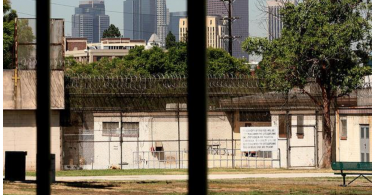
Sylmar-Juvie


ON ANY GIVEN DAY IN LA COUNTY’S 21 JUVENILE PROBATION CAMPS AND JUVENILE HALLS, a total of around 3000 children and teenagers are locked up under the watch and care of the Los Angeles County Department of Probation
.

Anyone who works in and around the kids and teenagers who have served time in those facilities has heard more than a few anecdotal accounts of staff abuse. Some of the stories come from the kids themselves, or from their parents who feel helpless to do anything with what they have been told them by their children. [READ TO THE BOTTOM FOR ONE SUCH ACCOUNT.]

I’ve been told similar accounts by volunteers who teach writing and the like to young inmates in inside the camps or juvenile halls.

Some of the stories are more egregious and credible than others. But even with the most believable accounts, the details are inevitably tough to verify. It does not help that many of the 600 security cameras placed throughout the facilities—cameras that might have proved or disproved the alleged incidents—have long been broken.

(Last month the LA County Sups voted to spend $1.2 million to figure out how to replace some of those cameras. Very nice, but a little late, guys. The broken cameras have been reported for several years.)

NOW, HOWEVER, SUNDAY’S LA TIMES FEATURES a rigorously reported article by reporters Richard Winton and Molly Hennessy-Fiske, that finally brings to light documentation of a few of the long rumored abuses.

To research their story, Winton and Hennesy-Fisk trolled through piles of court paperwork and police records, along with talking with sources inside county the probation system. The result is an important article that lays out multiple instances of abuse perpetrated by the very people inside the county facilities who are supposed to be helping and protecting the juveniles in their charge.

Among the incidents Winton and Hennessy found:

* A probation officer had sex with three youths in the detention hall where she worked — in laundry, supply and interview rooms. She was sentenced last year to four years in prison after pleading guilty to five counts of felony sexual abuse.

* A probation officer caught on tape beating a youth in a juvenile hall recreation room was convicted last year of battery and sentenced to 24 months’ probation.

* A probation officer was sentenced to a year in jail last year for directing five teenagers under her care to beat another youngster who she mistakenly believed had stolen her cellphone.

And here is another representative clip.

The Times examined records from the last four years – a period during which county officials hired Robert Taylor to head the agency with the mandate of reforming the department, including providing better oversight of officers. At the time he took over, the department was struggling with violence in its halls and camps and persistent criticism that it was doing little to help the juvenile offenders in its care.

Probation officials have sustained 102 allegations of officer misconduct involving youths at the county’s halls and camps over the last three years, according to a department source who asked not to be identified because he was not authorized to release the information publicly. The source said many of the sustained cases involved complaints of excessive force. Department officials did not disclose how many officers were involved in misconduct or the extent of any discipline.


IT IS ESSENTIAL TO NOTE that there are many staff and administrators in the countys various juvenile facilities
who are deeply dedicated to their work, and who assuredly make a difference in a lot of young lives..

For instance, Camp Vernon Kilpatrick located in the hills above Malibu is known for the positive affect of its CIF-rated sports program.

Camp David Gonzales in Calabasas is a model camp known for its commitment to strengthening not warehousing the young men who come through its doors through its consistently innovative educational and vocational programs.

BUT ALONGSIDE THE GOOD WORK BEING DONE in the LA probation’s best facilities there are accounts of conditions at other facilities that suggest that what the LA Times’ reporters uncovered is merely the tip of the proverbial iceberg.

There is, for instance, the pending ACLU lawsuit that alleges a laundry list of abuses and instances of educational neglect at the four-camp facility known as Challenger.

And there are anecdotal stories like the one I heard Sunday night.

Read the rest of this entry »

Posted in juvenile justice, LA County Board of Supervisors, Probation | No Comments »