Thursday, May 17, 2012
street news, views and stories of justice and injustice
Follow me on Twitter

Search WitnessLA:

Recent Posts

Categories

Archives

Meta

prison policy


The New Yorker: Why Do We Lock-Up So Many People?…& Other Must Reads

January 26th, 2012 by Celeste Fremon


Most Americans honestly don’t want to spend much time,
energy or emotion thinking about people in jail or prison—unless, by chance they have a family member who is locked up.

We harp on the issue here at WitnessLA since criminal justice is, after all, central to the mission of the site. But if the topic comes up in a social setting, I see eyes starting to glaze over, even among friends who try to be interested.

That’s why the article by Adam Gopnick in the current New Yorker, The Caging of America, is so heartening.

Gopnick is a critic and commentator with no particular expertise in criminal justice matters. But he’s also a very smart guy and clear headed thinker. Somehow the topic grabbed his interest, and he dove deeply.

The result is part think piece, part book review. (He examines the new book by Berkeley criminologist, Frank Zimring, The City that Became Safe: New York’s Lessons for Urban Crime and Its Control.)

In any case, it shouldn’t be missed.

I won’t try to summarize Gopnick’s work here. The essay is carefully crafted, thought by thought, and should be read in it’s totality. But some clips will give you an idea of what he’s on about.

To wit:

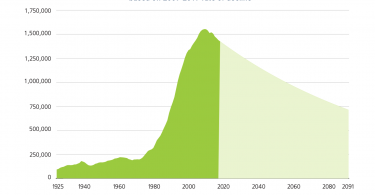
The accelerating rate of incarceration over the past few decades is just as startling as the number of people jailed: in 1980, there were about two hundred and twenty people incarcerated for every hundred thousand Americans; by 2010, the number had more than tripled, to seven hundred and thirty-one. No other country even approaches that. In the past two decades, the money that states spend on prisons has risen at six times the rate of spending on higher education.

Conservatives and other law and order types insist that the nationwide 40 percent drop in crime we’ve seen in the past few years can be laid at the feet of all this incarcerating. But, as Gopnick, channeling Zimring, points out, that assumption falls apart when one looks at New York’s crime stats, which happen to be another 40 percent lower still than the rest of the nation—the lowest since 1900—while its incarceration rate, rather than rising, has also dropped precipitously.

One fact stands out. While the rest of the country, over the same twenty-year period, saw the growth in incarceration that led to our current astonishing numbers, New York, despite the Rockefeller drug laws, saw a marked decrease in its number of inmates. “New York City, in the midst of a dramatic reduction in crime, is locking up a much smaller number of people, and particularly of young people, than it was at the height of the crime wave,” Zimring observes. Whatever happened to make street crime fall, it had nothing to do with putting more men in prison. The logic is self-evident if we just transfer it to the realm of white-collar crime: we easily accept that there is no net sum of white-collar crime waiting to happen, no inscrutable generation of super-predators produced by Dewar’s-guzzling dads and scaly M.B.A. profs; if you stop an embezzlement scheme here on Third Avenue, another doesn’t naturally start in the next office building. White-collar crime happens through an intersection of pathology and opportunity; getting the S.E.C. busy ending the opportunity is a good way to limit the range of the pathology.

And still we go on locking people up at a ferocious clip—even though, in terms of our incarceration rates, we increasingly stand alone in the world.

To catch sharks and not dolphins, Zimring’s work suggests, we need to adjust the size of the holes in the nets—to make crimes that are the occasion for stop-and-frisks real crimes, not crimes like marijuana possession. When the New York City police stopped and frisked kids, the main goal was not to jail them for having pot but to get their fingerprints, so that they could be identified if they committed a more serious crime. But all over America the opposite happens: marijuana possession becomes the serious crime. The cost is so enormous, though, in lives ruined and money spent….

So how do we go about ending this plague of imprisoning? Gopnick suggests that we must start thinking and acting sanely—in a thousand small ways.

Epidemics seldom end with miracle cures. Most of the time in the history of medicine, the best way to end disease was to build a better sewer and get people to wash their hands. “Merely chipping away at the problem around the edges” is usually the very best thing to do with a problem; keep chipping away patiently and, eventually, you get to its heart. To read the literature on crime before it dropped is to see the same kind of dystopian despair we find in the new literature of punishment: we’d have to end poverty, or eradicate the ghettos, or declare war on the broken family, or the like, in order to end the crime wave. The truth is, a series of small actions and events ended up eliminating a problem that seemed to hang over everything. There was no miracle cure, just the intercession of a thousand smaller sanities. Ending sentencing for drug misdemeanors, decriminalizing marijuana, leaving judges free to use common sense (and, where possible, getting judges who are judges rather than politicians)—many small acts are possible that will help end the epidemic of imprisonment as they helped end the plague of crime….

Anyway, read the thing. It’s worth it.


HOUSE PANEL QUESTIONS US ATTORNEY GENERAL ABOUT PARDONS OFFICE AFTER PROPUBLICA INVESTIGATION ON RACIAL DISPARITIES IN PRESIDENTIAL PARDONS

In December of this past year, in an investigation co-published by the Washington Post, ProPublica reporters Dafna Linzer and Jennifer LaFleur found that, in the past ten years of presidential pardons, white criminals seeking pardons were nearly four times as likely to succeed as minorities pardon seekers. Black pardon seekers had the lowest chance of all.

Here’s a clip:

Current and former officials at the White House and Justice Department said they were surprised and dismayed by the racial disparities, which persist even when factors such as the type of crime and sentence are considered.

“I’m just astounded by those numbers,” said Roger Adams, who served as head of the Justice Department’s pardons office from 1998 to 2008. He said he could think of nothing in the office’s practices that would have skewed the recommendations. “I can recall several African Americans getting pardons.’’

The review of applications for pardons is conducted almost entirely in secret, with the government releasing scant information about those it rejects.

The facts uncovered by the reporters’ investigation caused the House Judiciary Committee to pose a series of probing questions to Attorney General Eric Holder about what he was doing to look into this issue.


A WOMAN RELIVES THE TRAUMA OF FORCED STERILIZATION AND THE NIGHTMARE OF EUGENICS

This LA Times Column One story story by David Zucchino is dizzyingly painful to read, but also essential.

Here’s how it opens:

Elaine Riddick was a confused and frightened 14-year-old. She was poor and black, the daughter of alcoholic parents in a segregated North Carolina town. And she was pregnant after being raped by a man from her neighborhood.

Riddick’s miserable circumstances attracted the attention of social workers, who referred her case to the state’s Eugenics Board. In an office building in Raleigh, five men met to consider her fate — among them the state health director and a lawyer from the attorney general’s office.

Board members concluded that the girl was “feebleminded” and doomed to “promiscuity.” They recommended sterilization. Riddick’s illiterate grandmother, Maggie Woodard, known as “Miss Peaches,” marked an “X” on a consent form.

Hours after Riddick gave birth to a son in Edenton, N.C., on March 5, 1968, a doctor sliced through her fallopian tubes and cauterized them.

“They butchered me like a hog,” recalls Riddick, now a poised and determined woman of 57.

Between the years of 1929 and 1974, reports Zuccinno, close to 7,600 people were sterilized under orders from North Carolina’s Eugenics Board. Nearly 85% were women or girls, some as young as 10…

Read on.


Photo by Steve Liss for the New Yorker

Posted in American voices, crime and punishment, criminal justice, prison, prison policy, writers and writing | 1 Comment »

The Push for Clemency for Former Radical Judy Clark….and Related Topics

January 17th, 2012 by Celeste Fremon


The cover story in Sunday’s New York Times Magazine is a profile of Judy Clark,
one of a group of militant radicals who, in 1981, tried to rob a Brinks truck and ended up killing two police officers, and one of the Brinks guards, before getting caught. Clark was one of the getaway drivers for the group. As it turned out, she was an inexperienced and untalented driver and so managed to smash the car in which she and two of her crimeys were escaping into a concrete wall, at which point she and they were arrested.

Clark compounded her mistakes by insisting upon representing herself in trial and hectoring the jury with phrases like “Revolutionary violence is necessary, and it is a liberating force.”

As a consequence, she was sentenced to 75 years in prison—more than several of her co-defendants, most famously, Kathy Boudin, who let her private attorney do the talking. Boudin got 20 to life, and is already out, while Clark has thus far done 30 of her 75-year sentence.

The NYT Mag story on Clark and her subsequent “transformation,” written by former Village Voice investigative reporter, Tom Robbins (not to be confused with the novelist), is clearly intent on making the case for Clark’s release, without actually saying as much. Robbins, who knew Clark in her pre-Brinks robbing days, is much too smart a journalist to be that obvious (even if the NY Times editors would go along with it, which they wouldn’t). Instead, he makes the case that she has changed profoundly. And certainly by all accounts Clark seems to be a very positive force at Bedford Hills, the maximum security women’s prison where she has been for the past three decades.

(Read the article for the details.)

As Robbins notes, Clark has drawn to herself a long list of people pleading for clemency in her behalf, several of whom are very persuasive.

Speaking personally, however, I find I have a slew of mixed feelings about this matter.

Sure, I believe the warm looking, grey-haired, school-teacherish white lady has likely done enough time. Moreover, many of the prison officials who know her well describe her potential as a positive force who could better contribute to society on the outside, rather than being locked up on the public’s dime.

And the truth is, we incarcerate way too many people in this country for way too long. It is a practice is corroding our collective soul as well as our state budgets.

But—again just speaking personally—there are quite a number of people I’d put on the clemency list ahead of Clark. Yet none of them happens to be a cozy-smiled, well-educated, white woman.

They are instead former gang members whom we are content to put on the throwaway list.

(I’d wager that most working public defenders have their own special shortlist of former clients they’d put on the clemency list. Ditto prison chaplains, and so on.)

One more thing: I’d have felt a lot more comfortable with Robbins’ article if he and the Times’ editors thought to spend just a paragraph or two on the three victims: Edward O’Grady, Waverly Brown, and Peter Paige—all of whom had kids.

I’m just sayin’.


AND WHILE WE’RE ON THE TOPIC OF RACIAL DISPARITIES IN INCARCERATION….LEGAL SCHOLAR MICHELLE ALEXANDER EXPLAINS THE NEW JIM CROW

In the last two years, Michelle Alexander’s important book, The New Jim Crow: Mass Incarceration in the Age of Colorblindness, has been the #1 must read for criminal justice advocates.

Monday, NPR’S Fresh Air ran an interview with Alexander for Martin Luther King Day. The broadcast is worth listening to in its own right. And, by happy coincidence, it is also a good contextual framework with which to view the NY Times Judith Clark story.

Here’s a clip from Fresh Air’s write up on the show.

Under Jim Crow laws, black Americans were relegated to a subordinate status for decades. Things like literacy tests for voters and laws designed to prevent blacks from serving on juries were commonplace in nearly a dozen Southern states.

In her book The New Jim Crow: Mass Incarceration in the Age of Colorblindness, legal scholar Michelle Alexander writes that many of the gains of the civil rights movement have been undermined by the mass incarceration of black Americans in the war on drugs. She says that although Jim Crow laws are now off the books, millions of blacks arrested for minor crimes remain marginalized and disfranchised, trapped by a criminal justice system that has forever branded them as felons and denied them basic rights and opportunities that would allow them to become productive, law-abiding citizens.

Just listen.


…THEN ON THE ISSUE OF PEOPLE GETTING OUT OF PRISON IN GENERAL…..

Former Daily News editor of the Daily News, Ron Kaye, wrote an Op Ed for the Glendale News Press about his friend Nyabingi Kuti, a community organizer and activist with the MLK Coalition, who is working to bring together reentry services and programs for those getting out of prison.

Here’s a clip:

…..the governor’s “realignment” plan that started Oct. 1,…has a lot of people worried that it will trigger a huge surge in crime after years of decline. After all, without effective rehabilitation programs re-entry into society is tough, which is why we have a 70% recidivism rate.

Many local politicians and law enforcement officials figure are howling for more money to hire more cops and build more county jails.

But others like Nyabingi {Kuti] are working hard to develop alternatives to jail and tough policing to actually turn realignment into a creative opportunity to bring resources together to help the “formerly incarcerated” — a preferred term for ex-convicts — stay out of trouble and lead productive lives.

Right—which is exactly what realignment can be—a creative opportunity. Let us hope more people in the city and county see fit to similarly rise to that challenge.


AND…LAST BUT NOT LEAST: THE LA TIMES CALLS FOR A CHRISTOPHER COMMISSION FOR THE COUNTY JAILS

It’s good that an LA Times editorial calls for a thorough review of the situation in the LA County Jails by the new Citizen’s Commission—a la the Christopher Commission.

(I believe that’s what WitnessLA called for early last March, but okay, why quibble?)

But then the Times editorial goes on to say….nothing new. They say that the commission “….could determine whether the deputy culture inside the lockups is part of the problem. It could consider whether rookie deputies, whose first job out of the academy is as jailers, receive appropriate supervision. And it could identify the shortcomings that allow excessive use of force to go unpunished….”

Y’think??? What the Times fails to mention, and what WitnessLA has repeatedly pointed out, is that the root elements that have allowed all of the above problems to flourish begin well upstream of the symptomatic issues that the Times ticks off.

Fortunately, I think there are at least a couple of people on the commission who know where and how to look beyond the symptoms.


Photos of Judith Clark: (right) Nan Goldin for The New York Times. (left) Associated Press.

Posted in LA County Jail, LASD, Realignment, Reentry, Sentencing, Uncategorized, parole policy, prison policy | 1 Comment »

The Lifelong Price of a Felony Conviction—& the Cost to the Rest of Us

January 13th, 2012 by Celeste Fremon

For vast numbers of Americans who have been convicted of a felony, the punishment has no end point.

This essay in the New York Times by Carnegie Mellon professor, Alfred Blumstein, and University of Maryland criminologist, Kiminori Nakamura, gets to the heart of this issue that we as a nation can simply no longer afford to ignore.

Here’s a clip from their story:

IN 2010, the Chicago Public Schools declined to hire Darrell Langdon for a job as a boiler-room engineer, because he had been convicted of possessing a half-gram of cocaine in 1985, a felony for which he received probation. It didn’t matter that Mr. Langdon, a single parent of two sons, had been clean since 1988 and hadn’t run into further trouble with the law. Only after The Chicago Tribune wrote about his case did the school system reverse its decision and offer him the job.

A stunning number of young people are arrested for crimes in this country, and those crimes can haunt them for the rest of their lives. In 1967, President Lyndon B. Johnson’s Crime Commission found that about half of American males could expect to be arrested for a nontraffic offense some time in their lives, mostly in their late teens and early 20s. An article just published in the journal Pediatrics shows how the arrest rate has grown — by age 23, 30 percent of Americans have been arrested, compared with 22 percent in 1967. The increase reflects in part the considerable growth in arrests for drug offenses and domestic violence.

The impact of these arrests is felt for years. The ubiquity of criminal-background checks and the efficiency of information technology in maintaining those records and making them widely available, have meant that millions of Americans — even those who served probation or parole but were never incarcerated — continue to pay a price long after the crime. In November the American Bar Association released a database identifying more than 38,000 punitive provisions that apply to people convicted of crimes, pertaining to everything from public housing to welfare assistance to occupational licenses. More than two-thirds of the states allow hiring and professional-licensing decisions to be made on the basis of an arrest alone.

Employers understandably want to protect their employees and customers from risk. Yet at the same time, there is a growing public interest in facilitating job opportunities for those who have stayed crime-free for a reasonable period of time. The weak economy and a rethinking of the logic of mass incarceration — driven in large part by budget pressures — have also brought attention to the situations of ex-offenders like Mr. Langdon, who face the collateral consequences of conviction long after their involvement with the criminal justice system has ended. Federal authorities are beginning to pay attention. Last April, Attorney General Eric H. Holder Jr. urged state attorneys general to review laws and policies “to determine whether those that impose burdens on individuals convicted of crimes without increasing public safety should be eliminated.”

Read the rest. to find out what Blumstein and Nakamura suggest as solutions.

PS: A former California prison warden friend of mine who originally drew my attention to this story, pointed out that the one aspect of this issue that the authors don’t mention is voting rights. “The United States is the only country that permits permanent disenfranchisement of felons even after completion of their sentences,” he wrote in an email.

This causes around two million Americans to be forever disenfranchised. However, each state has different rules. In California, thankfully, while voting rights are not restored upon release from prison, once someone is off parole or probation, they may register to vote again.

Posted in Uncategorized, crime and punishment, parole policy, prison, prison policy | 7 Comments »

LA Rolls Out an Are-U-Ready-to Get-Out-of Gangs? Test….& other Must Reads

January 9th, 2012 by Celeste Fremon


This month LA’s Gang Reduction and Youth Development office (GRYD)—which runs the city’s gang intervention and prevention programs
—will roll out a brand new strategy ostensibly designed to determine how ready a gang member is to get out of his or her gang, and thus how ready they are to receive services that might aid them in turning their lives around.

With this in mind,some well known gang researchers who have been working working with GRYD, came up with a written test. Christina Hoag of the AP has a story on the new tactic. Here’s a clip:

USC researchers came up with measures of the strength of a gang member’s allegiance and to what extent he derives his identity from the gang.

“The group exerts a powerful influence on the individual. With gangs, we want to try to reduce that group influence,” said Karen Hennigan, assistant psychology professor at USC who developed the questionnaire. “So the question is ‘how well can you hold your own against the group?’ We call it the ‘I position’.”

Anti-gang counselors, who are often former gang members, will ask questions ranging from participation in sports and church groups to the number of family dependents to reactions to such statements as “being in a group is an important part of my life.”

One challenge may be finding gang members willing to take the survey, particularly if it’s perceived as judgmental.

Hennigan said anti-gang counselors will approach gang members saying the survey will be used to help improve their lives. At the very least, the aim is to get gang members to stop violent behavior, if they can’t exit the gang altogether.

I’ve heard some about this new test, but I’ve not actually seen the thing. I do know that it is similar, in intent and nature, to the existing GRYD questionnaire that at risk kids are asked to take to determine if they are at risk enough to merit receiving the city’s gang prevention services.

Matt Fleischer reported for WitnessLA on this earlier test—known as the YSET (Youth Services Evaluation Tool) or “The Tool”—and we found that many experts were critical of the strategy. (We were pretty critical ourselves.)

There is a list of reasons why this “tool” is potentially problematic too. In order to better determined its possible pros and cons, we’ll be reporting on it further in the days and weeks ahead.

In any case, stay tuned.


HAS CALIFORNIA’S LAW-AND-ORDER MADNESS FINALLY STARTED TO ABATE

Our state has been in a law and order frenzy since the mid 1980’s, but the law-passing part of the frenzy reached a fever pitch up in the past 15 years.

The Sac Bee’s senior editor, Dan Morain (who is in general a smart writer and savvy about the political winds that cyclically blow through the state) has a column that suggest that the madness may finally be beginning to play itself out.

Here’s a clip:

Not that many years ago, California legislators worked themselves into a law-and-order frenzy, and with voters’ help, infused the justice system with steroids by approving the nation’s toughest “three-strikes” sentencing measure.

How the pendulum has swung.

After unrelenting prison growth dating back decades, Gov. Jerry Brown proposed a budget last week that would slash $1.1 billion from the California Department of Corrections and Rehabilitation, paring its annual budget to $8.7 billion. Brown is calling on the Legislature to reduce the 66,000-position corrections department by 3,782 spots in the coming year and contemplates reducing the number of jobs by 10,200 over the next five years.

The inmate population never reached the 230,000 projections made in 1994 when California adopted the three-strikes law. But the number of inmates did top 174,000 in 2006. Now, the population sits at 132,000, and will to 112,000 if all goes as planned in the next five years.

“I cannot think of a word that would overstate it,” said Stanford professor Joan Petersilia, a criminal justice expert who has long studied California’s prison system. “We have never seen anything like this in California.”

Morain also points out that the new proposition likely headed for the ballot that is aimed at modifying California’s ultra strict 3-Strikes law , does not seem to be garnering all the usual opposition. (Surely there will be opposition, but some of the usual suspects may not be part of it.)


CONNIE RICE SAYS : “POWER CONCEDES NOTHING”

An autobiographical book by LA civil rights attorney Connie Rice titled Power Concedes Nothing: One Woman’s Quest for Social Justice in America, from the Courtroom to the Kill Zones is being released on Tuesday. More on this tomorrow (after I go to the book party celebrating its publication). In the meantime, here’s a clip from Carolyn Kellogg’s review of the book for Sunday’s LA Times.

Yet from a young age, she was aware that not everyone shared her fortune. The light-skinned Rice tells the story of a darker boy on an Arizona playground who asked, “What IS you?” — he couldn’t believe that they were both black. With an uneasy sense of commonality, she pushed — something she does again and again in her life — and visited his home; it was her first genuine encounter with the deprivations of poverty. Rice looks back to that encounter not because of their shared identity but for what it revealed to her: the disparity of opportunity and circumstance. By her teens, steeped in the teachings of the Rev. Martin Luther King Jr. and moved by Rep. Barbara Jordan, she was convinced she must “end the inequality conspiracy, not join it.”

This passionate conviction drove her to Harvard-Radcliffe, then law school at New York University. The summer internships that law students take their second year have classically been thought of as a tacit line to a career with that firm, and Rice landed one at the NAACP’s Legal Defense Fund. That was 1982, the summer that decisions by the Supreme Court meant that states could renew their pursuit of death penalty cases. “We had vowed to do whatever it took to keep everyone alive,” Rice writes of the stance that she and a pair of determined fellow interns took. “We were too inexperienced to know that it could not be done.” She recounts their near round-the-clock work, including late-night filings and Southern court conflicts, with breathless detail.


STATE INMATES ARRIVE IN LA COUNTY (AND OTHER CA COUNTIES) WITH COSTLY MENTAL ILLNESSES

The LA Times’ Anna Gorman reports on this problem, which is neither easy nor cheap to solve.


NOT QUITE AMERICAN ENOUGH

Luis Luna has lived the U.S. since the age of three when his mother smuggled him across the border from Mexico. Then at 20, he was deported after a cop stopped him for a broken headlight. Now he’s trying to slip back in to the only country he sees as home. Be sure to read the LA Times’ Richard Marosi’s excellent story of Luna’s dilemma.

Posted in Gangs, Must Reads, Propositions, Sentencing, prison policy | No Comments »

ACLU Files Racial Profiling Suit Re: Creepy Incident With 56 Glendale Students

October 14th, 2011 by Celeste Fremon


The ACLU of So Cal filed a racial profiling lawsuit against Glendale Unified School District,
the Glendale Police Department, the Los Angeles Police Department, and LA County Probation on Thursday having to do with a 2010 incident in which 56 Hoover High Hchool students were rounded up and questioned for an hour.

The suit names individual officers from the GPD, the LAPD, probation, plus administrators at Hoover HS for “racial profiling and unlawful search and seizure.”

The lawsuit is based on an incident that occurred on September 24, 2010, when, according to the ACLU, school administrators, working with police and school-based probation officers, rounded up 56 Latino students during their lunch period, herded them into classrooms, interrogated them—and in a bizarre touch—”orced them to pose for mock mug shots.”

Attorneys say that the students were targeted although there was no evidence that they were violating any laws or breaking school rules.

Here’s more from the ACLU statement:

I was shocked and scared when I saw the police, especially because I knew I hadn’t done anything wrong,” said sixteen-year-old Ashley Flores, one of the plaintiffs in the lawsuit. “It was the first encounter I’ve had with police. I’ve never been in trouble and have nothing to do with gangs.”

The students, all Latino, were eating lunch when school administrators ordered them into two classrooms, where armed GPD and LAPD officers were waiting for them. Police told the students that they could not leave until they provided information. When some protested that they had done nothing wrong, officers ordered them to “sit down and shut up,” and threatened to go to their homes at 6 a.m. to collect the information if they did not cooperate. The officers told students that their personal information would be kept in a file to identify them if they ever got in trouble. The students were detained between 30 and 90 minutes, causing some to miss their fifth-period classes.

“The police officers, school officials, and probation officers involved in this roundup targeted these students solely because they are Latino,” said David Sapp, a staff attorney at the ACLU of Southern California. “They acted as though being a Latino teenager is all the justification they needed to detain and threaten these students, which is a textbook case of racial profiling.”

One student who was eating lunch with the others, who is not Latino, was not detained in the classrooms.

Additionally, after the incident, Defendant Michael Rock, a captain in GPD who authorized the roundup, acknowledged that the students’ ethnicity was central in determining which students were detained, adding that GPD had planned to conduct a similar operation targeting Armenian students. [Italics mine.]

Nice.

The lawsuit sounds righteous, and there’s no excuse for racially profiling and terrorizing kids, yet it might help to have this bit of context:

According to the school website, Hoover High’s student population is around 42 percent Armenian American, and around one quarter Latino. In recent years, elements within the two ethnic groups have sometimes been violently at odds. The most tragic such event occurred in May of 2000 when 17-year-old Raul Aguirre was beaten with a crowbar then stabbed to death in front of the school just after classes ended for the day. Raul Aguirre, it seemed, was a non-troublemaker kid who had tried to intervene in a fight between the two ethnic factions, and was murdered for his trouble.

In any case, one assumes that there’s more to the story. Again, not that anything excuses the actions of the adults. However, additional information might at least, in part, explain the thinking of the cops and the Hoover High administrators.


AND IN OTHER NEWS:

CDCR SAYS CALIFORNIA’S PRISON HUNGER STRIKE HAS ENDED

The CDCR reported on Thursday that the mass hunger strike in the state’s prisons has ended. This is from their statement:

CDCR officials in Sacramento were contacted by inmates by letter on October 11. It was the first such contact by inmates or their representatives during the inmate-led action.

Officials agreed to meet with inmate representatives to discuss its ongoing review of and revisions to its Security Housing Unit (SHU) policies that began in May 2011. Similar to its discussions with inmates during a July hunger strike, all agreed the changes to policies would take several months to finalize. The department agreed to continue on its same course.

Inmates initiated a second hunger strike on September 26, and after three days, 4,252 inmates in eight state prisons had missed nine consecutive meals – the point at which CDCR considers an inmate to be on a hunger strike….

Last Friday, Ian Lovett reported for the NY Times that, unlike with the first strike in the summer, this time the hunger strikers were dug in and prepared to last as long as it took to get some of their demands met, so the change was unexpected.

Here’s a clip from last week’s story:

….since inmates resumed the strike last week in continued protest against conditions of prolonged isolation, things have gone differently: the corrections department has cracked down, trying to isolate the strike leaders, some of whom say they no longer trust the department and are hoping to push the governor to enact reforms.

“I’m ready to take this all the way,” J. Angel Martinez, one of the strike leaders at Pelican Bay State Prison, said in a message conveyed through a lawyer this week. “We are sick and tired of living like this and willing to die if that’s what it takes.”

This time, though, both sides have shown less inclination to compromise, and no negotiations between the strike leaders and the Department of Corrections and Rehabilitation have taken place since the strike resumed.

An internal memo from George J. Giurbino, director of the Division of Adult Institutions for the department, outlined new, more aggressive processes for dealing with mass hunger strikes….

However, on Thursday, Lovett reported on how and why the strikers had agreed to begin eating again. Here’s a clip:

…after negotiations on Thursday between the corrections department and lawyers representing the inmates, strike leaders agreed to resume eating.

Corrections officials reiterated the reforms the department had agreed to at the end of the previous hunger strike in July, which they said would take several months to finalize, and “agreed to stay on its same course,” according to a news release from the department.

The department had already agreed to a review of its policies for placing inmates in security housing units.

But Carol Strickman, a lawyer with Legal Services for Prisoners with Children who negotiated on behalf of the inmates, said that, most importantly, the department had agreed to review the cases of all prisoners already in isolation because of “validated” gang affiliation, rather than because of their behavior while in prison.

“This is the first time the prisoners had heard that kind of review was in the works,” Ms. Strickman said. “That new information, I believe, convinced them to end the hunger strike.”

Posted in ACLU, CDCR, Civil Liberties, Education, LAPD, Probation, prison, prison policy | No Comments »

On Warren Olney’s Which Way LA? About Releasing Women Inmates

September 15th, 2011 by Celeste Fremon


I was on Warren Olney’s Which Way LA? on Wednesday night talking about the impending transfer of women inmates
to various California counties—LA most prominently included—in order to finish their prison sentences at home. I was on along with California Department of Corrections spokesperson Terry Thornton and Don Thompson from the Associated Press.

You can listen to the podcast here.


AN INSIDER’S VIEW OF THE 9/11 PRISONER INTERROGATIONS

While we’re on the topic of podcasts, be sure to listen to the fascinating segment of NPR’s Fresh Air featuring former FBI agent and interrogator Ali Soufan who explains how it was that the U.S. government missed key opportunities to prevent terrorism attacks and find Osama bin Laden sooner because of “mismanaged interrogations and dysfunctional relationships within the government’s counterterrorism agencies.”

Then, as long as you’re on a roll, you also might want to listen to the Fresh Air interview with actress Margo Martindale, who absolutely must, must, MUST get a supporting actress Emmy for her role as Mags Bennett on the FX series Justified.

Posted in Sentencing, prison policy, torture | No Comments »

Monday Must Reads (Views and Listens)

September 12th, 2011 by Celeste Fremon


TOO IMPORTANT TO FAIL

The terrible fact is that a staggering 48-percent of all African American males will drop out of high school. Tavis Smiley explores what amounts to a national tragedy and looks at what to do about it.

The PBS show debuts Tuesday night in LA, but check listings for your cable provider to find out what time and which PBS station will have it.


LA TIMES SAYS STATE SHOULD BE FORCED TO DEFEND PROP 8 AGAINST CHALLENGES

The Times editorial board makes an interesting and worthwhile argument. I still don’t happen to agree with them, but their points in Monday’s editorial are good ones and essential to consider as you make up your own mind.


HOW 9/11 COMPLETELY CHANGED SURVEILLANCE IN THE U.S.

This story is from Sunday’s Wired Magazine by Ryan Singel, and is a definite must read. Here’s a clip:

Former AT&T engineer Mark Klein handed a sheaf of papers in January 2006 to lawyers at the Electronic Frontier Foundation, providing smoking-gun evidence that the National Security Agency, with the cooperation of AT&T, was illegally sucking up American citizens’ internet usage and funneling it into a database.

The documents became the heart of civil liberties lawsuits against the government and AT&T. But Congress, including then-Sen. Barack Obama (D-Illinois), voted in July 2008 to override the rights of American citizens to petition for a redress of grievances.

Congress passed a law that absolved AT&T of any legal liability for cooperating with the warrantless spying. The bill, signed quickly into law by President George W. Bush, also largely legalized the government’s secret domestic-wiretapping program.

Obama pledged to revisit and roll back those increased powers if he became president. But, he did not.

Mark Klein faded into history without a single congressional committee asking him to testify. And with that, the government won the battle to turn the net into a permanent spying apparatus immune to oversight from the nation’s courts.

Klein’s story encapsulates the state of civil liberties 10 years after the shattering attacks on Sept. 11, 2001. After a decade, the country is left with a legacy of secret and unilateral executive-branch actions, a surveillance infrastructure whose scope and inner workings remain secret with little oversight, a compliant judiciary system that obsequiously bows to claims of secrecy by the executive branch, and a populace that has no idea how its government uses its power or who is watching out for abuses.

Read the rest.


TAKING ADVANTAGE OF A SECOND CHANCE – A FORMER GANG MEMBER GETS TO STAY IN THE U.S.

Hector Tobar’s LA Times story is one you shouldn’t miss. Here’s a clip from the story’s opening:

Before this week, the last time I’d seen Obed Silva was in an immigration court in downtown L.A. On that day, he rolled his wheelchair to the witness box and explained to a judge why he shouldn’t be deported.

That was in 2009. Born in Mexico but raised in Orange County, Silva is a 32-year-old former gang member paralyzed from a gunshot injury who reinvented himself as a scholar. It was the errors of his youth — as a teenager he shot and wounded a man at an O.C. party — that led to the deportation proceeding.

Professors at his alma mater, Cal State L.A., testified in immigration court on his behalf. After I told his story in this column, even a conservative talk-show host said he deserved to stay in the U.S. And in December, the government agreed to stop the deportation proceedings against him.

After nearly four years of court dates and adjournments, Silva’s final appearance before a judge lasted only a few minutes, he recalled. “Next thing I knew, the judge said, ‘You’re free to go.’”

This week Silva and I met again, at his mother’s home in Buena Park. I’d come to see what he was doing with his second chance.

He’s teaching writing at Cypress College and tackling his own painful story in a book. Much of his manuscript is about another man born in Mexico, a heavy drinker who was deported many years ago, and who isn’t missed on this side of the border:

Obed’s father, the late Juan Silva.

Juan Silva was, as Obed writes, “an alcoholic, a drug-addict and a wife beater.” Juan Silva, aged 48 at his death, was one of those fraught men who live hard and leave a lifetime of wreckage in their wake.

“I came to this country to run away from him,” Obed’s mother, Marcela Mendoza, told me. Juan Silva was, by Mendoza’s account, obsessed with the family that had escaped him. Soon after they left, he followed them northward……


THE MORAL IMPERATIVE OF PRISONS: WHAT HAPPENS WHEN A RESEARCHER COMPARES U.S. PRISONS WITH LOCK-UPS ELSEWHERE IN THE WORLD? ANSWER: THE NEWS IS NOT GOOD

“The degree of civilization in a society is revealed by entering its prisons.”

– Fyodor Dostoyevsky


In the spring and summer of 2010, law professor and researcher Lucian Dervan
, traveled to prisons in the United States, The Netherlands, and Israel to “compare the way each country detains its most violent and culpable residents.” The results of this research, he wrote afterward, “indicate something quite striking about what makes prisons around the world successful.” His results also indicated an alarming view of the way the United States treats its prisoners and what results from that dehumanizing treatment.

Here is a long clip from Dervan’s conclusions. (You can download the entire paper here.)

What makes one prison a violent and uncontrollable badland, while another is a calm, relatively safe, and productive facility for both staff and inmates? From my travels to three continents in search of an answer to this question, one aspect of each prison seems to contribute significantly to its success or failure. Where prisoners believed they were treated like human beings and were provided with reasonable living conditions and opportunities to utilize their time in meaningful ways, the prison environment was relatively healthy and rates of violence were low. In comparison, [in U.S. prisons] where prisoners were subjected to abhorrent living conditions and no efforts were made to treat them with a modicum of respect or provide them with even a scintilla of meaningful stimulation during the day, the prison environment was poisoned and violence ran rampant.

One final story from my travels will summarize the distinction between treating inmates like human beings and treating prisoners as mere objects for confinement.

[W]hen I traveled to Israel three prisoners were asked if they would volunteer to meet with me and, for their services, they were personally thanked by a prison official. During my visit to the state maximum-security prison, however, the treatment of the prisoners was quite different. At one point, a prisoner was sitting inside his cell reading a book. A
guard, who was showing me this particular wing of the facility, decided to demonstrate how he could control the lights inside this prisoner’s cell from outside. Without acknowledging the prisoner was even present, the guard then began switching the light on and off several times. When he was finished with his demonstration, still not having even acknowledged the presence of the prisoner inside the cell, he simply continued to walk down the corridor. It is striking to observe that the guards at this state facility treated prisoners with considerably less respect than the officers tasked with supervising convicted terrorists in Israel.

In conclusion, it is important to clarify why we care what type of environment exists inside a prison. It is certainly not clear that how prisoners are treated has any positive impact on recidivism rates. In fact, of the four prison systems examined in this Article, the one with the highest rate of recidivism is The Netherlands.Nevertheless, the environment inside prisons is vitally important. First, prisons in which inmates feel a sense of community appear to be less violent than those that serve as little more than warehouses for the one out of every hundred Americans currently behind bars. Second, prisons with high rates of violence are expensive facilities to administer because they require large staffs and incur incidental costs associated with medical treatment, overtime, and sick days. As such, prison systems can perform their functions in a more economically efficient manner by creating environments where prisoners are provided with incentives to cooperate and reject violence. Finally, treating prisoners as human beings and creating positive prison environments is simply the morally correct manner in which to administer a penitentiary.

Fyodor Dostoyevsky stated, “The degree of civilization in a society is revealed by entering its prisons.” Even without the significant added benefits of reducing violence and lessening the administrative costs of running our prison systems, treating prisoners with dignity is the moral duty of any government. That abiding by this duty creates a safer environment for both staff and inmates and provides for the possibility of creating better prisons with less money should merely be considered a significant and
wonderful ancillary benefit.


FATHER MYCHAL JUDGE – “WE COME TO BURY HIS HEART BUT NOT HIS LOVE, NEVER HIS LOVE”

Like most news outlets, NPR had a string of good 9/11 stories. This, about the death of NY City Fire Department chaplain, Father Mychal Judge, is a particularly sweet one.

Father Mychal Judge was a Franciscan friar and a chaplain to the New York City Fire Department. He was also a true New York character. Born in Brooklyn, Mychal Judge seemed to know everyone in the city, from the homeless to the mayor.

On the morning of Sept. 11, 2001, Father Mychal arrived at the World Trade Center shortly after the first plane hit. And as firefighters and other rescue personnel ran into the North Tower, he went with them.

Bill Cosgrove, a police lieutenant, was also there. When the South Tower collapsed, it sent debris flying into the neighboring building. When the dust cleared, Mychal Judge was dead. Soon after, Cosgrove found him. Then, Cosgrove and a group of firefighters emerged from the rubble, carrying Father Mychal’s body….

Listen to the rest here.


AND JUST IN CASE YOU MISSED IT….FOX SPORTS AND THE STUNNINGLY RACIST USE OF USC STUDENT

As you may or may not know by now, Fox Sports ran a video about the inclusion of two more college teams—Utah and Colorado— in the PAC 10, which will now be the PAC 12. In order to publicize the change on Fox’s college sports show, the show’s “reporter” Bob Oschack interviewed students at USC about their reaction to the new of the change, and asked them to “give a good old fashioned American welcome” the two new schools. Oschack, however, did not interview just any USC students. He picked only Asian students and only Asian students with strong accents. The result was racial caricature that was utterly flabbergasting in its creepiness.

The story was first reported by the Colorado Daily Camera and in short order calls and emails began to stream into the network, Fox Sports at first issued a tepid apology that was little more than an “Ooops. Our bad.” Then, a few hours later, as the fury over the vile video grew, there were evidently some hurried meetings in FoxLand because the apology from the Fox Sports head got a little bit stronger—but not much.

We sincerely apologize to President [C. L. Max] Nikias and the entire USC community for the production and posting of the video. The context was clearly inappropriate and the video was removed as soon as we became aware of it. We will review our editorial process to determine where the breakdown occurred, and we will take steps to ensure something like this never happens again.

The fury continued, thus on Wed, Fox cancelled its college sports show, The College Experiment which had produced the horrid segment, yanked videos from the network site and Hulu, and apologized all over again. (Of course Fox couldn’t stop a million video flowers from blooming on YouTube and the like. For example, here at KCET in it is posted along with a commentary by blogger/teacher Ophelia Chong, which—by the way— is very much worth reading.

Although the news on the incident died down over the weekend, all is far from forgiven. After all, said one Asian commentator, Fox is the network that called Obama’s birthday party “a “hip-hop BBQ” that “didn’t create jobs”—and other fun racist moments. In other words, they created the environment in which it was only a matter of time that the racist crap on the news segments would bleed into areas like sports coverage.


Posted in Gangs, Middle East, Must Reads, National issues, art and culture, crime and punishment, criminal justice, immigration, prison, prison policy, race, racial justice | No Comments »

Bill Passes Making it a Crime to Have or Smuggle a Prison Cell Phone

September 9th, 2011 by Celeste Fremon


Certainly it is not workable for inmates to have unfettered access to unmonitored phone calls,
and contraband cell phones have assuredly been running rife through California state prisons.

The same is also true for Federal lock-ups as this week’s WaPo story points out.

Thus it is no surprise that on Thursday, the California legislature sent a bill to the governor’s desk that will make it a crime for an inmate to possess a cell phone or for staff to sneak in a cellphone for an inmate’s use.

In the run-up to the vote there were stories in the media telling sensational tales of the activities of street gangs being directed and crimes being masterminded from behind bars using these illegal cell phones.

It is unquestionably true that some of the thousands of contraband phones are being used for criminal activities. After all, the shot callers from prison gangs were directing actions on the street just fine without cell phone access. So it stands to reason that a nice smart phone would make such activities a whole lot easier.

But in most cases, inmates are simply calling spouses, children, mothers, dads or friends—just for the human connection. And, yes, inmates also surf the web and put up Facebook pages and do heaven knows what else. But more than anything they’re looking for a cheap and accessible way to keep in touch.

Collect calls from California prisons are about the most expensive calls in the country, and the usurious rates are paid, not by the inmates but by their families. Cell phones lower those rates and make it possible for inmates to keep in touch with family more often at a less crushing cost. This is not a bad thing as study after study shows that the strength of ties with family and community essential for an inmate’s emotional health and the surest predictor of success on the outside.

With this in mind, Doug Berman at Sentencing Law and Policy has a few thoughts about how “prison-friendly cell phones” might be a better solution than merely banning the things.

Here’s a clip:

Though I fully understand the problems that contraband cell phones can pose in prisons, I do not understand why anyone would be confident that this new federal criminal law would be likely to be effective at addressing these problems (or would even ever get seriously enforced by federal prosecutors). [WLA NOTE: I think the same is likely true for California's about-to-be- law.]

As the title of my post hints, I think trying to provide inmates with controlled and closely monitored access to a prison-friendly cell phone may be a much more effective way to deal with a problem that seem likely to get even more profound if and when smart-phones and tablets and other small electronics become even cheaper and easier to pass to inmates who may just want no more than a cheap and easy way to keep up with the outside world.

Yep. In other words, if you can’t beat the technology, better to join it on your own terms.


SB9—THE JUVENILE LWOP BILL—MAY BE VOTED ON FRIDAY

It is possible that SB9 will be voted up or down on Friday in attempt to pass it after a defeat a few weeks ago. This is the bill that would give some people who were given life sentences as juveniles, a chance at a chance to eventually be paroled.

FYI: Should you be interested, those who are advocates for the bill have listed the following Assembly members to call:

Assembly Member Nora Campos (916) 319-2023
Assembly Member Wes Chesbro (916) 319-2001
Assembly Member Joan Buchanan (916) 319-2015

Posted in prison, prison policy | No Comments »

The Stories Behind the Story of the Pelican Bay SHU Hunger Strike

August 24th, 2011 by Celeste Fremon


The best reporting thus far on the inmate hunger strike that originated in the Pelican Bay SHU
—or Special Housing Unit—came from California Watch reporter Michael Montgomery, whose latest story ran on Tuesday in his series on the strike—what it meant, who is behind it, and whether it accomplished anything.

One thing you should know is that Montgomery knows this material. In past years, he has reported some deeply disturbing stories on the psychological effects wrought by these isolation units that confine inmates in windowless cells for 23 hours out of every day, separating them from nearly all human contact for years at a time.

In the course of this series, he discovered that many of the strikers’ demands already existed as recommendations that emerged from a year-long internal study commissioned by the CDCR then roundly ignore.

Here are links to Montgomery’s radio broadcasts in order— here and here and here.

His written stories on the strike may be found here and here.

Below there’s a clip to give you a feel:

State corrections officials are moving forward with a major policy initiative that could improve conditions and reduce the length of time some inmates spend in controversial isolation units. The changes are being proposed amid threats of another hunger strike by inmates who spearheaded one last month at Pelican Bay State Prison.

The policy changes, which still are being worked out, are in line with proposals highlighted in an internal study completed in 2007 by a panel of experts appointed by the California Department of Corrections and Rehabilitation, according to interviews and documents. The panel’s recommendations included:

***Moving to a conduct-based model that punishes inmates for tangible offenses, rather than for mere affiliation with a gang. This approach is widely used in other states and by the Federal Bureau of Prisons.

*** Ending the practice of indefinite detention of alleged prison gang members and associates in the Security Housing Units

***Ending the practice of automatically sending validated prison gang members and associates to the Security Housing Units

***Creating a “step-down” program inside the Security Housing Units to encourage positive behavior by offering incentives, such as special programs

***Ending the distinction between prison gangs and other threat groups to give the department more flexibility in determining inmate placement in the Security Housing Units


WHAT TO DO ABOUT THE JUSTICE GAP (YES, THERE IS A SOLUTION)

This Op Ed from the New York Times not only opines with deservedly righteous indignation, it offers a solution—or at least a good idea.

The clip below is self-explanatory:

Most low-income Americans cannot afford a lawyer to defend their legal interests, no matter how urgent the issue. Unless they are in a criminal case, most have no access to help from government-financed lawyers either.

In civil proceedings like divorces, child support cases, home foreclosures, bankruptcies and landlord-tenant disputes, the number of people representing themselves in court has soared since the economy soured. Experts estimate that four-fifths of low-income people have no access to a lawyer when they need one. Research shows that litigants representing themselves often fare less well than those with lawyers. This “justice gap” falls heavily on the poor, particularly in overburdened state courts.

There is plenty the government, the legal profession and others can do to improve this shameful state of affairs. With the economic downturn, only around two-thirds of law school graduates in 2010 got jobs for which a law degree is required, the lowest rate since 1996. That leaves the other third — close to 15,000 lawyers — who, with financial support from government and the legal profession, could be using their legal expertise to help some of those who need representation.

While the Constitution requires that defendants in criminal cases be provided a lawyer, there is no such guarantee in civil cases. The Legal Services Corporation, created by Congress, gives out federal grants that provide the bulk of support for legal aid to the poor. Over the decades, that budget has shrunk — it was $404 million in 2011, about one-third less than it was 15 years ago, adjusted for inflation. The House Appropriations Committee has proposed reducing that to $300 million for 2012. The cut would be devastating; the budget should, instead, be increased.

Half of the people who seek help from legal aid offices are already turned away…


NOTE: There will be only light blogging today because I’m spending some time with my 25-year-old son who is going to get married over Labor Day weekend (!!!)

Posted in Human rights, crime and punishment, criminal justice, prison, prison policy | 8 Comments »

3 Legal Must Reads: New CA Supreme Justice Goodwin Liu…Asylum…and Prisons

August 1st, 2011 by Celeste Fremon


A trio of legal and justice stories that you shouldn’t miss:


THE SIGNIFICANCE OF JERRY BROWN’S APPOINTMENT OF GOODWIN LIU TO THE CALIFORNIA SUPREME COURT

In his Sunday column, the Sac Bee’s Dan Morain has an interesting take on why Governor Jerry Brown’s recent appointment of Goodwin Liu to the California Supreme Court is important—to him and to us.

Here’s how it opens. But read the whole thing, because Morain develops his thesis in steps.

Gov. Jerry Brown is trying to make amends for missteps he made in his youth.

Brown nominated Goodwin Liu to the Supreme Court last week, hoping he has found a justice in the mold of a giant in California’s legal history, Roger Traynor.

Like Liu, Traynor was a 40-year-old UC Berkeley law professor with limited courtroom experience when Gov. Culbert Olson appointed him in 1940. Brown’s father, Gov. Edmund G. “Pat” Brown, elevated Traynor to chief justice in 1964.

For three decades, Traynor was integral to a court that expanded civil rights and pioneered what are now basic concepts of civil law. In Brown’s view, Traynor is the most distinguished justice ever to serve this state……


THE MESS WE’RE IN: FIVE STEPS IN TRANSFORMING PRISON CULTURE

Law professor Lynn S. Branham is an expert in sentencing and incarceration policy, and has written a very interesting paper for the Indian on how to—not just reform—but transform the dysfunctional prison culture that we have in most states, but most notably in California.

Here’s a clip from the abstract:

…..the more fundamental question is whether prisons can be, not just improved, but transformed. Transformation in this context means deep and sustained changes in the ethos of those who work and live in prisons. That ethos would reflect at least four precepts: (1) hope as an imperative; (2) the viability of renewal; (3) the catharsis that attends personal responsibility and accountability; and (4) the duty and call, extending to prisoners and correctional employees alike, to respect human dignity.

This article rests on the proposition that such “culture busting” in prisons is possible and describes five key steps that need to be taken by each state and the federal government to effectuate the envisioned transformation in their prisons.


US IMMIGRATION LAW GOVERNING ASYLUM CUTS AGAINST THOSE THREATENED BY MEXICAN DRUG CARTELS

US asylum law was written during the cold war and was aimed mainly at people who were being persecuted by their government. However, now we have a whole new class of asylum seekers at our borders, mainly those fleeing the violence of the Mexican drug cartels.

This story in the El Paso Times explains the problem. Here’s a clip:

….To obtain political asylum, a person must prove that there’s a well-founded fear of persecution on account of the person’s race, religion, nationality, political opinion or membership in a particular social group.

An individual must also show that he is being persecuted by his government or that authorities in his country are unable or unwilling to protect the applicant from persecution by another group.

Former immigration attorney Edgar Holguin said the problem for many political asylum cases from Mexico is that current asylum law — contained in the Refugee Act of 1980 — was drafted to offer protection in a Cold War setting.

“What I tell my clients is that asylum law was designed to help people fleeing from the other side of the Iron Curtain,” he said. “It worked really well for people who were openly practicing Christian faith in a communist country. But in Mexico’s case, it’s difficult to pigeon someone into it. The law was written for a different era and different circumstances.”

San Francisco immigration Judge Dana Leigh Marks, head of the national immigration judges’ union, said that the law predates some of today’s problems, such as gangs in Guate mala and cartels in Mexico, so there are fewer precedents on how the law should be applied.

“These are newly emerging situations, so case precedents do not squarely address them,” she said.

While the law can be stretched to accommodate cases from foreigners seeking relief from gang or drug violence, such arguments often don’t fit traditional interpretations of the law, immigration experts said…..

(Thanks to my pal and immigration policy guru Dan Kowalski for the heads up on this story.)


Photo by Chip Somodevilla/Getty Images

Posted in Edmund G. Brown, Jr. (Jerry), How Appealing, Must Reads, immigration, prison, prison policy | 2 Comments »

« Previous Entries Next Entries »