Thursday, May 17, 2012
street news, views and stories of justice and injustice
Follow me on Twitter

Search WitnessLA:

Recent Posts

Categories

Archives

Meta

FBI


Sanchez Hearing to be Behind Closed Doors

January 13th, 2010 by Celeste Fremon

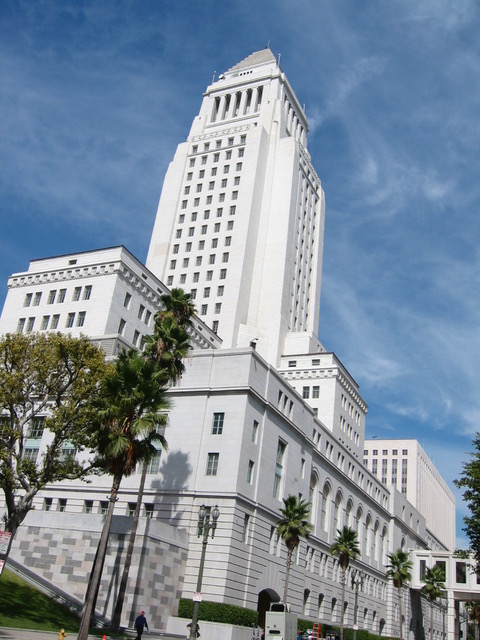
U.S._Court_House,_Los_Angeles

Wednesday January 13, at 10 am, Judge Manuel Real will conduct yet one more hearing
(or the second part of one more hearing) into the matter of whether or not Homies Unidos founder Alex Sanchez should be allowed bail.

Last week, if you’ll remember, Judge Real surprised all concerned by asking to talk to at least two experts in LA gang intervention and enforcement who could give an opinion as to whether Alex Sanchez was indeed an MS-13 a shot caller and a danger to the community as the prosecutors have insisted. The Judge wanted individuals with no dog in the fight, like maybe someone from the mayor’s office, he said, and perhaps some upper echelon type from the LAPD or the Sheriff’s Department. The “experts” had to be mutually agreeable to both the government’s attorneys and to Sanchez’s court appointed lawyer, Kerry Bensinger.

For the past week calls and emails have flown around the city as those even tangentially involved with the case madly opined and speculated about who those experts could and should be.

The court promised to be packed with spectators and supporters. But then on Tuesday afternoon, another surprise: Yes, Judge Real would hear testimony by the newly-chosen experts, but behind closed doors. In other words, the hearing would be closed to all save the attorneys.

This latest move fueled even more speculation about who the “experts” might be and what they intended to say—either for or against Alex Sanchez— that they did not want to state in open court.

The hearing will take place at the federal courthouse at 312. N. Spring.

More as it develops.

Posted in Arresting Alex Sanchez, FBI, LA County Jail, LASD, criminal justice | 8 Comments »

Alex Sanchez: Part 9 – Judicial Whiplash & “Real” Surprises

January 7th, 2010 by Celeste Fremon

In the courtroom of U.S. District Court Judge Manuel Real, the latest bail hearing for Alex Sanchez, held took a sharp turn on Wednesday morning, causing Sanchez supporters to bask cautiously in what seemed to be a small but tangible glimmer of hope.

The changed atmosphere at the hearing seemed presaged when Sanchez was ushered into the courtroom in casual slacks and a shirt, rather than the jail house jumpsuit and shackles that have characterized his previous appearances. On the way in, he managed to flash his family a smile that, while it did not exactly make it to cheerful, was clearly striving for upbeat.

At the last bail hearing, Judge Real repeatedly interrupted and corrected Sanchez’s court-appointed attorney, Kerry Bensinger, disallowing most of the material that Bensinger sought to present in order to counter the prosecution’s contention that Sanchez should be denied bail as he was both dangerous and a flight risk. However yesterday’s Judge Real appeared to be in a whole different mood and, while he questioned Bensinger at times, he remained even tempered.

This time around, most of Judge Real’s most aggressive challenges were aimed at the younger of the two government prosecutors, Elizabeth Carpenter, who grew visibly flustered at Real’s sudden change in direction.

Perhaps the oddest moment in the exchange was when Carpenter told the judge that the defendant’s supporters had “publicly stated” that Sanchez “could not get a fair trial” in Real’s court.

Well, what evidence did she have of such a thing? the judge wanted to know. (Cough—this blog and the Nation magazine—cough, cough) Surely the defendant and his lawyer had not stated that?

“No, no,” said Carpenter, back-peddling rapidly, Mr. Bensinger had not made any such statements. “But the defendant’s supporters certainly have, including one who had signed an affidavit of surety.”

(At this, veteran civil rights attorney Jorge Gonzalez elbowed Tom Hayden who, at an earlier hearing, had offered his house as part of a guarantee of bail for Sanchez. Hayden studiously ignored the elbowing.)

Judge Real, however, fastened on to the statement with gusto. “But those are lay people,” he roared. “They don’t know anything about the law!” Appearing fond of his words, Real repeated them. “That’s someone who knows absolutely nothing about the law!”

Then Real fixed Carpenter with a steely gaze. Surely she wasn’t trying to paint the defendant with those statements, he asked her. At that Carpenter backed away from the subject altogether and turned to explaining why Sanchez was a flight risk.

This too, Real challenged.

Well, where exactly would he flee to? the judge wanted to know. Carpenter hesitated. “Where will he go?” Real asked again. After all, Real pointed out, Sanchez had been granted political asylum because of the danger El Salvador presented to him, did the government have any reason to believe he would flee there?

The government did. But in a complete 180 from his hardline view of Sanchez’s flight risk potential at the last bail hearing, Real further questioned the prosecution’s assumption. Carpenter was left muttering something about Sanchez fleeing to South American countries without extradition treaties while the judge looked exasperated.

Yet the most startling incident came slightly later in the hearing when Carpenter was explaining why Sanchez was too dangerous and gang involved to be granted bail and Real again challenged her assertions. Had Sanchez been arrested or had any kind of negative police contact in the years between the asylum decision and the case before the court? Sanchez asked. He had not, Carpenter admitted.

Well, Judge Real said finally, “Isn’t there a possibility that you and Mr. Bensinger can get together and choose someone, maybe the person in charge of gang programs for the City, or someone of like authority with the LAPD who could come in and testify whether they have any evidence of continuing gang involvement by Mr. Sanchez. Perhaps we could arrange for a closed hearing to allow that person to testify frankly without fear of revealing critical information.” [These notes on dialogue are approximate.]

The 40 or so observers in the court tried not to stare open-mouthed.

And with that, Judge Real ordered the hearing to resume on January 13, 2010, at 10:00 a.m. The gavel came down. And that was that.

“What to make of it?” wrote Jorge Gonzalez when he emailed me later. “Who knows? Is the Judge merely making like he is sincerely considering the defense arguments for the appellate courts and the public?” (As a trial attorney, Gonzalez is very familiar with Real and his courtroom habits.) “Maybe, but if he leaves the door open a crack [Bensinger] is obligated to stick a foot in and put forth more positive evidence for him to consider. He will make the case that surely there must be a way that, given certain conditions, the rights of the defendant and considerations of the safety of the community can be satisfied.” It looked like supporters came out of the courtroom cautiously hopeful, he said, “that they might be able to persuade the Judge of the merits of that statement.”

Tom Hayden’s reaction was similar. “Taken literally,” he wrote in his own email after the hearing, “the judge’s order means that the city’s top gang reduction official, Guillermo Cespedes, and a top LAPD gang expert appointed by the new Chief Charles Beck would be asked, or even subpoenaed, to state what they know about Alex Sanchez from the past decade. Since city and police officials have often collaborated with Sanchez in the past, the public record might place them at odds with former CRASH officer Frank Flores, the prosecution’s expert witness.”

But, like Gonzales, Hayden was reluctant to be too optimistic. “There is no predicting whether this represents an unprecedented approach to conflict resolution,” he wrote, “or merely a step by the judge to prove to the critics that he is holding an exhaustive hearing, and armor-plating himself against a future appeal, before denying Sanchez bail once again. ”

And so the all-too-human legal drama continues. Stay tuned.


PS: And, for those of you who are not as entirely riveted by the Sanchez drama as some of the rest of us, take a look at this article on the already controversial UCLA study that contends legalizing undocumented immigrants would boost California’s sagging economy. Anna Gorman reports for the LA Times.


PPS: OMG, how could I have missed this?! Apple has rented a stage at the Yerba Buena Center for the Arts in SF on January 26 [changed to Wed, 1/27] for a “a major product announcement.” OMG! OMG! Could it be? An Apple tablet! An iReader! (Cue loud version of Apple boot-up cord along with visual of Apple logo bathed in heavenly shaft of light.)

David Carr at the NY Times is busy making up possible names for the possible thang (which is already possibly named the iSlate).

Hmmm. Must cut down on consumption of food and electricity so that I can afford the doubtlessly absurdly expensive gadget if indeed it is to be introduced in exactly 20 days. (Not that I’m counting.)

(And yes, this is a social justice issue. How could you think otherwise?)

Moses-Heston-with-tablets


PPPS: Oh, yeah, and the governor gave some kind of speech. More on that later on.

Posted in Arresting Alex Sanchez, Courts, FBI, Gangs, crime and punishment, criminal justice | 16 Comments »

Alex Sanchez – Part 8: Back to Square One….Sort Of

January 4th, 2010 by Celeste Fremon

Alex-Sanchez-with-kids

FEDERAL BAIL HEARINGS & GROUNDHOG DAY: WHO JUDGES THE JUDGES?

Alex Sanchez, the gang intervention leader and Homies Unidos founder who was indicted last June on federal Rico charges, is going back to court at 10 a.m. on Wednesday January 6 for another bail hearing.

It will be his third.

Most criminal cases feature a single bail hearing. From the beginning, however, Alex Sanchez’s situation hasn’t been “most cases.”

(For the back story on the arrest of Alex Sanchez start here and read from the bottom up.)

The hearing will take place in the same federal courtroom with the same federal jurist who presided over the last hearing—namely US District Court Judge Manuel Real.

The new hearing was ordered by the 9th Circuit Court of Appeals, an action that was viewed as both good news and bad news by Sanchez’s supporters and his court-appointed defense attorney, Kerry Bensinger. Good news because there is to be a new hearing at all after Sanchez was denied bail twice in a row. Bad news because the hearing is back with Judge Real, who is the guy who was the most recent and vociferous denier.

In late November, Sanchez attorney Bensinger filed a brief with the 9th Circuit in an effort to get a new hearing by a new judge, contending that with Real his client did not receive anything resembling a legally proper hearing and that Sanchez would be unlikely to receive a fair trial with the controversial judge either.

The government prosecutors subsequently countered with their own brief and everyone waited to see what the 9th-ers would say.

On December 22, the appeals court delivered its ruling. The 9th Circuit panel told Real he would need to set up a new hearing and, delivering a slight whack to the judge’s metaphorical hands, the panel set down some requirements. As Tom Hayden notes, Real was to “accept and consider” evidence “beyond a reasonable doubt” that Sanchez would be a danger to the community if released on bail. He was also to consider the “preponderance of evidence” in deciding whether Sanchez would be a flight risk.

In other words, the 9th Circuit kinda sorta conceded that Real did not do the swellest of jobs with the last hearing, but they were not willing to go so far as to take him off the case.

“I think part of the problem is that, off the bench, everyone likes Judge Real. Off the bench, he’s very charming,” said LA criminal defense attorney Harland Braun when we talked about the matter a few weeks ago. But on the bench, Real is considered by many, Braun among them, to be an irrational tyrant who actively skews proceedings toward whichever side he believes should prevail. “He does things like make faces at the jury during testimony, and signal to the prosecutor when to object. It’s a totally unnatural situation.” (Braun has been up against Real many times over the years and is among those who have been vocal about their opinion that the judge, who will be 86 later this month, should retire, or at the very least, step down to part-time “senior” status, for which he has been eligible since 1985.)

“But really, I blame the 9th Circuit,” said Braun. “They know what’s going on. But they don’t have the guts to do anything about it.”

Whatever the case, Sanchez supporters don’t seem to hold out lots of hope that Judge Real will reverse himself and grant bail. Yet there is much interest as to whether, in order to placate the 9th Circuit, the judge will allow some of the testimony and lines of questioning that he excluded last time Sanchez was in his courtroom.


THE CURIOUS CASE OF THE ACCIDENTAL TRANSFER

To make matters even more perplexing, for a while it looked as if Judge Real was indeed going to be off the case, but not because of the doings of the 9th Circuit.

During the time when Sanchez and company were waiting for the 9th to make up its mind, an odd thing happened: Bensinger unexpectedly received notice on December 9 that Real had been taken off the case and it had been assigned to a new jurist, a Judge Christina Snyder. The order was signed by Judge Snyder on December 2, officially filed two days later.

Sanchez supporters were ecstatic at the news, but Bensinger was also surprised because the only request he had made was through the Court of Appeals, and that was still pending.

Eventually it was learned that an attorney for one of the other 18 defendants named in the federal Rico case of which Sanchez was a part had filed a request for a transfer to Judge Snyder. The attorney applied for the judge swap under a legal protocol known as a “low number request.” It seems this other defendant had been tried in front of Snyder in a nearly identical case in 2006, thus could conceivably qualify for the oddly named low number request (which in state court is called, much more sensibly, a “notice of related case”)—the idea being that a judge who has already tried a defendant for a nearly identical offense has less of a learning curve so therefor can more easily speed things along.

But since this was a RICO case with a zillion other defendants all legally joined at the hip, a transfer of one case meant a transfer of all. Judge Snyder could say yes or no to the request, depending upon her schedule and her take on the matter. It appeared that on December 2, Judge Christina Snyder said yes –and signed the order.

But a few hours after receiving notification of the transfer, Bensinger got a call from the federal prosecutors who said they had talked to Judge Real’s clerk, that Judge Snyder’s signing of the order had been a big silly mistake, and that Real wanted the case back, thank you very much.

Since Bensinger had gotten no official notice of the second judicial switcheroo, he didn’t know what to think. But, a day or two later still, Bensinger did indeed get yet another order, this one signed by Judge Gary Allen Feess, the Chair of the Case Assignment and Management Committee.

(If Judge Feess’s name sounds familiar, he was the fellow who oversaw the LAPD’s Federal Consent decree.)

Feess wrote that United States District Judge Christina Snyder had “inadvertently signed a transfer order…” (How one “inadvertently” signs a transfer order is unclear. But okay.) However, wrote Feess, “…the current case is at such an advanced stage and Judge Real has spent such substantial time and effort on the matter that no judicial economy would be achieved by a transfer at this late date.” The transfer order was thus VACATED (Judge Feess’s caps, not mine) and “…the matter is ORDERED to be returned to Judge Real’s calendar for all further proceedings.”

And so it was.

Onward to January 6.


NOTE: FOR A LESS SANCHEZ-FRIENDLY but always exceptionally informative view of some of these same matters, be sure to check Tom Diaz’s post at Fairly Civil.


OH, AND WHILE WE’RE ON THE SUBJECT OF COURTS AND CASES, THERE IS THE MATTER OF KEVIN COOPER

Without knowing lots more about the case, I don’t have a strong personal opinion on this man’s guilt or innocence, but whatever your view, the issue—which was written up in the LA Times on Sunday by Carol Williams—-makes for troubling reading.

Posted in Arresting Alex Sanchez, Courts, FBI, crime and punishment, criminal justice | 16 Comments »

Big News! Judge Real Taken off Sanchez Case!……No, Wait…

December 9th, 2009 by Celeste Fremon

Judge-Real-2

Monday night the news was startling.
Alex Sanchez’s attorney Kerry Bensinger learned that US District Court Judge Manuel Real had been taken off the case.

Tom Hayden quickly wrote up the news for The Nation. Here is how his report opened:

The gang conspiracy case against Alex Sanchez was transferred to the jurisdiction of a new federal judge today after weeks of community protest alleging bias by Judge Manuel Real. The decision was rendered by a judicial status conference in a closed chamber December 2. Supporters of Alex Sanchez saw the ruling as a major change for the better.

After weeks of protests alleging judicial bias, the gang conspiracy case against Alex Sanchez was transferred to the jurisdiction of a new federal judge.

The new judge assigned to the case is Judge Christina Snyder, 61, appointed by President Bill Clinton in 1997 on the recommendation of California senators Diane Feinstein and Barbara Boxer. Judge Snyder is a Pomona College alumna (1969) and a Stanford Law School graduate (1972). In an important recent decision, she ruled against California state Medicare cuts in 2008. Little is known about her approach to juvenile justice or police reform issues. She was in private practice for twenty-five years before her appointment to the federal bench.

Alex Sanchez supporters were thrilled.

Certainly the change in judges in no way suggested whether or not legal events would play out in Alex’s favor. But supporters felt it would mean a trial that would hopefully be fair—an outcome that many even outside the Sanchez camp had increasingly come to question should the proceedings stay in Judge Real’s courtroom.

The order to transfer the Sanchez case from Judge Real—which also contained a concurring signature of the new Judge, Christina Snyder, signed Dec. 2—- was filed on December 4, and then reportedly sent to Sanchez’ defense lawyer at 3:07 Monday afternoon.

Then a couple hours later on Tuesday afternoon…..everything changed.

Sanchez’s attorney received a new email, this time from the government prosecutor. Judge Real’s clerk said that Real wanted to keep the case and that Judge Snyder’s signature was “a mistake.”

Hayden sent around an email Tuesday night containing details and reactions. It read in part:

“The turn of events will raise new suspicions about alleged manipulation of the proceedings which began six months ago with Sanchez’ arrest on gang conspiracy charges. Sanchez, a well-known gang intervention worker who helped expose the Los Angeles police Rampart scandal a decade ago, asserts his innocence in the case. He is being held without bail at a federal prison in Los Angeles.

As of 4:30 Tuesday afternoon, no order reversing the transfer had been received by defense counsel, and no explanation offered for the unusual chain of events.

The order surprised and pleased the Sanchez defense team. His supporters, organized as www.wearealex.org, assert that Sanchez is being railroaded and denied any semblance of a fair trial. Sanchez’ court-appointed counsel, Kerry Bensinger, argued in a recent appeal to the Ninth Circuit that the case should be remanded to another judge.

Why the December 4 transfer order was withdrawn less than a day after it was made public will raise questions about the inner workings of the judiciary itself.

Uh, huh. Something like that.

Or to put it another way: Whiskey Tango Foxtrot???!!

Posted in Arresting Alex Sanchez, FBI, Gangs, criminal justice | 32 Comments »

Arresting Alex Sanchez: Part 7: The 9th Circuit & the Brief

December 7th, 2009 by Celeste Fremon

Alex-Sanchez-5

In the past few weeks, a new element has been unfolding in the case of Alex Sanchez.

(For those unfamiliar with the basics of the case: Alex Sanchez is the El Salvadoran-born, former MS-13 gang member who transformed his life to become a nationally respected gang intervention leader. This past June, Alex was arrested by the FBI as part of a federal racketeering indictment and accused of plotting the murder of another gang member among other charges. Previous posts on the matter may be found here and here and here and here.)

As you will remember, in three different hearings, Sanchez was denied release on any kind of bail, despite more than 100 letters of support from various prominent LA community members, plus $2.5 million dollars in bail pledges and property. His trial is not expected to begin until December 2010.

Now his lawyer, Kerry Bensinger, is trying one more time for bail by taking the matter to the United States Court of Appeals for the Ninth Circuit with what blogger/author Tom Diaz, describes as a “take-no-prisoners brief that (in nice, polite lawyer language) flames trial Judge Manuel L. Real.”

The government is expected to answer Bensinger’s brief with it’s own legal pile of papers as soon as this week.

Diaz, who leans strongly to the law enforcement view of things in the Sanchez case, has an excellent rundown of Bensinger’s brief. I urge you to read the whole of Diaz’s post. But here are a very few representative clips:

The brief scorches a few other targets, including the government’s trial lawyers and the principle MS-13 expert witness in the case, Los Angeles Police Department Gang Detective Frank Flores. Flores’s testimony about the meaning of wiretaps (Sanchez allegedly directing a “hit” on a renegade gang member) was key in the detention hearings. The defense claims that the government not only got one of the key phone call participants wrong, but Flores misconstrued what happened during the calls.

But Bensinger focuses his flamethrower on the 85-year old Judge Real, stating, “At a minimum, the matter should be remanded for a detention hearing before a different judge.”

If the judge did anything right, it escaped counsel’s notice.

Reading between the lines, Bensinger is conveying to the appeals court the message that — in his view — Real for whatever reason or reasons is confused or willfully obtuse about what the federal law requires in a bail (“detention”) hearing. In short, the brief argues that the trial judge just doesn’t “get it.”

The 32-page document landed in the appeals court docket less than a week after that court issued an opinion and order applying its own flame to Judge Real.

After that, Diaz pretty much lays out the whole brief, in interesting and accurate detail.

The core of Sanchez’s appeal is that he was denied a fair hearing on the only issues relevant to whether he should be released, which are (1) is he a risk of flight, and (2) does he present a threat to persons or a community? Instead, the brief claims, Judge Real essentially held a “mini-trial” on whether Sanchez is guilty of the offenses with which he is charged.

Yet, while Judge Real held a “mini-trial,” the brief contends that he refused to allow any evidence from the defense that would dispute the central core of the government’s case against Sanchez.

A focus of the case so far has been the government’s wiretaps of four calls in which Alex Sanchez certainly takes a leading role. But the crucial question has developed to be: was that leading role as a mediator and peace-maker or as a “shot caller” pushing the conversation to the ultimate murder in El Salvador of one Walter Lacinos (aka Camaron) by a gangster known as “Zombie”? A close second is whether the government got the wrong “Zombie.”

…Of critical importance, given the district court’s focus on “the content of these [four wire-tapped] conversations” is the district court’s refusal to permit Father Greg Boyle’s testimony. Fr. Boyle is the Executive Director of Homeboy Industries, the largest gang intervention program in the country, and a nationally recognized gang expert knowledgeable in gang language, interactions and “codes.” After listening to the calls and reviewing Det. [Frank] Flores’s declaration re-interpreting the calls and the prosecution’s arguments based thereon, Fr. Boyle concluded that, rather than corroborating a murder plot, Mr. Sanchez’s statements reflected a gang mediator’s peacemaking efforts.

Anyway, there’s lots, lots more. So just read it.

By the way, when I last wrote about the bail hearing, although I was present in the court, I had not read the transcripts of the hearing. I have now.

And I can hardly wait to see how the government replies to this brief.

Posted in Arresting Alex Sanchez, Courts, FBI, LAPD, crime and punishment, criminal justice | 13 Comments »

Arresting Alex Sanchez: Part 6: The Judge Real Show

October 22nd, 2009 by Celeste Fremon

Alex-Sanchez-girl-with-sign

1.


The final bail hearing for Alex Sanchez began around 1:40 p.m. on Monday, October 18
.

Every bench in courtroom on the second floor of the federal court on Spring Street was packed to the point of slight discomfort for the audience, with several reasonably prominent people turned away altogether because they came too late.

After Judge Manual L. Real opened the proceedings, he told Sanchez’s attorney, Kerry Bensinger, to speak first. Bensinger is a tall, fit, affable, very smart man and a skilled researcher who is court appointed, but has spent an astonishing amount of time on this case already.* His courtroom manner, however, while calm and intelligent, has thus far lacked the aggressiveness that he and his client may need.

And then there is U.S. District Court Judge Manual Real. Appointed in 1966 by Lyndon Johnson, at 85, Judge Real is what we used to call a character. He has spent 43 years on the same bench and projects an image that combines the demeanor of an irascible uncle who mutters loudly and tyrannically over his soup at Thanksgiving dinner, with that of a glowering bird of prey.


2.

Bensinger told the judge that he would like to call to the stand Father Greg Boyle. The intention was to have the priest (who is frequently called as an expert witness in both state and federal trials) talk about the elements of the four wiretap conversations central to the prosecution’s case that he noted were discrepant from what the feds had said was on the recordings. Most importantly, Boyle would speak about the crucial section about Sanchez no longer being an active gang member that the prosecution had conveniently omitted from their filing. [Details here.]

It promised to be an interesting testimony.

On the way to the hearing I spoke to Greg about the four recordings and asked him if there was anything in the conversations that he thought was incriminating. “All the time I was listening, I kept bracing myself,” he said. “But it never came. There really isn’t anything.”

In an earlier hearing, the prosecution had called their own expert witness—LAPD detective Frank Flores—to characterize what was on the recordings. Attorneys in the audience assumed that Judge Real would permit Greg to take the stand in order to level the playing field.

Attorneys in the audience were wrong.

He did not need to hear from Father Greg, Judge Real shouted. (And when I say shouted, I am not being hyperbolic.) “It is not his interpretation that is important! It is that of the court!”

Bensinger tried to explain about the importance of the missing section that he said directly disputed the prosecution’s claim that Sanchez was an active gang member and a shot caller. But Judge Real was no longer listening. “That’s a matter for trial! Tri-al, counselor, don’t you understand?!”


3.

Bensinger said he had another witness he intended to call, a woman who runs a prominent gang tattoo removal agency in LA County. Bensinger wanted her to rebut the prosecution’s earlier contention that, although Sanchez had all his visible gang tattoos removed, the fact that he still had one left on his chest proved that he was still an active gang member.

Real shouted down that idea too.

“She’s not competent to say anything one way or the other!” he roared.

The only thing that Judge Real would allow from Bensinger’s prepared presentation, was the cross examination of Det. Frank Flores. This basically meant that the prosecution was able to present a witness and multiple pieces of evidence–exhibits— to “prove” why Sanchez was an active gangster and flight risk, while the defense was allowed no countering witnesses, and no countering exhibits.

With a sigh, Bensinger proceeded.

Bensinger asked Detective Flores why he didn’t include the missing material about Sanchez not being an active gang member in his own court filing. [See previous post for details] Flores said he didn’t think it was important. Kerry pressed that point and Flores said that Camaron—the nickname of the now-dead El Salvadoran MS-13 gangster who made the remarks —was speaking “tongue in cheek.”

At this, there was audible muttering from the crowd. “So Cameron was a post modern gangster who was speaking ironically?” someone near to me whispered.


4.

It was Bensinger’s contention that Sanchez threatened no one, and ordered no hits. To the contrary, said Bensinger, Sanchez was on the four calls in question to try to diffuse a situation in which several people—Sanchez prominently included—had been accused of being FBI informants. Because of this accusation, a Salvadoran gangtser with the nickname Cameron had caused a “green light” to be put on Sanchez and others. In other words, Cameron had ordered a hit on a number of people, including Sanchez. And Sanchez was trying use his contacts and personal influence to defuse what had become a volatile situation.

The issue of the FBI informant rumor and the “green light” are not in depute. What is in dispute and, based on the transcripts, open to interpretation, is what Alex Sanchez did about the threat.


5.

One of the issues that Bensinger brought up during the cross examination was his contention that Flores completely and crucially misidentified a person on one of the calls, a guy with the street name of Zombie. According to Flores, the person, “Zombie,” on the phone call was also the person who was eventually arrested for the murder of Cameron, a murder that Sanchez had allegedly ordered during the last of the four phone calls that are the center of the prosecution’s case.

Yet, according to Bensinger, the guy called “Zombie” on the call was a very different fellow from Juan Bonilla, the killer, who is also called Zombie.

(I know this nickname business is dizzying, but try to stay with me here.)

Read the rest of this entry »

Posted in Arresting Alex Sanchez, FBI, Gangs, LAPD, crime and punishment, criminal justice | 50 Comments »

The Arrest of Alex Sanchez – Part 5: A Game Changer?- UPDATED

October 19th, 2009 by Celeste Fremon

Alex--7

UPDATE: No Bail. Not shocked. Much drama. Judge Real is….an intriguing character, shall we say. More in a while.

Right now, however, I’m getting ready to be on KNBC’s The Filter with Fred Roggin. (More about that in a while too. You can watch me live at 7:30 p.m. on digital 4.2 or right here.)


The next—and presumably the final—bail hearing for Alex Sanchez
will be held today at 1:30 p.m. at the downtown federal courthouse on Spring Street, with Federal Judge Manuel L. Real presiding.

The hearing should be dramatic on a multiplicity of levels. For one thing, Judge Real has asked to hear the recordings of the wiretapped conversations on which the FBI has purportedly built its case.

Yet, the most dramatic moment could come when Sanchez’s attorney, Kerry Bensinger, presents some brand new information to the court.

It is information that has at least the potential to be a game changer.

It is also information that, without an excellent explanation, could blow a substantial hole in the prosecution’s credibility.


FIRST LET’S RECAP THE BACK STORY: Alex Sanchez is the El Salvadoran-born, former MS-13 gang member who transformed his life to become a nationally respected gang intervention leader. Sanchez founded and is the executive director of Homies Unidos, and has been praised in cities across the country as someone who has helped turn around the lives of many, many young men and women.

Then this past June, Alex was arrested by the FBI as part of a federal racketeering indictment and accused of plotting the murder of another gang member among other charges. It was not that the Feds accused Sanchez of shooting anyone himself, or personally dealing in drugs and guns. Worse, the indictment maintained that Sanchez is a shot caller—AKA a leader—of a particular clique of MS-13 who ordered such things done. He was, said the Feds, leading a double life and had successfully pulled the moral and psychological wool over the eyes of his myriad friends, admirers and supporters.

Although prosecutors say they have informants who paint Sanchez as a shot caller, the heart of the case is based on four wiretap conversations. the transcripts of which many law enforcement experts—like D.C. based organized crime and terrorism maven, Tom Diazconsidered to be quite damning.

The conversations are in Spanish, and many of the most significant statements in the recordings are ambiguous and/or couched in colloquial gang argot. As a consequence, in addition to the Spanish/English translation, they also required a sort of gangster cultural interpretation in order to determine how damning the recordings actually were. The latter interpretation was provided by LAPD Detective Frank Flores who is considered to be one of the department’s resident experts on Mara Salvatrucha, MS-13. It was Flores’ conclusion that, without a doubt, Sanchez was a dangerous shot caller who had ordered a murder.

Observers like like D.C. based organized crime and terrorism maven, Tom Diaz found the transcripts quite damning. Diaz, who knows several law enforcement sources close to the case, and is himself an attorney, gives his interpretation of the transcripts here.

In short, it seemed that things were looking grim for Alex Sanchez.


THEN THIS PAST WEDNESDAY, AN INTERESTING THING HAPPENED: Sanchez’s lawyer, Kerry Bensinger filed with the court a new formal statement by Homeboy Industries founder and director Father Greg Boyle on behalf of Alex Sanchez.

The statement came about after Kerry gave Father Greg and some others the transcripts of the wiretap conversations. The idea was that they would read the lengthy things and give their opinions on what they read.

Several who read the material, like Tom Hayden, admittedly a strong Sanchez supporter, felt that, counter to what Flores and the Feds said, the 1500 pages of transcript backed Sanchez’s claims of innocence.

But, as a fluent Spanish speaker and a gang expert of nearly a quarter century duration, Greg Boyle went much further. He didn’t just review the English translations and Detective Flores’s interpretations, he went upstream and listened to, analyzed—and, in some crucial sections, re-translated—the underlying recordings themselves.

This yielded some intriguing results.

I talked to Greg yesterday, and he told me that, when he listened to the raw recordings, his analysis of what was said varied substantially from what the FBI’s translations combined with the analysis of LAPD Detective Flores had concluded.

But that isn’t the most important part of what he found. In reviewing the recordings, Fr. Greg also notice that that there was one significant section of the conversation that the feds and the LAPD had curiously left completely off the transcript—an omission that basically tosses a live grenade smack in the middle of the Fed’s case against Sanchez.

Here’s how Tom Diaz put it. (It was Tom who first alerted me to the filing):

Father Boyle points out a troubling omission from the transcript in the government’s case — namely, the statement of one of the gangster’s that pretty clearly appears to say (in so many words) “butt out, Alex, you are no longer one of us.”

….If you indict Mother Teresa, you better be able to prove her guilt slam dunk style.

[SNIP]

No doubt, the government will have an answer [to the filing].... If it does not have a zippy and persuasive reply to the following, you won’t be able to count the ruined careers on all your hands and toes.

Here is the relevant part of Greg’s statement. [Declaration of Father Greg Boyle Filed in Support of Defendant Sanchez's Application for Review of Detention Order, United States v. Alfaro, United States District Court for the Central District of California, Docket No. CR-09-00466-R-22.]

Read the rest of this entry »

Posted in Arresting Alex Sanchez, FBI, Gangs, LAPD | 50 Comments »

The Arrest of Alex Sanchez: Part 4 – The 2nd Bail Hearing

July 17th, 2009 by Celeste Fremon

alex-hearing-2

Alex Sanchez had a second bail hearing on Wednesday afternoon.
He did not get bail. Nor was he denied it.

Alex, if you’ll remember, is the former MS-13 gang member turned highly honored gang intervention leader and head of the well-regarded nonprofit, Homies Unidos. A month ago, Sanchez was named in a federal racketeering indictment and accused of plotting the murder of a rival gang member. The case alleges Sanchez was leading a double life: while a good guy by day, by night he was the premier shot caller—AKA leader—of a particularly violent clique of MS-13.

At the last bail hearing held on June 30, 110 people wrote letters of support—including city leaders and a wide array of clergy. Friends and colleagues put up $1.2 million in surities against any bail. To sweeten the deal, Tom Hayden put up his house toward the hoped for bond. Sanchez was denied bail anyway.

Sanchez’s attorney appealed the bail decision, and Wednesday’s hearing was the result. But rather than settle the matter, U.S. District Judge Manuel L. Real decided to continue the bail issue until August 17, nearly a month from now.

On the surface this might sound like just another case of justice delayed.

But, there is a lot more to this story.

*******************************************************************************************************************

BAIL HEARING, ROUND DEUX

On Wednesday things were unusually quiet around LA’s courthouses since that was the day that most courts in the state were on budget-driven furlough. However, the federal court on Spring Street was still doing a thriving business—simply because, being federal, its cash flow was not restricted by the mammoth budgetary sinkhole into which California seems to be rapidly disappearing.

The previous June 30 hearing was held in front of a nervous-seeming U.S. Magistrate Judge Alicia G. Rosenberg who gave the discomforting impressing that she looked only to the prosecutor for her cues.

Judge Manuel Real was quite another breed of jurist. A white-haired man of 85 who was appointed to the bench in 1966 by Lyndon Johnson, Manuel Real is a controversial figure who once threatened to throw then Attorney General Dan Lungren into jail for contempt and used to be known for telling lawyers “This isn’t Burger King. We don’t do it your way here.” More recently and most notoriously, Real was censured and nearly subjected to impeachment proceedings for his unorthodox handling of a 2006 bankruptcy case.

Yet while quirky, he was reputed to be smart and was obviously extremely experienced. And unlike the magistrate, U.S. District Judge Real made it clear from the beginning that he and no one else was the boss of his courtroom. He was the precider.
.
judge-manuel-real

Real first called Alex’s defense attorney, Kerry Bensinger,
who once again recited all the support that Alex Sanchez had received. There were presently more than 140 letters written to testify to Alex’s character, said Bensinger. And the amount of properties and surities that had been put up by friends in Sanchez’s behalf, now totaled $2.5 million.

Not only were all these friends willing risk their own property and money for Alex, Bensinger said, the defense proposed that, if granted bail, all Alex’s calls and visitors could be completely monitored, and Alex himself would willingly wear any kind of electronic monitoring device.

Bensinger also listed all the reasons why Sanchez was not a flight risk or a danger. All his family is here, and he could not return to El Salvador without risking almost certain death. This was why he fought for asylum in 2000 and, in 2002 was granted asylum by an INS judge in a nearly unprecedented ruling. In fact, said Bensinger, for the nearly two year duration of the asylum case, Sanchez was out on bail, “and he made every court date and didn’t flee then. And he won’t flee now.”

Neither was Sanchez the dangerous man that the government was portraying him to be, said Bensinger. His previous offenses were long in the past, and a part of the time when he was an admitted gang member. And they had been legally expunged anyway. The only felony that remained on his record was from way back in 1991, when he led a different kind of life. Even that offense had been lightweight enough that Sanchez received only probation, and no jail time.

When Bensinger finished, Judge Real fixed the attorney with a hawk-like stare. “The defendant is charged with conspiracy to commit murder,” Real said, “and many of these murders occurred when Sanchez was supposedly helping young men get out of gangs. What about that?

“Murders plural?” muttered the crowd in the courtroom. Although the long RICO indictment in which Sanchez was named listed many murders and murder plots, Sanchez was solely (allegedly) involved in the 2006 conspiracy to murder Walter Lacinos, an MS-13 gang member who was indeed subsequently killed in El Salvador.

Nevertheless, the judge read off a horrifying string of homicides and homicide plots, including the alleged plot against LAPD detective Frank Flores, that were linked to other MS-13 gang members.

Since it had never previously been suggested that Sanchez had any part in these homicides or murder plots, even by the government’s highly zealous prosecutor, the crowd of Sanchez supporters looked confused and fearful as the potentially broad and irrational use of the RICO Act began to dawn on them. Passed in 1970 as a way to indict previously untouchable mafia kingpins, RICO is a good tool that may also be used as a bludgeon in that it allows prosecutors to employ the vague and flexible charge of “racketeering” to tie more ordinary defendants like Sanchez to crimes and people with which they have no direct causal involvement whatsoever.

Hearing the judge’s interpretation of the charges in the indictment, one defense attorney friend of Sanchez shook her head unhappily.

Even Bensinger appeared slightly thrown for a loop. “Mr. Sanchez is only accused of one predicate act, which is the 2006 conspiracy to murder Walter Lacinos,” he said.

“Are you telling me these murders aren’t real?” the judge all but shouted.

“Your honor, they’re real murders…” Bensinger tried to counter, “but Mr. Sanchez isn’t…..”

“This is like a bad episode of Boston Legal,” whispered an observer. “Any minute now, this judge is going to say, ‘No more jibberjabber in my courtroom!.’”

There was more back and forth between judge and defense attorney, all of it suggesting very rough legal times ahead for Alex Sanchez.

But the hearing was not over. Not at all.

Read the rest of this entry »

Posted in Arresting Alex Sanchez, FBI, Gangs, LAPD, crime and punishment, criminal justice | 6 Comments »

The Arrest of Alex Sanchez: Part 3 – The Bail Hearing

July 1st, 2009 by Celeste Fremon

alex-bail-hearing-1

Yesterday, Los Angeles gang intervention leader Alex Sanchez
had his bail hearing at the US District Court on Spring Street in downtown Los Angeles.

The drama that played itself out in the 8th floor hearing room of the US District Court building was both informative and disturbing.

As you’ll remember, Alex Sanchez is a former MS-13 gang member who turned his life around in the mid-1990s and now serves as the executive director of the non-profit, Homies Unidos. He is highly regarded in Los Angeles for the work he has done in helping others reclaim their own lives, and for persuading school kids to stay out of gangs altogether. Sanchez has won multiple awards, and has been lauded nationally as a peacemaker and a role model.

Then last week Alex Sanchez was arrested by the FBI on Federal racketeering charges. The Feds allege that 37-year-old Sanchez has been living a double life and is in fact the shot-caller for the Normandie clique of the infamous Mara Salvatrucha and that he was involved in a conspiracy to have a rival gang member killed in El Salvador in 2006. Prosecutor Elizabeth Carpenter announced that if Sanchez is found guilty he would receive a life sentence without possibility of parole.


AT THE COURTHOUSE

Although family, friends and supporters were firm in their insistence that Alex was innocent, everyone gathered at the courthouse assumed that the Federal prosecutor would ask for a high bail due to the seriousness of the charges.

In an effort to get the bail reduced—or better yet, to persuade the judge to release Alex on home arrest—Sanchez’ attorney’, Kerry Bensinger, made an impassioned pitch.

In 20 years of law practice, Bensinger told U.S. Magistrate Judge Alicia G. Rosenberg, “I’ve never seen such an outpouring of support for a client.”

Indeed, only about one third of the 100 or more family and friends who turned up for the hearing were able to jam themselves into the room. The rest were asked to wait in the small park across from the court, where a press conference was scheduled to be held, post hearing.

Among those who made it inside the hearing were Michael de la Rocha, deputy to City Council member Tony Cardenas, former state senator Tom Hayden and Minister Tony Muhammad of the Nation of Islam, who was accompanied by a couple of his bow-tie-wearing Fruit of Islam body guards.

alex-bail-hearing-51

Author/poet Luis Rodriguez also made it inside the hearing room but civil rights lawyer Jorge Gonzales arrived late so waited patiently outside.

The Reverend Cecil Murray, former pastor of the First AME Church, sent a statement. Father Greg Boyle, who was out of town, sent a fellow priest to read an even lengthier statement.

Attorney Bensinger read excerpts from 110 additional letters that he said were from clergy, academics, university professors, a few politicos and a pile of professionals.

There was even a strongly worded letter of support from a former FBI guy named Tom Parker who used to be the assistant special agent in charge of the F.B.I.’s Los Angeles Bureau. Parker too was at the hearing.

“In my experience, when someone is arrested people start to distance themselves from that individual,” Bensinger said. “The opposite has occurred here.”


THE $1.2 MILLION

As for the bail itself, Bensinger announced that although Sanchez had no assets of his own to put up to guarantee bail, his group of friends and supporters had put up a total of $1,260,500 in “surities” in his stead.

Read the rest of this entry »

Posted in Arresting Alex Sanchez, FBI, Gangs, LAPD, crime and punishment, criminal justice | 29 Comments »

The Arrest of Alex Sanchez – Part 2

June 25th, 2009 by Celeste Fremon

alex-sanchez-1

I am still in Washington DC.
(I was at Bennington College going through the last ten days of my MFA program, which was wonderful! My son flew in to see his middle-aged mom graduate. Then jumped over to DC for the week. Am flying back tonight—and very ready to be home in LA and to pat dog and cat-type critters).

Meanwhile, I am monitoring the unfolding story about Alex Sanchez’s arrest.

(Frank Girardot has a PDF of the actual indictment.)

Here are a few small updates and some thoughts:

*******************************************************************************************************************

Friends and associates have organized an informational meeting on Alex Sanchez’s legal situation this Sunday at 6 pm at the Central American Resource Center—CARECEN—at 2845 W 7th St, Los Angeles.

His bail hearing is scheduled on Tuesday, June 30 at the US District Court at 312 N. SPRING ST, 8th floor. Supporters are being encouraged to attend the hearing.

*******************************************************************************************************************

Some voices have been comparing Sanchez’s legal troubles to those of Hector Marroquin, the former—and decidedly crooked—gang intervention worker who began an organization called No Guns then was arrested in 2007 after he was found to be dealing in ….guns.

On the surface, the two cases might appear to be similar—both men worked in gang intervention in LA. Both men were arrested and charged with serious illegal gang activity—Alex’s charges far more serious even than Marroquin’s.

But past the surface, the stories are very, very different.

Sanchez is genuinely beloved by a wide variety of people in LA and beyond. Marroquin, by contrast, was viewed by many as troubled—even before there was any kind of hard evidence that he was up to no good. Thus when the news broke about his arms sales, few in and around LA’s gang violence reduction field were all that surprised by the revelations as they had long suspected that the man might still be playing both sides of the street.

Not so, Alex Sanchez.

His arrest has produced shock and widespread disbelief among those who know him. (You will pardon me if I don’t take seriously those who do not know Sanchez personally, who are now shrieking, “Oh, yeah, we saw it all along!”)

Thus far, the level of support for him has remained very strong.

One of the few exceptions has been civil rights attorney Connie Rice, who has given interviews to the WaPo and to Frank Stolze at KPCC, in which Connie wondered if Alex was slipping because, “He was not willing to help gang intervention workers who were getting targeted by gangs that he had relationships with. That’s always a sign that they are backing away from the intervention role.”

Connie is a friend and I respect her tremendously. But I find this line of reasoning faulty and disappointing. A lot of people have been “backing away,” as she puts it, from the hard core street intervention to which Connie refers. In the simplest sense, this means meeting with gang members and trying to persuade them to stop shooting at each other.

Yet, some of those most expert in the field of gang violence reduction and community health— Father Greg Boyle prominently among them—have been down that road many, many times in past years and now feel that their days are more productively spent with such efforts as getting guys who want out of the gang world into solid jobs, helping their little brothers to stay in school, and aiding those emerging from juvenile facilities and prisons to make a successful—and law-abiding—transitions back into their families and communities.

The idea is to help the homeboys and homegirls create new, good lives—not to try to persuade them to better manage the old, bad ones.

I can’t say for sure whether Alex still believes in street intervention or not. I can say that, whenever I spoke to him, he seemed the most interested in programs that had to do with helping gang members and former homeboys (or wannabe homeboys) move toward the light, one might say, rather than trying to negotiate with the darkness.

In other words, if a chary view of street-level shuttle diplomacy between gangs and gang members (which is a tourniquet at best and that some experts believe actually enforces the gang structure, not disrupts it) is evidence of gang involvement, then I’ve got a list of middle-aged gang expert white people whom the Feds might want to investigate—myself included.

And while we’re on the subject of Father Greg Boyle, here’s a small snippet of what he wrote in one of the emails we have been exchanging on the subject of Alex Sanchez, and why Greg doesn’t believe that Alex could possibly be involved in an MS-13 conspiracy:

1. Here’s the story: Law enforcement–and I
include the FBI here–when it comes to the gang thing–they see only
through a glass darkly. They possess exactly half the pieces to this
jigsaw puzzle. That’s not bad news–if they were humble, they could say
to the “community”–”Look, we have only half the pieces”–then
together, truly, we’d be able able to piece this puzzle together.

2. The Bad news: they possess half the pieces, but assert that they
have all the pieces.

3. So…this is why cops tell homies that “The Mexican Mafia has
meetings at Homeboy Industries” and Blinky [Rodriquez] holds the guns
for Valley gangs ….and Alex Sanchez is “involved” in some MS conspiracy. They
hold half the pieces. They put two and two together and get 5.

We are a long way from the end of this story.

Posted in Arresting Alex Sanchez, FBI, Gangs, LAUSD, crime and punishment, criminal justice | 9 Comments »

« Previous Entries Next Entries »